

Optics
A lens is more than glass.
Between a scene and its image is an assembly of surfaces, coatings and adjustments. A lens begins long before the shutter is released.
Remember this
A lens balances geometry, materials, coatings and assembly. Its character is more than aperture or sharpness at the centre.
Bringing light together
A photographic lens combines elements in groups to form an image on film or a sensor. Surface curvature and material properties determine how rays bend.
The ideal positive lens brings parallel rays to a focus. A real photographic lens must form an image across a whole surface, using different ray directions and wavelengths. Combining elements helps address that harder problem.
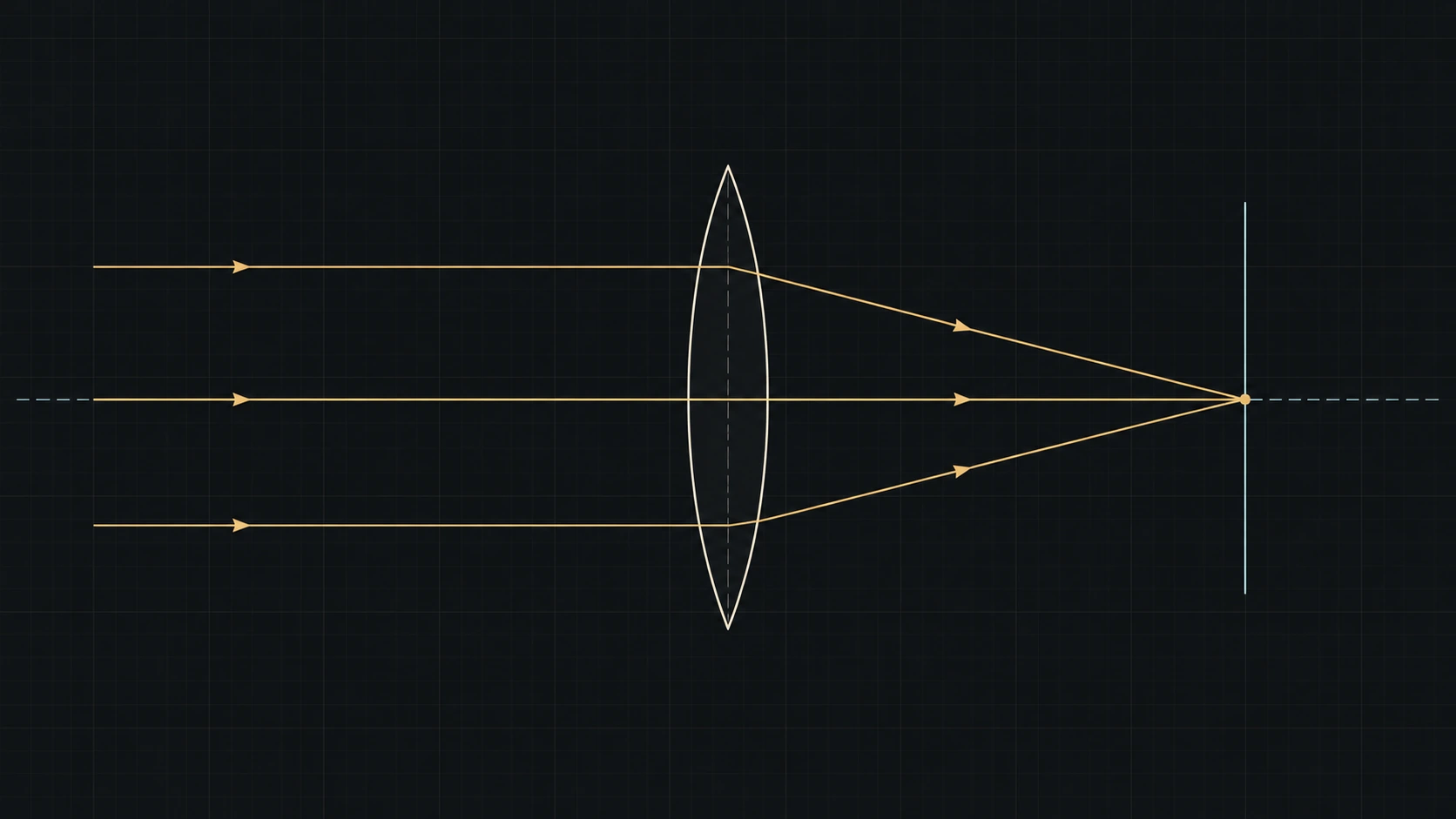
Design balances useful imaging with control of aberrations, within practical size and mechanical constraints.
Elements and groups: more is not always better
A lens element is one optical component; a group combines one or more associated elements, sometimes cemented together. Shapes and materials work together to direct rays and control imaging errors. More elements do not automatically mean better quality.
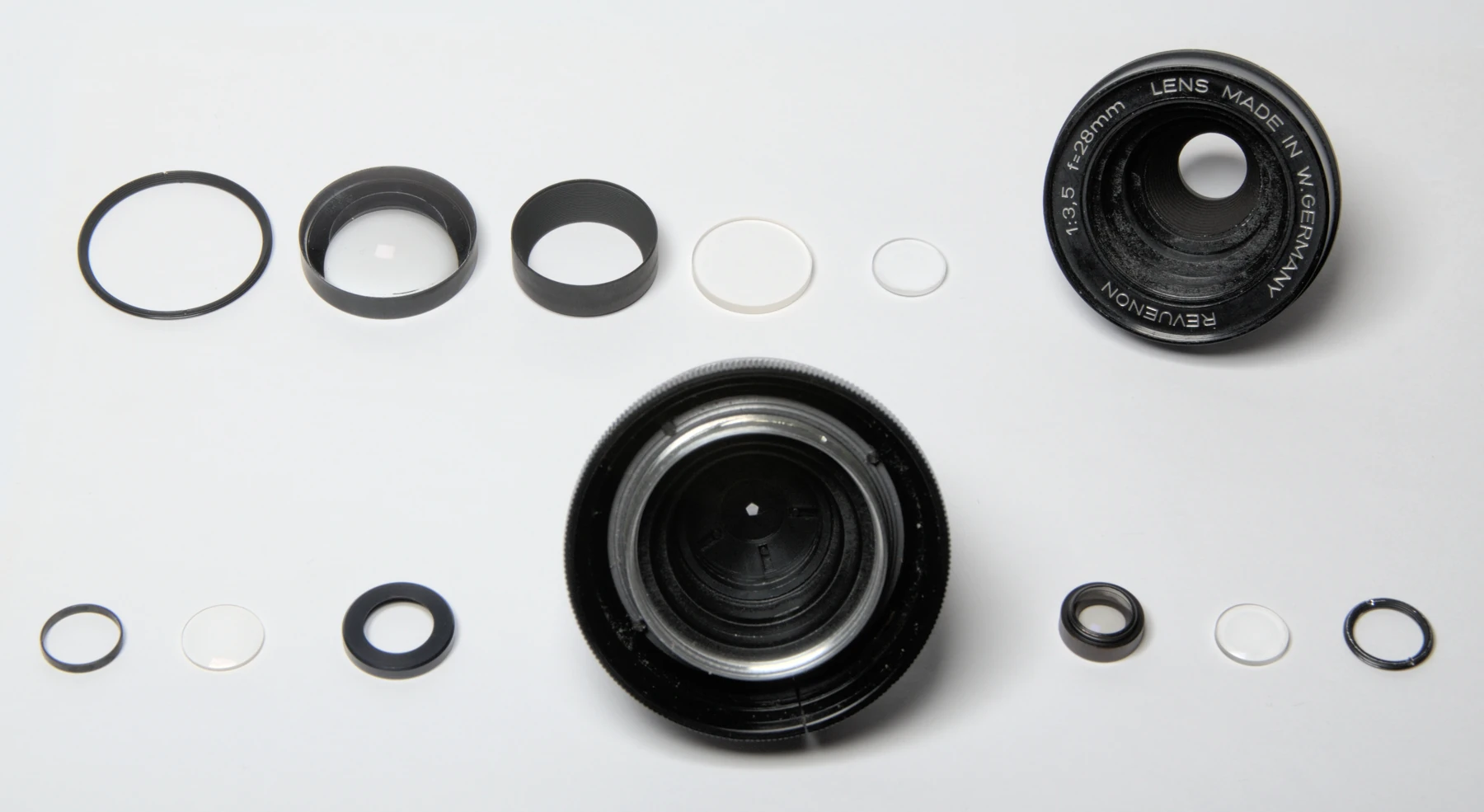
Air spaces matter as well as glass. Cemented elements may form one group, while visible dismantled parts may simply be retaining rings. Counting objects on the table does not reveal the optical formula.
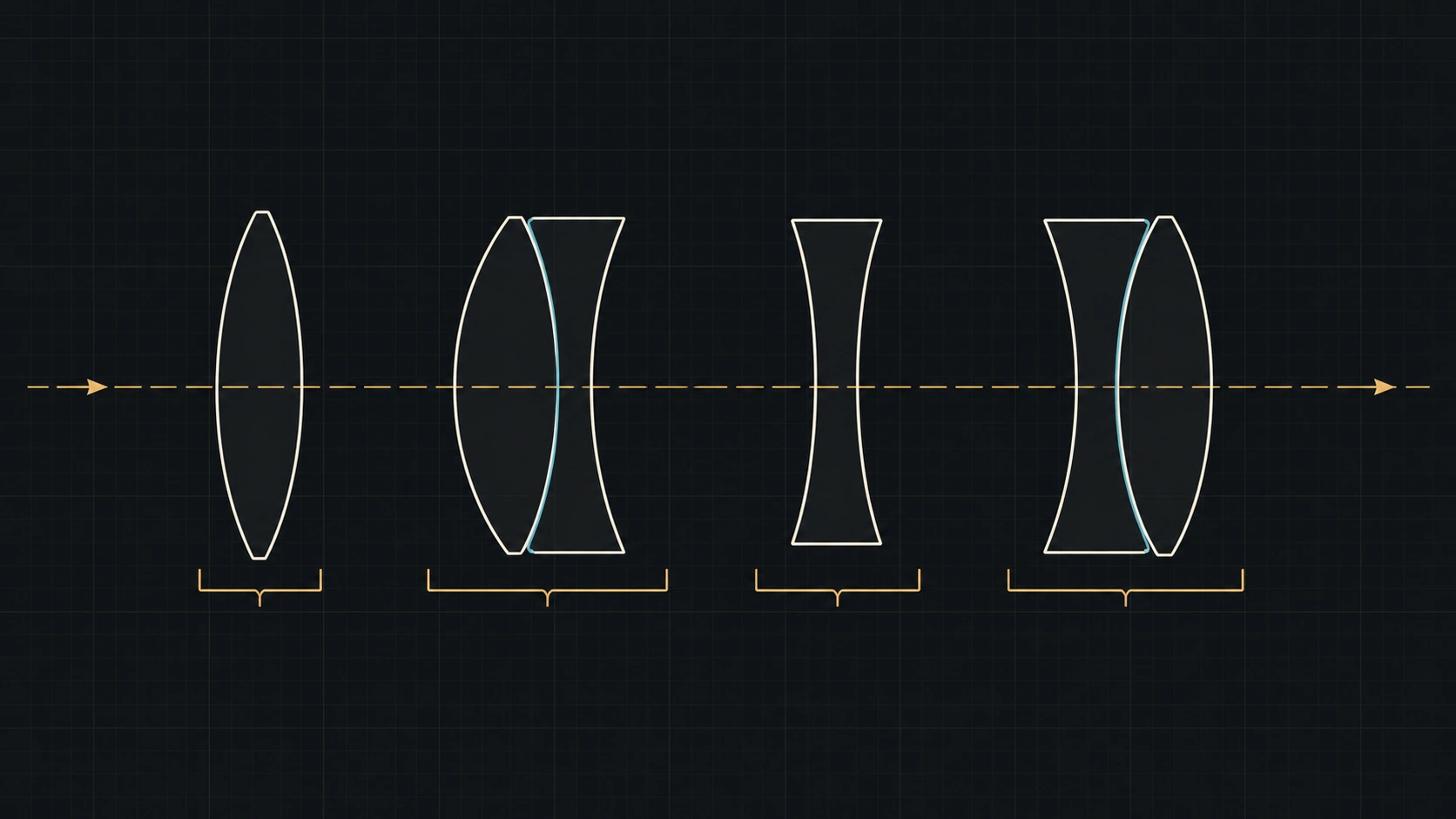
Front and rear elements contribute to the complete design. The dismantled lens photograph shows real parts, not a universal arrangement: each optical formula places its components differently.
Focal length is not barrel length
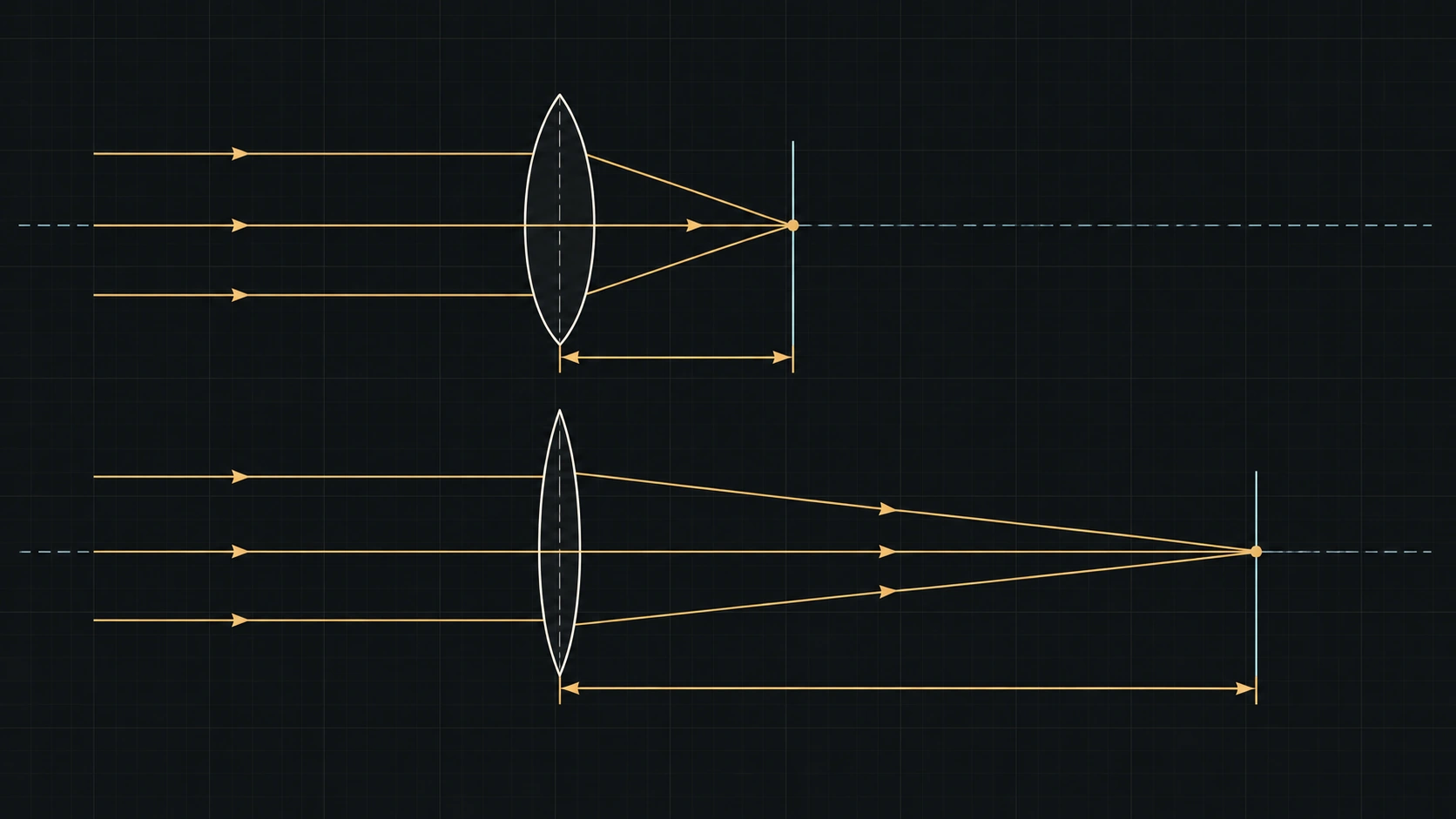
Focal length, in millimetres, is an optical property defined at infinity focus. On a given sensor format, a shorter focal length covers a wider angle and a longer one frames more tightly. Sensor size therefore matters to the field of view.
The upper diagram has a shorter distance to the focus. Real multi-element lenses use optical reference planes, so measuring the barrel is insufficient. Comparing framing also requires the same film or sensor format.
A zoom changes focal length by moving groups. A prime retains its nominal focal length. Equivalence compares framing between formats; it does not change physical focal length or previously collected light.
Aperture: light and depth of field
The diaphragm is the iris, often formed by blades. The f-number is focal length divided by entrance-pupil diameter: a smaller number means a wider relative aperture, not a larger outside lens diameter.
For the same lens and position, a larger iris admits more light if other conditions remain unchanged. Maintaining similar exposure requires compensation elsewhere. Stopping down is a choice about light and depth, not universal quality.
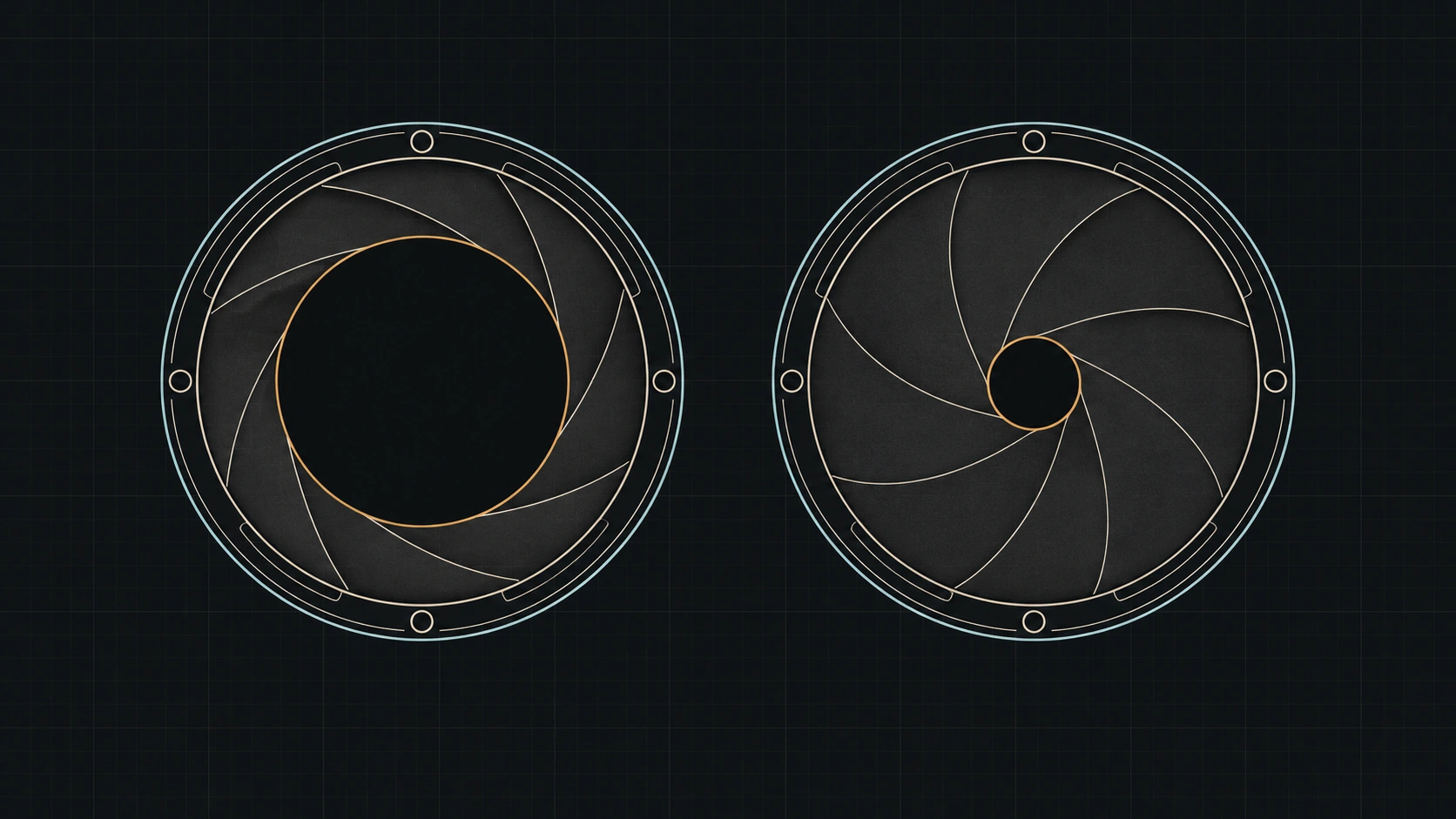
Under comparable conditions, stopping down increases depth of field but reduces incoming light. At very small apertures, diffraction can reduce fine detail, so greater depth of field does not guarantee maximum overall sharpness. Blade shape affects defocused highlights. Focus distance and viewing conditions also influence depth of field.
Focusing: moving the right group
Focusing adjusts the optical system so a subject at a chosen distance forms a sharp image on the sensitive plane. Some designs move the whole formula; others move an internal group.
The focusing group moves along the optical axis while the sensor plane stays fixed in this example. This differs from lateral stabilisation. Selecting the wrong autofocus subject and a mechanical focusing problem are separate issues.
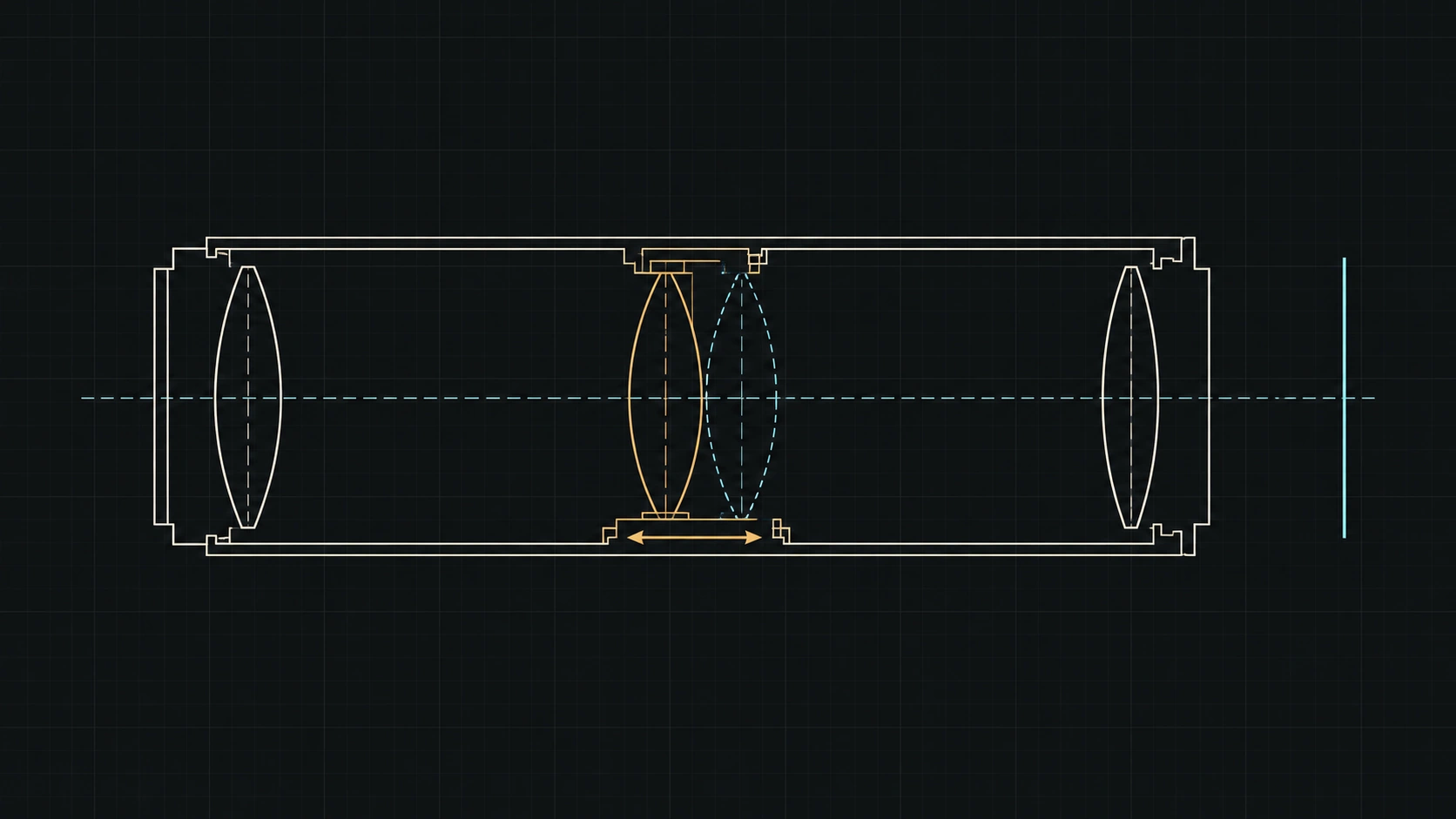
An autofocus motor performs the commanded motion. Minimum focus distance and magnification describe different things: close focusing alone does not define a macro lens. Choosing the subject remains a photographic decision.
Aberrations and compromises
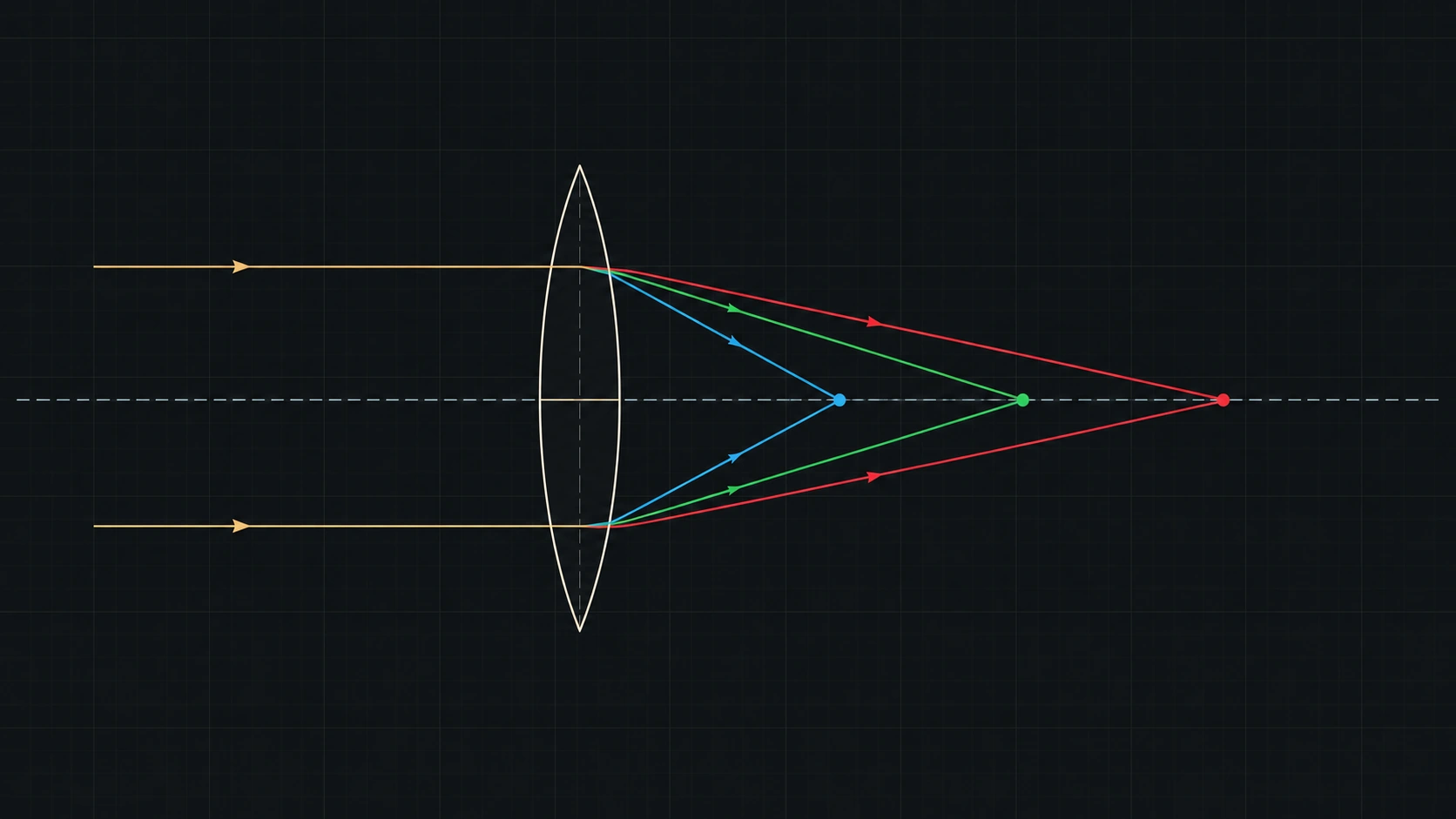
Dispersion means light bends differently according to wavelength. Colour fringes can result when colours do not converge as intended. Curves, materials and group combinations control chromatic aberration and other imaging errors.
This drawing isolates chromatic dispersion: blue and red rays reach different foci. Real designs balance several errors across the frame. Glass types, surfaces and spacing work together rather than relying on one miraculous material.
An aspherical surface varies differently from a sphere, offering extra correction possibilities without guaranteeing perfection. Distortion, edge detail and stray light need assessment at different distances and apertures.
Why coat the surfaces?
Some light reflects at each interface. Antireflection coatings reduce those reflections, helping limit flare and ghost images. They do not make every backlit scene look the same.
The treated interface shows a weaker reflected branch. This is a conceptual comparison: performance also depends on wavelength and incidence angle. Antireflection treatment helps control stray light without eliminating every reflection.
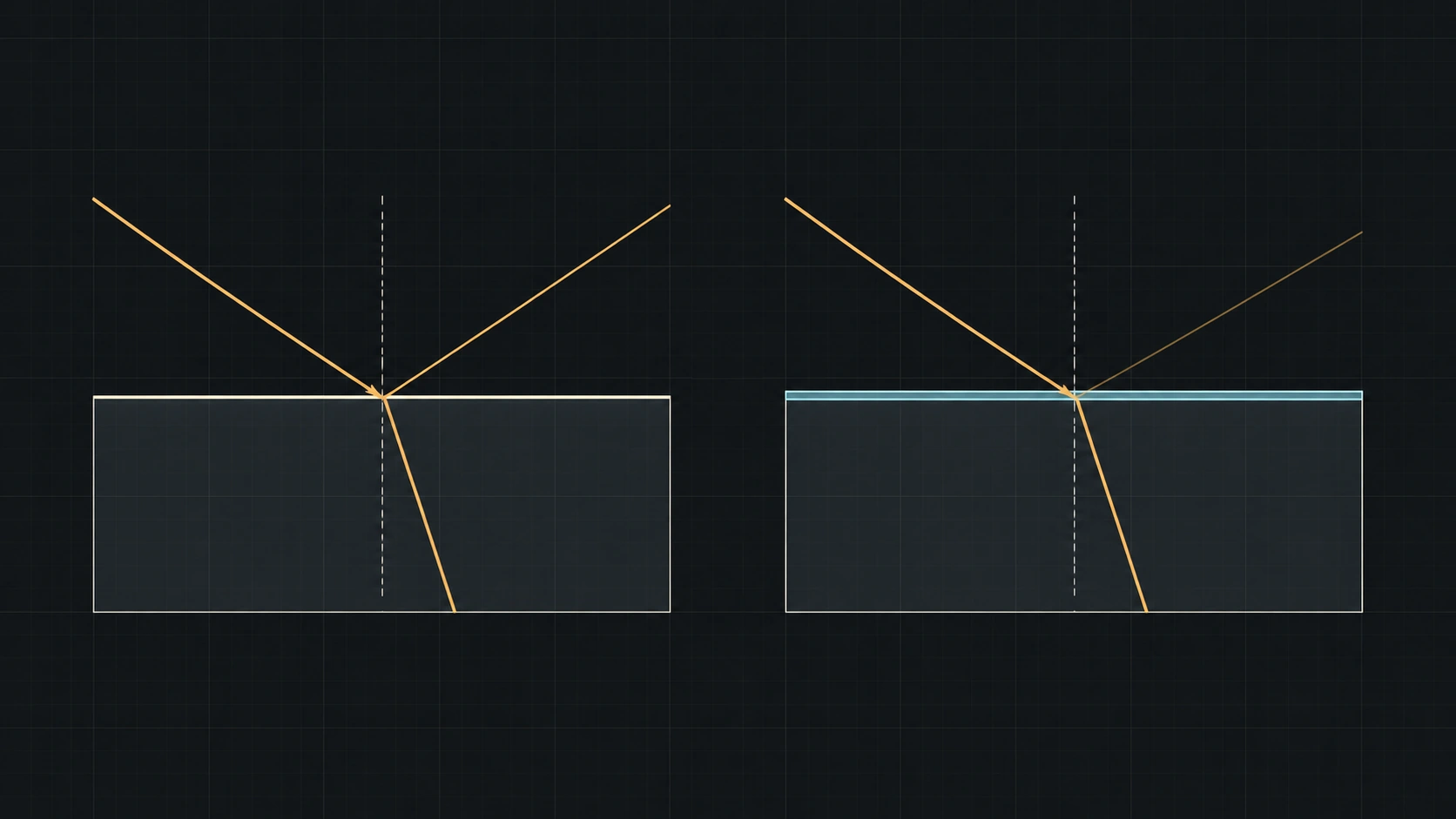
Stray light also depends on the scene, angle and lens construction. A reflection is not one predictable colour associated with a brand.
Shaping the glass
Surfaces must reach their intended shape. Manufacturing can involve machining, polishing or moulding, depending on the part. An aspherical surface does not follow a simple sphere.
The blank must acquire the intended surface, and that surface must then be positioned correctly. A well-polished but misplaced element is insufficient. Precision concerns both the individual part and the assembled instrument.
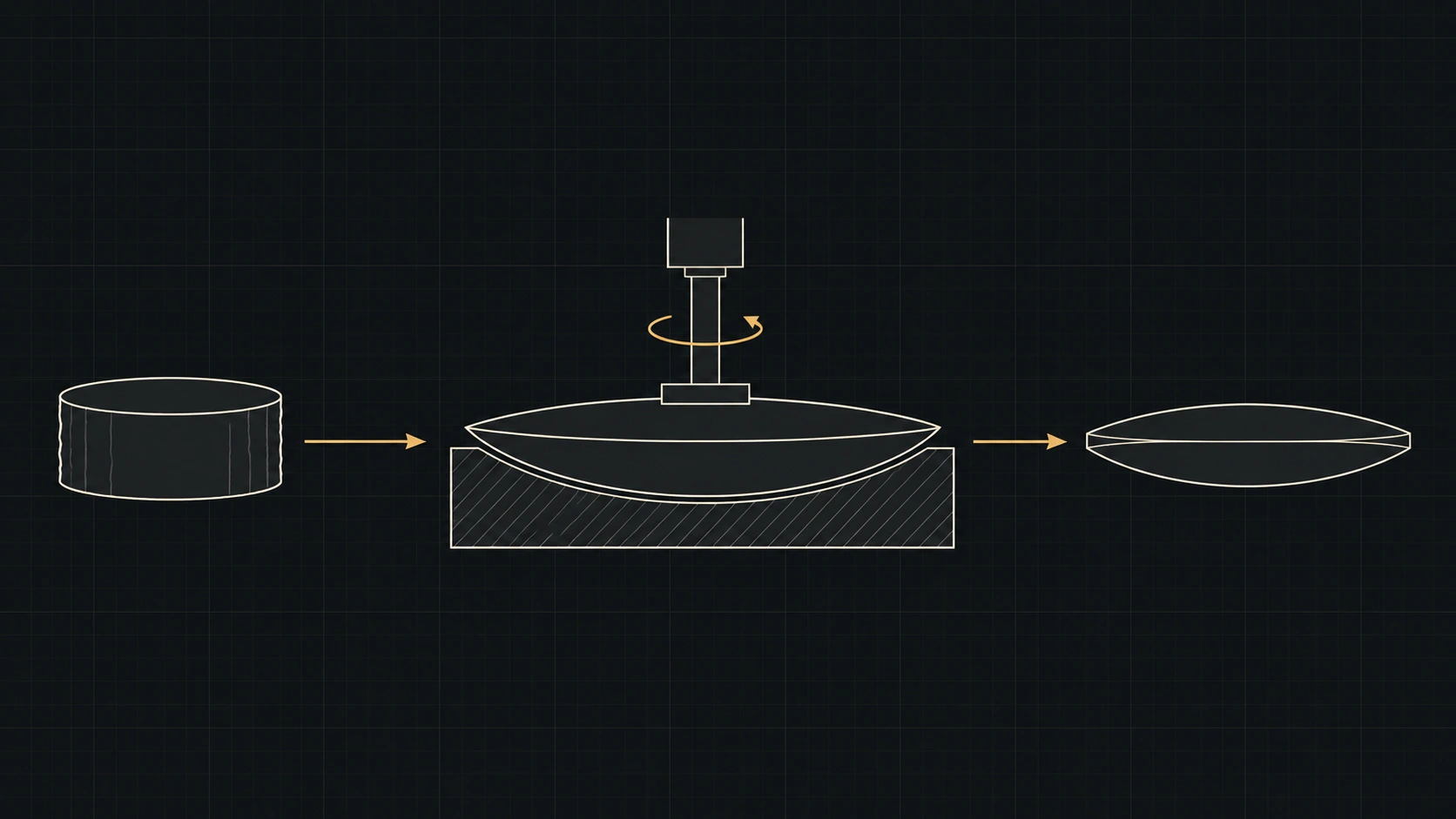
Shape is checked during production. Each optical element must also be positioned correctly relative to the others.
Barrel, mount and mechanics
The barrel holds parts in place and guides moving elements. The mount connects lens and body; depending on the system, contacts carry power, commands and information. Alignment preserves intended imaging geometry.
The simplified cutaway separates optics, mechanical guides and the camera connection. Some parts stay fixed while others must move repeatably. The barrel supports intended positions and movements rather than merely covering the glass.
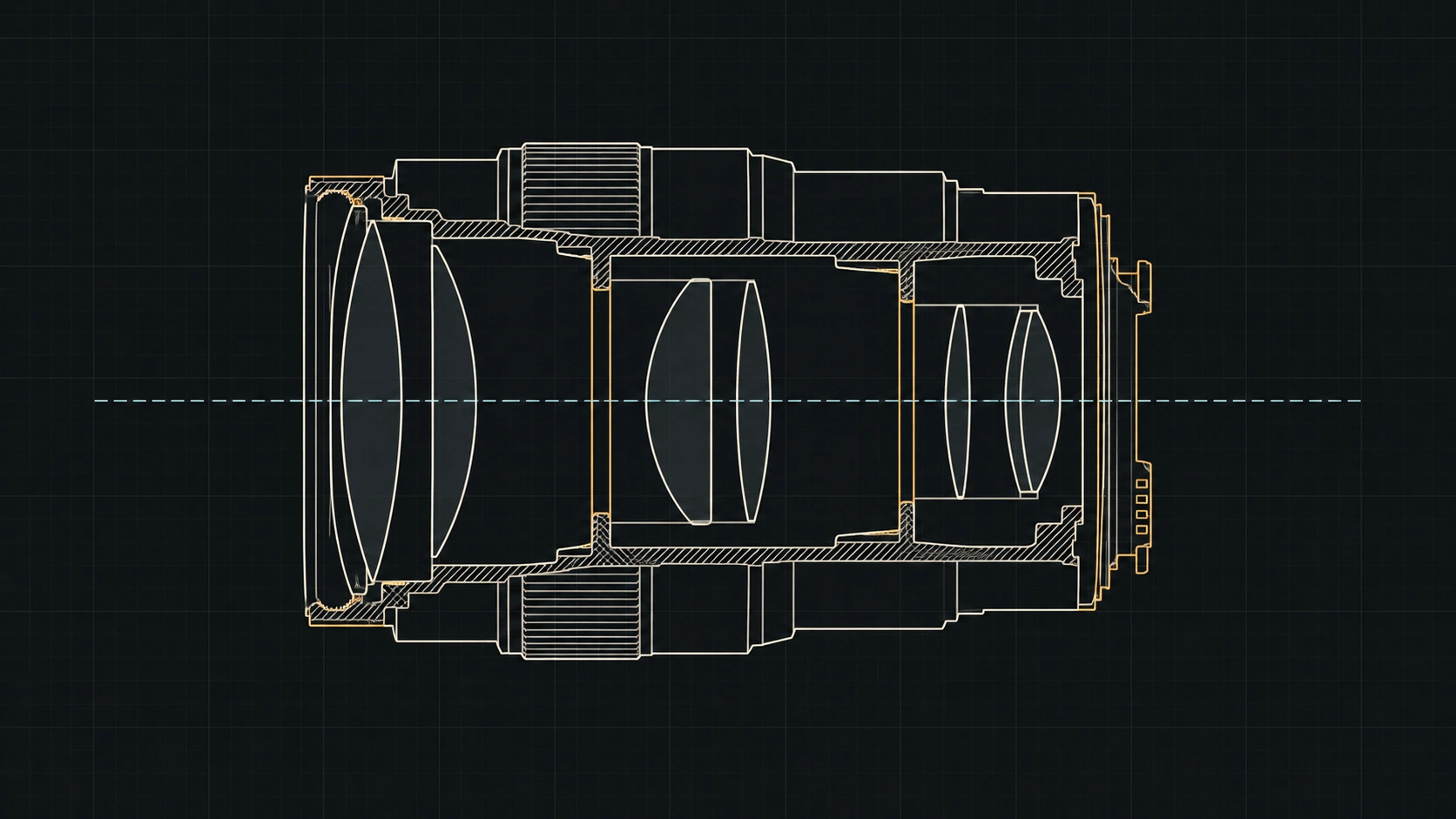
Decentring can degrade part of the image, so tolerances and inspection matter alongside glass. Sealing does not imply immersion resistance; limits depend on the design and documentation.
Stabilisation and the character of blur
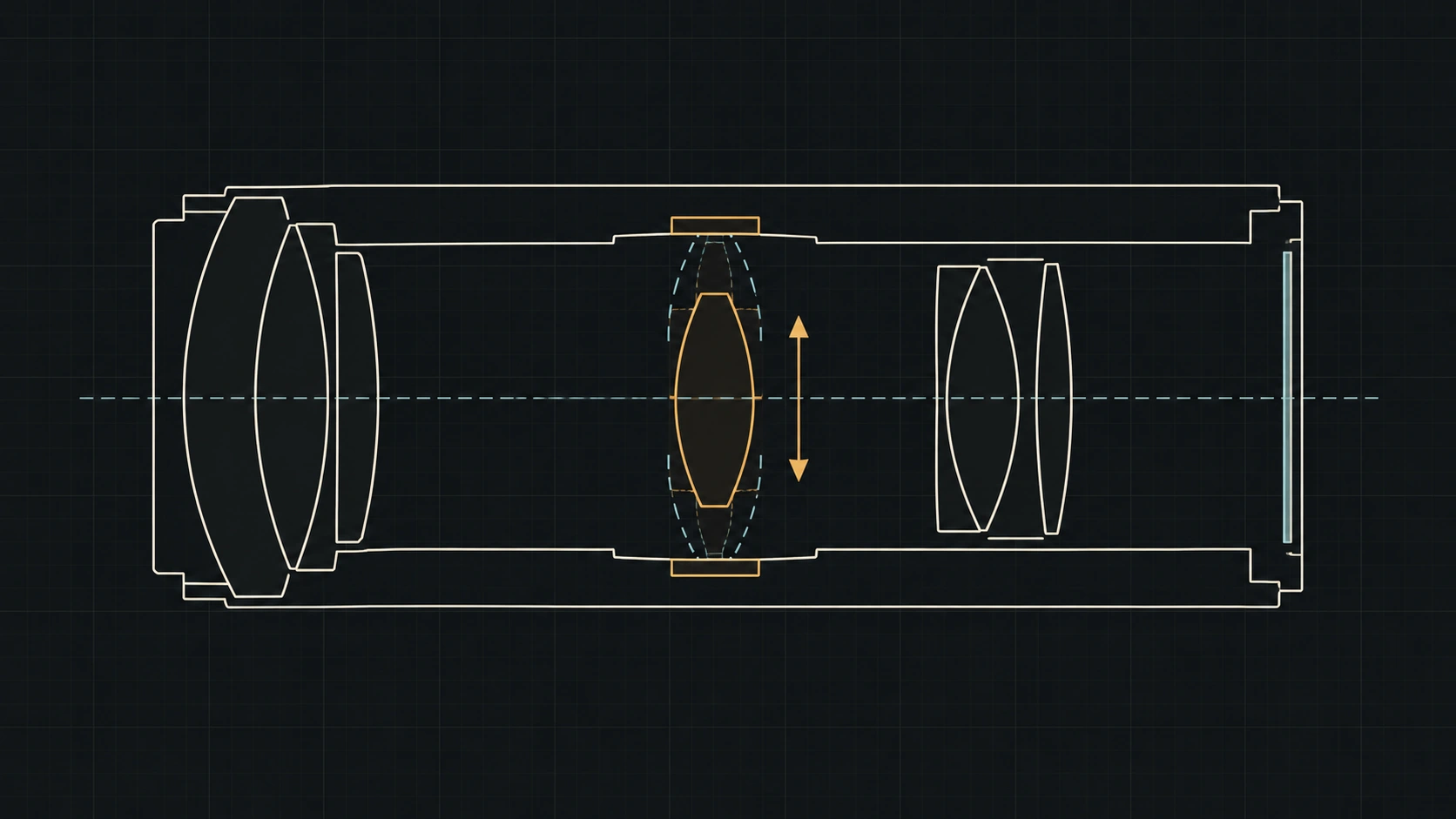
Optical stabilisation, when fitted, moves an assembly to compensate for some camera movement. It does not replace a shutter speed fast enough to freeze a moving subject. Sensor stabilisation acts elsewhere in the system.
The illustrated stabilisation group moves across the axis. Even a stabilised camera can record a moving person as a blur at a long exposure. Camera movement, subject movement and defocus are different causes.
Bokeh describes the appearance, not just the amount, of defocus. Background distance, aperture and design contribute. Digital diffusion does not change the optical formula or depth of field recorded during capture.
Assembling an instrument, choosing a look
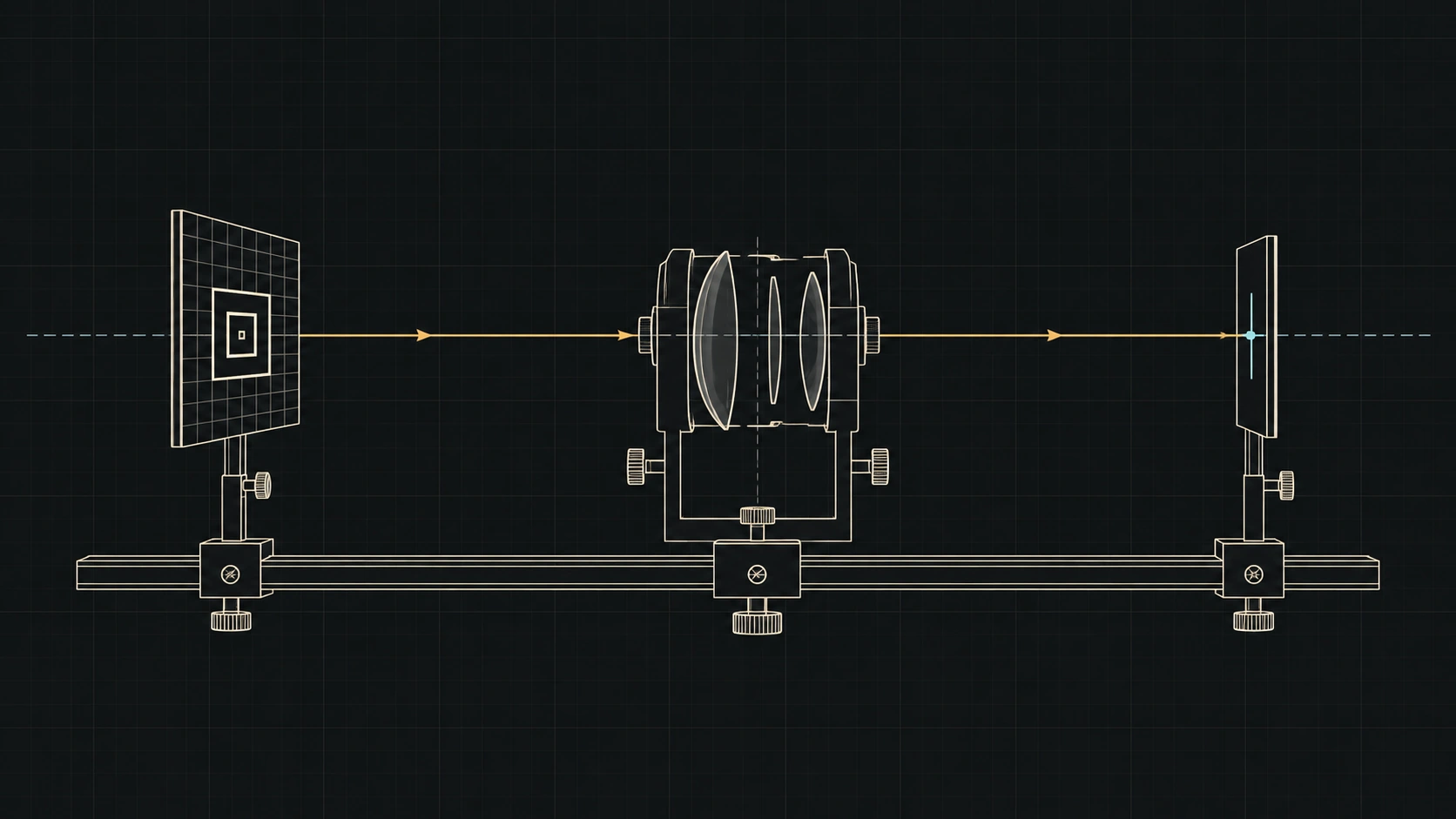
The elements fit into a focusing mechanism and, depending on the design, an aperture or zoom assembly. Alignment and testing matter alongside the glass.
The optical bench represents checks on the assembled system. Individual lens quality alone is insufficient: the parts must work together. For photographers, optical properties, handling, framing and intention all contribute to the final choice.
Digital effects can evoke diffusion or texture after capture. Lens FX is a creative tool, not a physical replacement for the lenses in your phone.
Sources and further reading
From reading to making images
Discover Lens FXKeep exploring
All stories

Film: light becomes matter.
How an emulsion records light, how development reveals the image and how photographic film is manufactured.
Read the story
Kodak: how photography entered everyday life
From dry plates to the Brownie and colour film: a history of materials, laboratories and everyday photography.
Read the storyShare this article
An idea worth passing on.