


Film
Film: light becomes matter.
Before it becomes colour or grain, film is a light-sensitive surface. A photograph begins with an invisible reaction.
Remember this
A film photograph comes from a chain: exposure, emulsion, processing, then printing or scanning. The film name alone does not determine the result.
An image you cannot yet see
A flexible base carries an emulsion of silver-halide crystals in gelatin. Light changes the crystals it reaches, creating a latent image that is not yet visible.
A bright sky and a dark coat send different amounts of light towards the emulsion. The film records that distribution before an image becomes visible. Exposure prepares the image; processing reveals it.
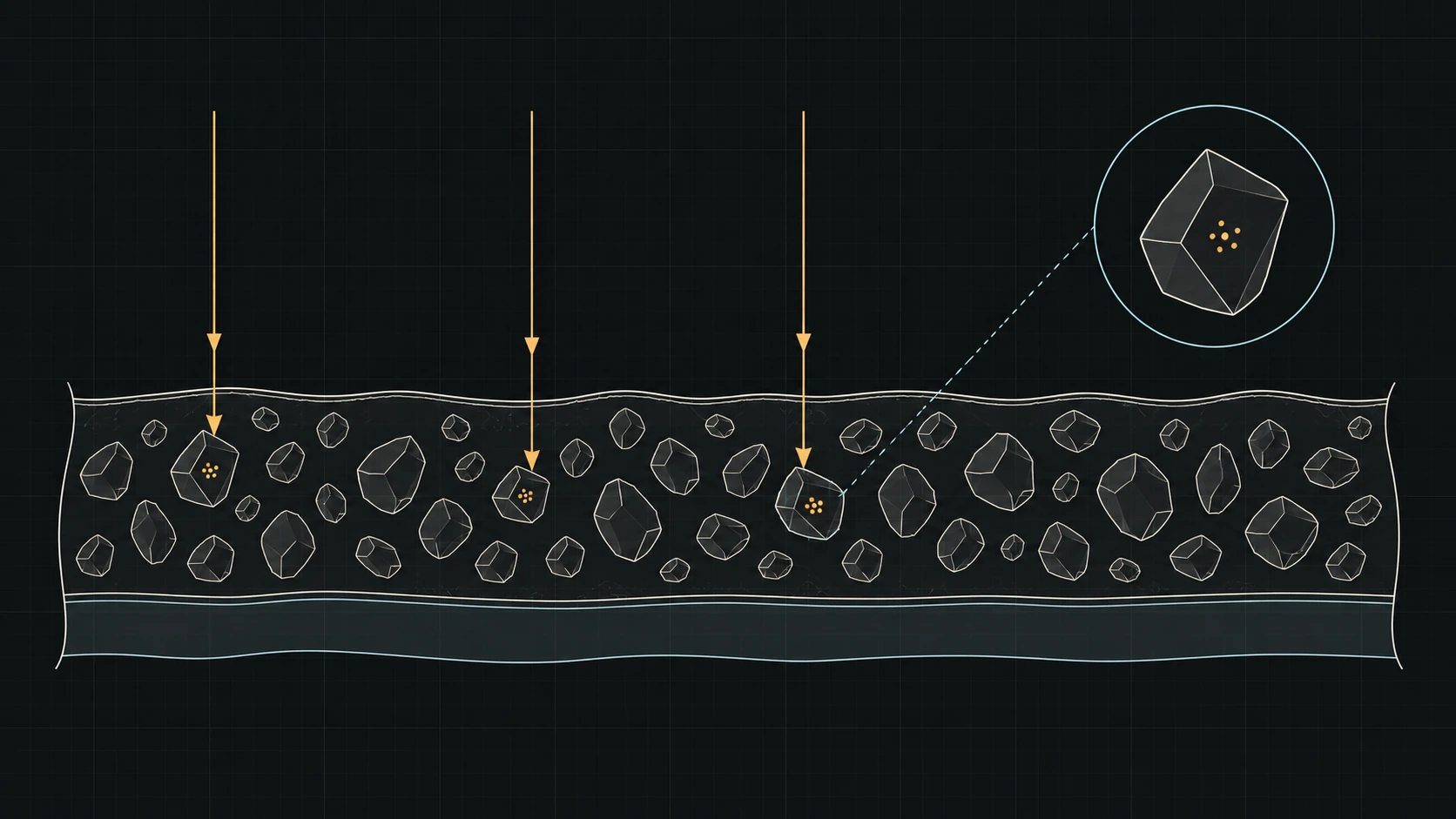
Releasing the shutter prepares a chemical change. It does not immediately produce a finished negative.
Base, emulsion and useful layers
The base supports the image while remaining flexible enough to travel through a camera. Gelatin carries the sensitive crystals and allows processing solutions to act. A protective coating helps limit surface damage.
The base holds the strip while the emulsion carries the photographic reaction. Other layers serve different purposes. Their exaggerated separation in the drawing explains their roles, not the actual thickness of a commercial film.
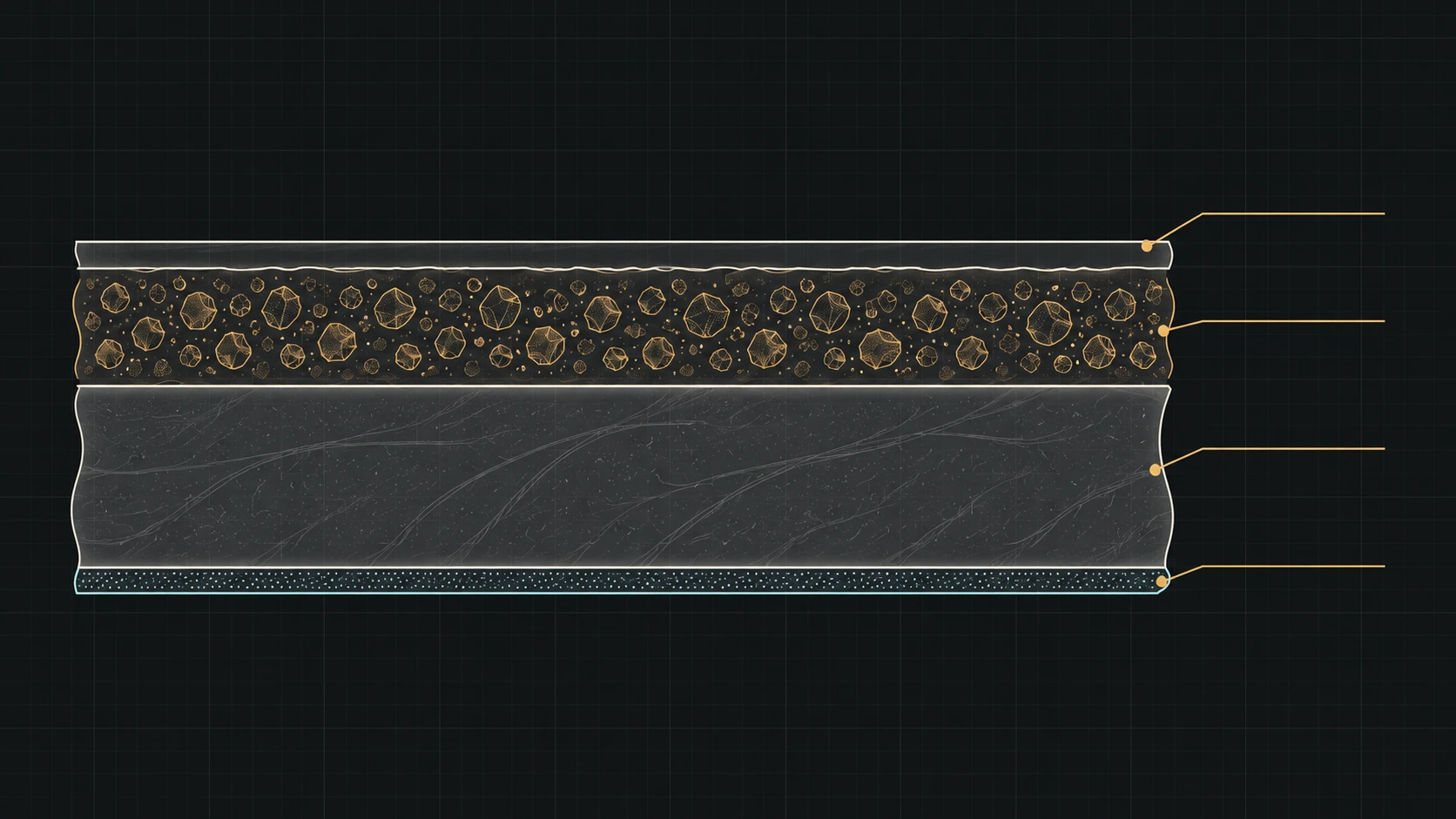
Other layers manage reflections or selected wavelengths. Negative colour film, slide film and black-and-white film use different structures; film is not just tinted plastic.
Reveal, then stabilise
In conventional silver black-and-white processing, developer preferentially converts sufficiently exposed grains into metallic silver. Fixer removes undeveloped halides; washing and drying complete the process.
A processing tank admits the liquid baths while keeping light away from the film. Development builds the silver image; fixing removes undeveloped sensitive compounds. Washing then removes processing residues. These are distinct operations.
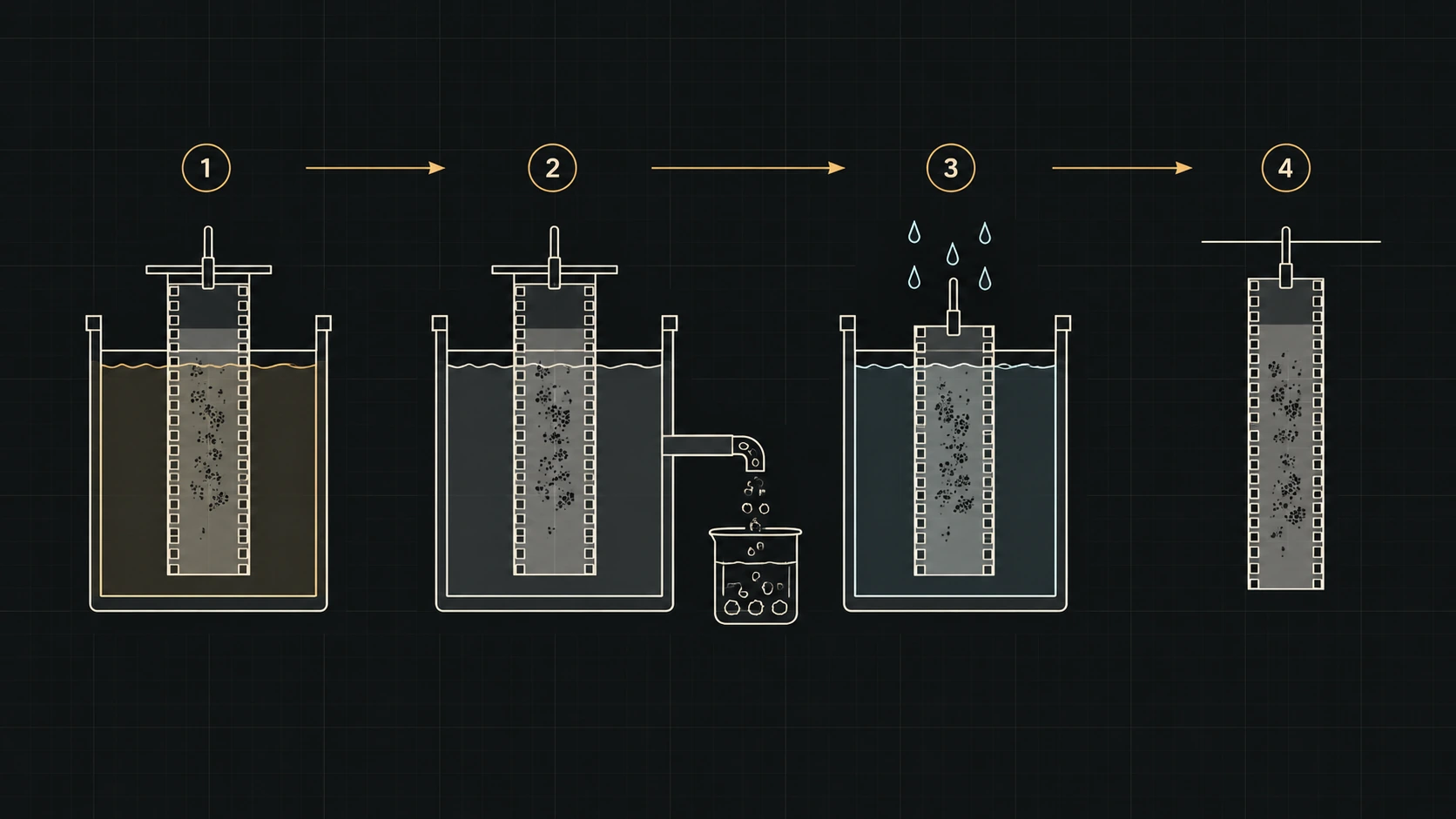
Common colour films use layers sensitive to different parts of the spectrum, with processing that forms dyes. They are not simply black-and-white negatives coloured afterwards.
Colour dyes after development
In common chromogenic colour films, development couples the silver reaction to the formation of dyes. Bleaching and fixing remove silver and halides, leaving the colour image. The precise sequence depends on the process.
The separated layers explain a principle, not a finished colour picture stored in each layer. Light sensitivity and dye formation are different stages; their combined response produces the processed image.
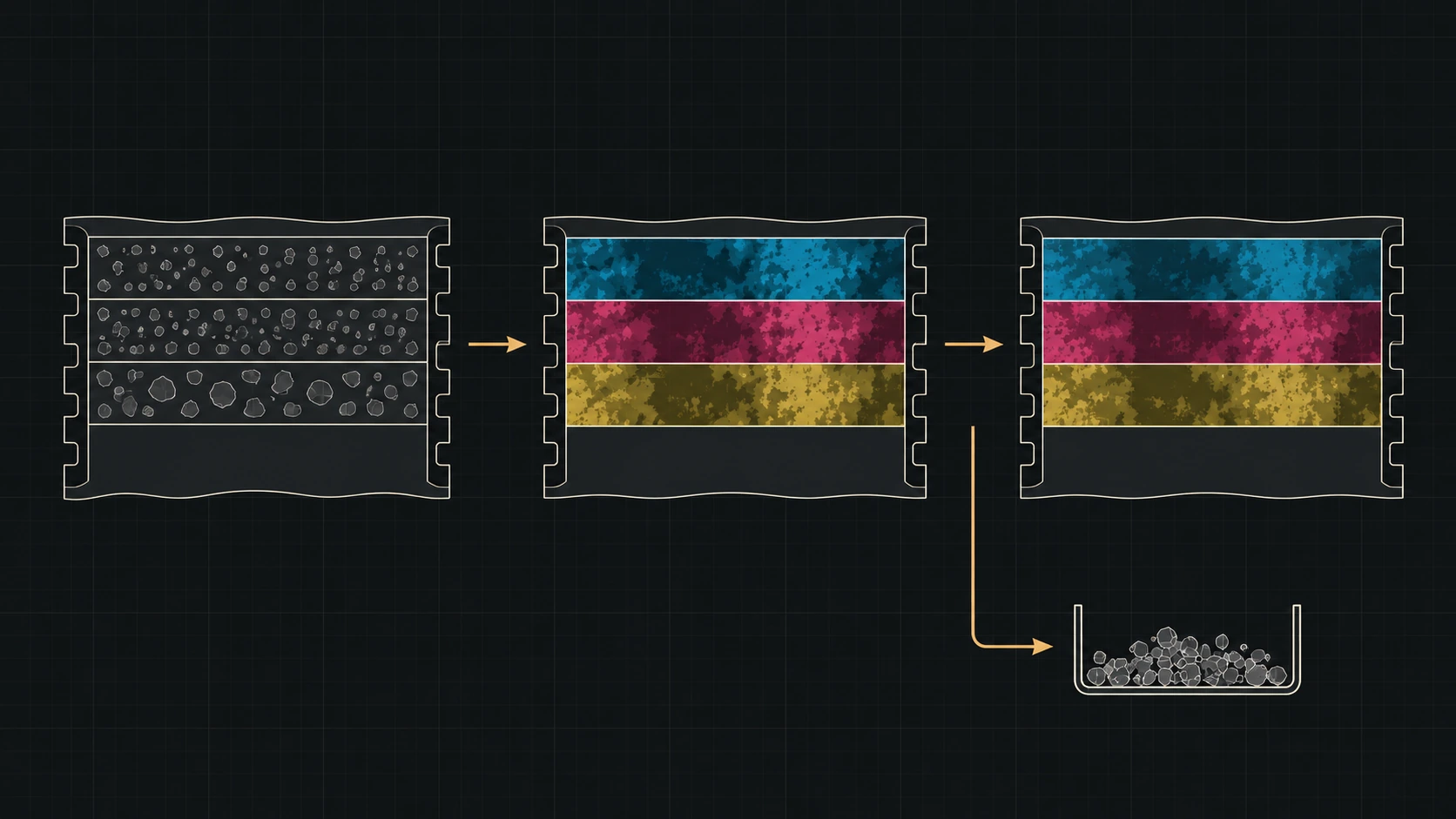
C-41 is used for usual colour negatives; E-6 produces transparencies. Their chemistry and temperatures are not interchangeable presets. Follow the manufacturer’s processing documentation.
How is film manufactured?
Emulsions are prepared and coated onto a base, dried, then slit and packaged. Uniform layers and protection from unwanted light matter as much as the cartridge format.
Coating must remain consistent across the strip. Drying, cutting and packaging must also protect the sensitive material from unwanted exposure. The familiar cartridge is the visible end of a much longer manufacturing chain.

Formulations and structures differ between products. A simplified cross-section explains the principle, not a manufacturer’s recipe.
Sensitivity, grain and pushing
A film’s ISO rating describes standardised sensitivity. Changing the camera dial changes chosen exposure, not the emulsion. Push processing pairs reduced exposure with adjusted development, affecting contrast and grain.
Rating a film faster does not make it collect more light. Reduced exposure may leave little shadow information. Push processing changes the recorded image but cannot replace light that never reached the emulsion.
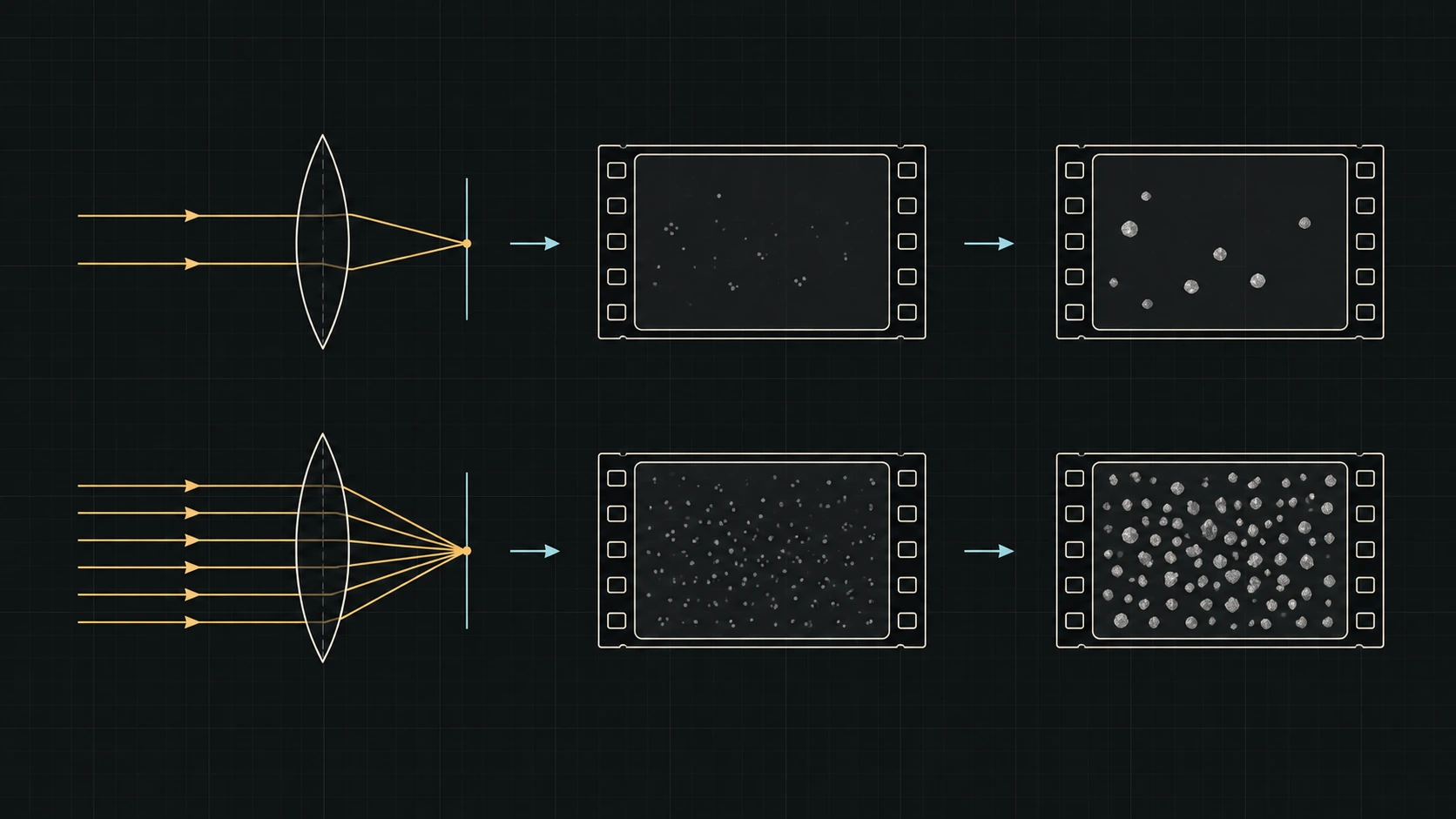
It cannot automatically recover missing shadow information. Developer, enlargement and scanning also influence visible grain. Meaningful film comparisons consider this whole chain.
Negative or transparency
In a negative, bright parts of the subject generally produce denser film areas. Printing or scanning inverts the image to obtain a positive. Common colour negatives also have a coloured mask.
A negative needs tonal inversion to produce a positive image. Colour negatives also require interpretation of their mask. Comparing two scans therefore means considering the scanner and the decisions made during conversion.
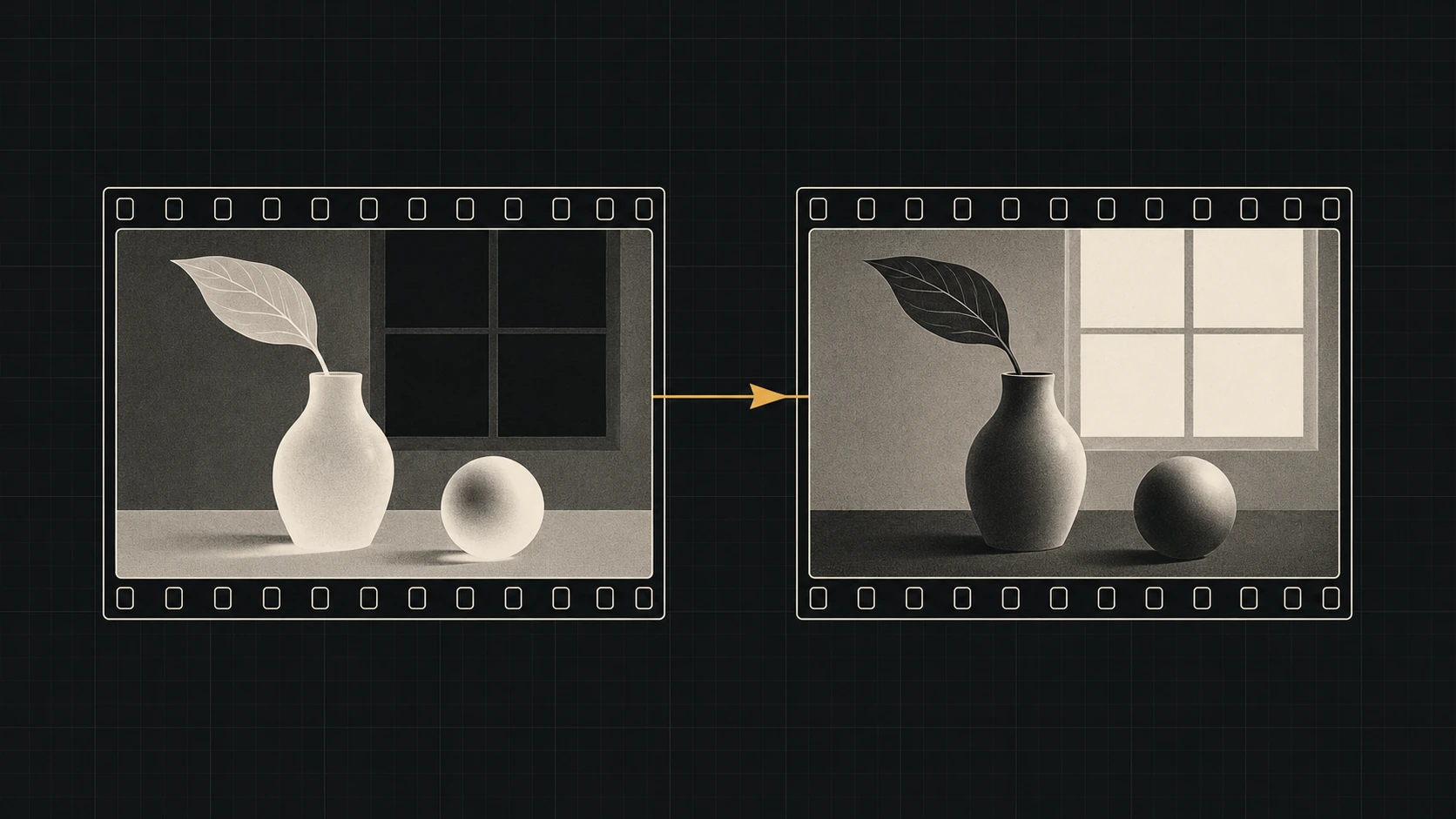
A processed slide is viewed directly as a positive by transmitted light. Scanning, viewing illumination and digital interpretation can still change its appearance.
Why the same film can look different
Scene lighting, exposure, processing and scanning all influence the image. Warm colour may also come from illumination or laboratory choices. Grain is not just uniform noise.
To isolate a film’s character, keep the scene, light and processing chain comparable. A colour cast may come from any of these stages. A film name describes possibilities rather than one guaranteed colour.
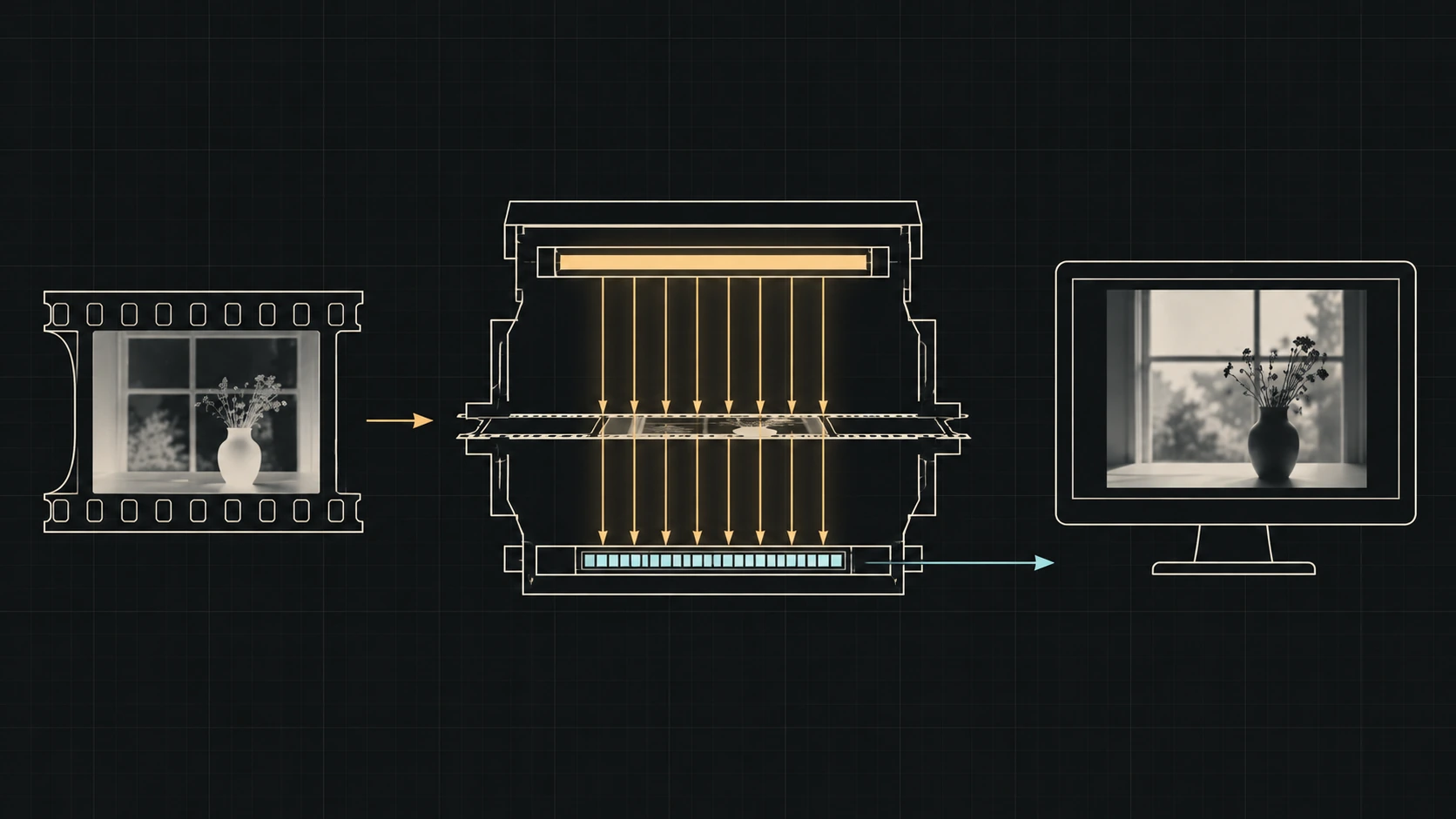
Kolorshift offers digital visual interpretations. A LUT transforms colour values; it does not recreate silver crystals or chemical development.
Sources and further reading
From reading to making images
Explore filmsKeep exploring
All stories
A lens is more than glass.
From optical glass and polishing to coatings and assembly: the steps and compromises that shape a photographic lens.
Read the story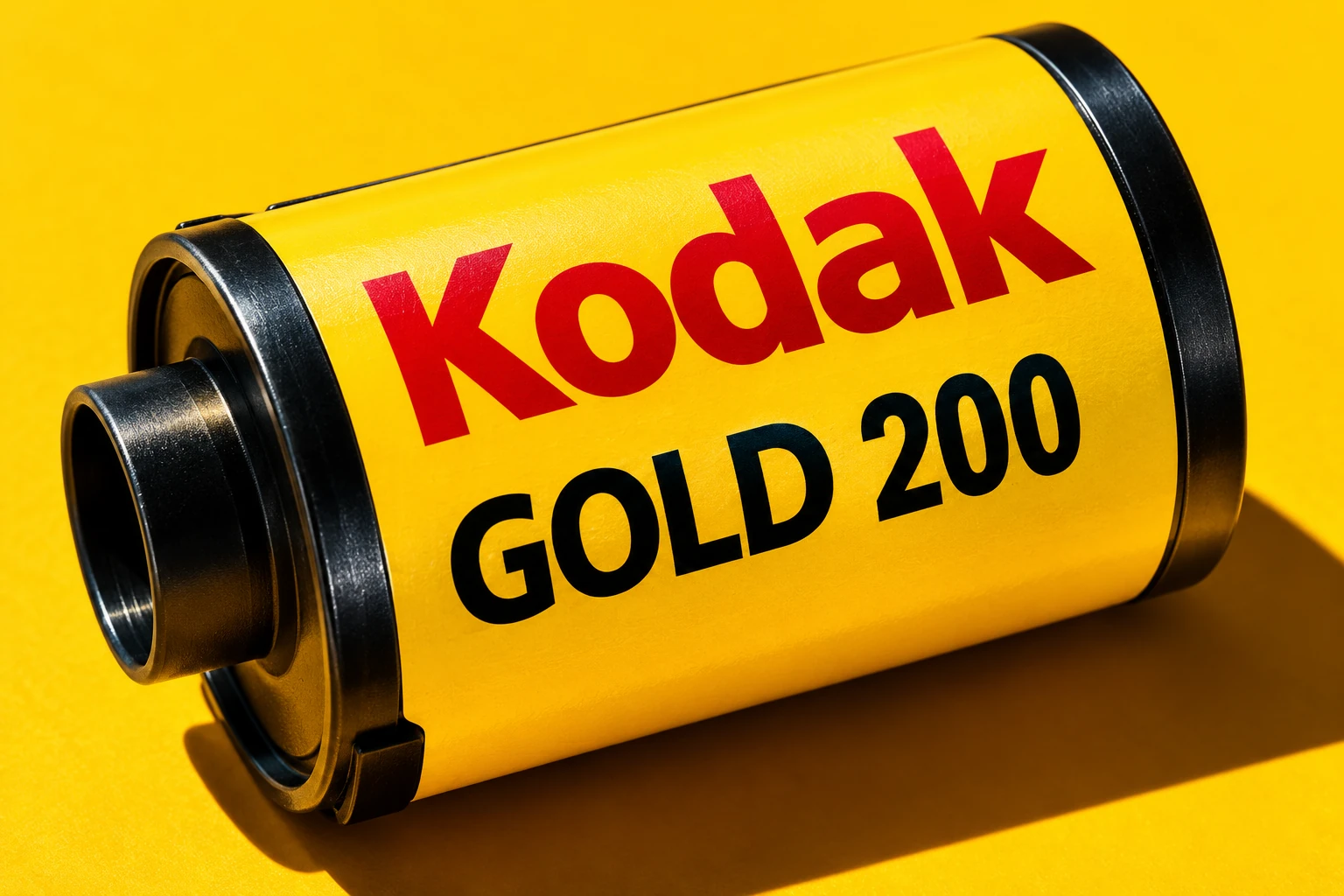
Kodak: how photography entered everyday life
From dry plates to the Brownie and colour film: a history of materials, laboratories and everyday photography.
Read the storyShare this article
An idea worth passing on.