

Understanding
Colour negative and slide film: two paths to colour
An orange negative and a luminous slide can depict the same landscape without being two versions of the same object. Their difference comes from how light, silver and dyes build the image. Before choosing a film for its name or reputed colours, it helps to understand what the laboratory will return: an intermediate intended for printing, or a positive image that can be viewed directly by transmitted light.
Remember this
C-41 develops colour negatives; E-6 produces slides; RA-4 processes colour paper. Appearance depends on the film, exposure, lighting and processing, not just the name on the box.
Colour forms in several layers
Colour film is not a miniature screen made of red, green and blue dots. It superimposes light-sensitive layers recording different parts of the spectrum. In a simplified account, blue-, green- and red-sensitive layers later contribute yellow, magenta and cyan dye images respectively.
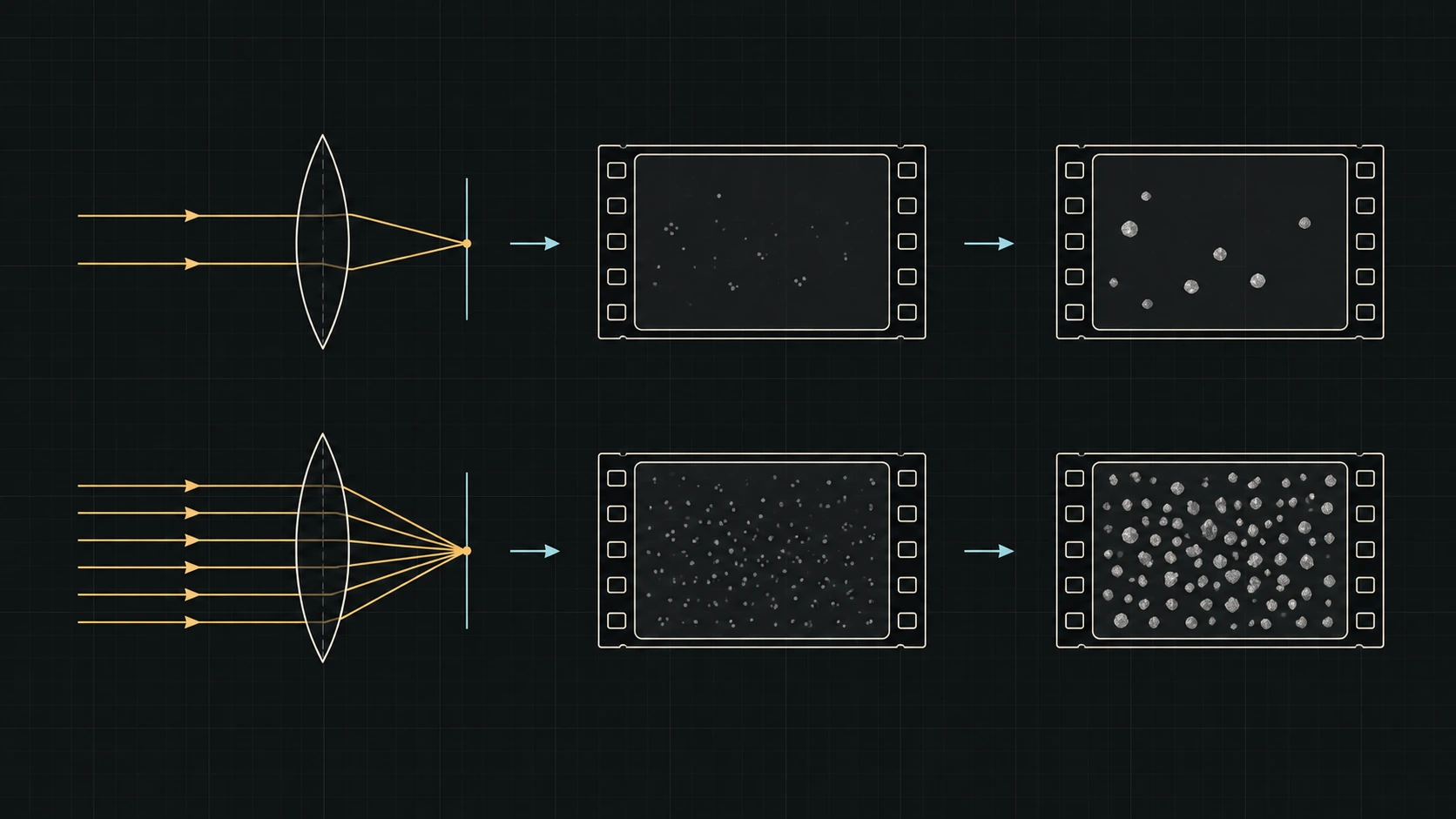
Silver-halide crystals first record a latent image that is invisible to the eye. During chromogenic development, reactions associated with silver development allow couplers to form dyes. After the prescribed silver-removal stages, these coloured images chiefly constitute the final image on the film.
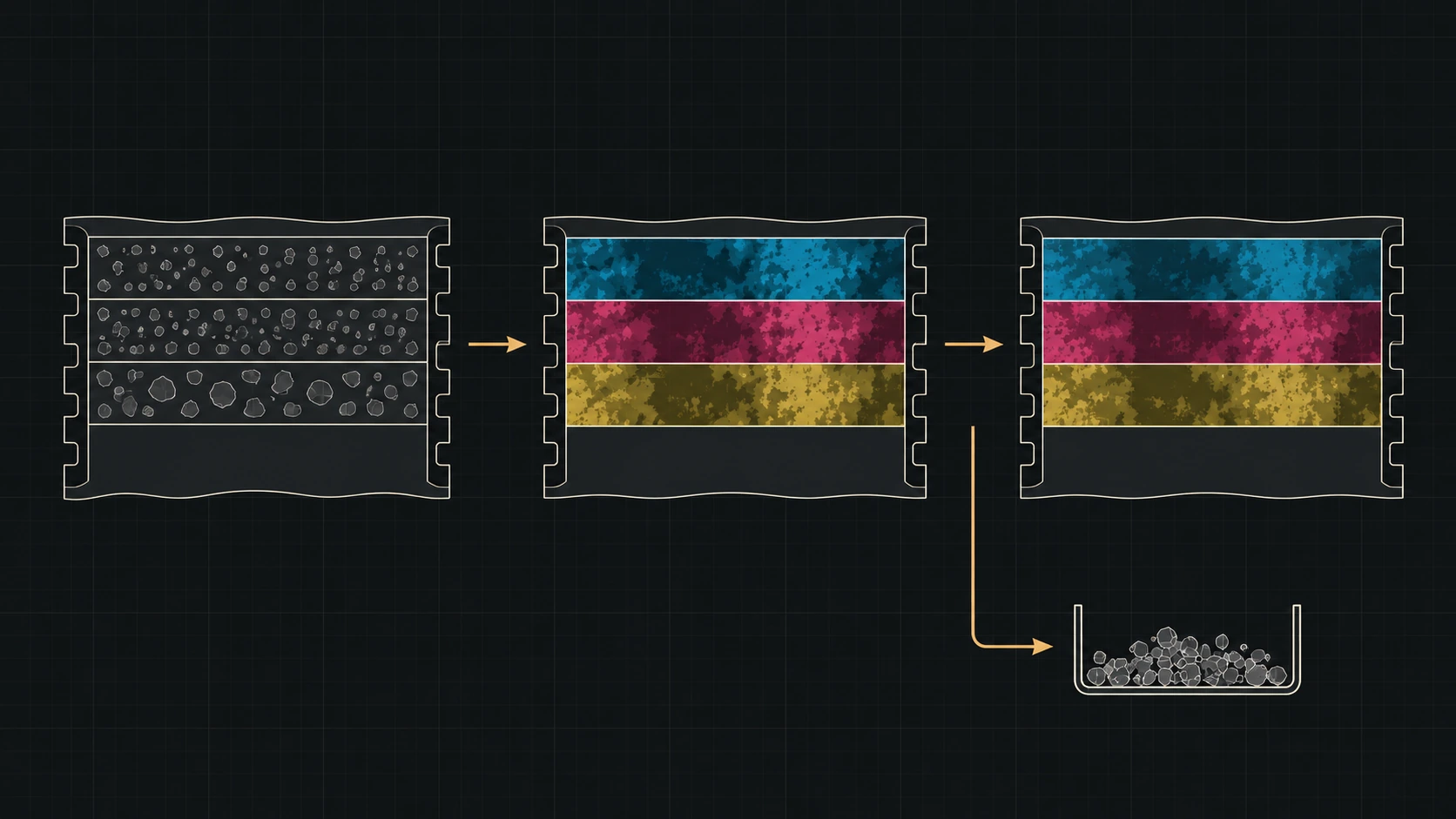
Do not imagine three completely independent sheets. Real products use additional layers and interactions engineered by their manufacturer. The diagram explains subtractive colour: dyes absorb particular components of the light passing through them. It does not reproduce an industrial formulation or measured layer thickness.
C-41: a negative intended for a second image
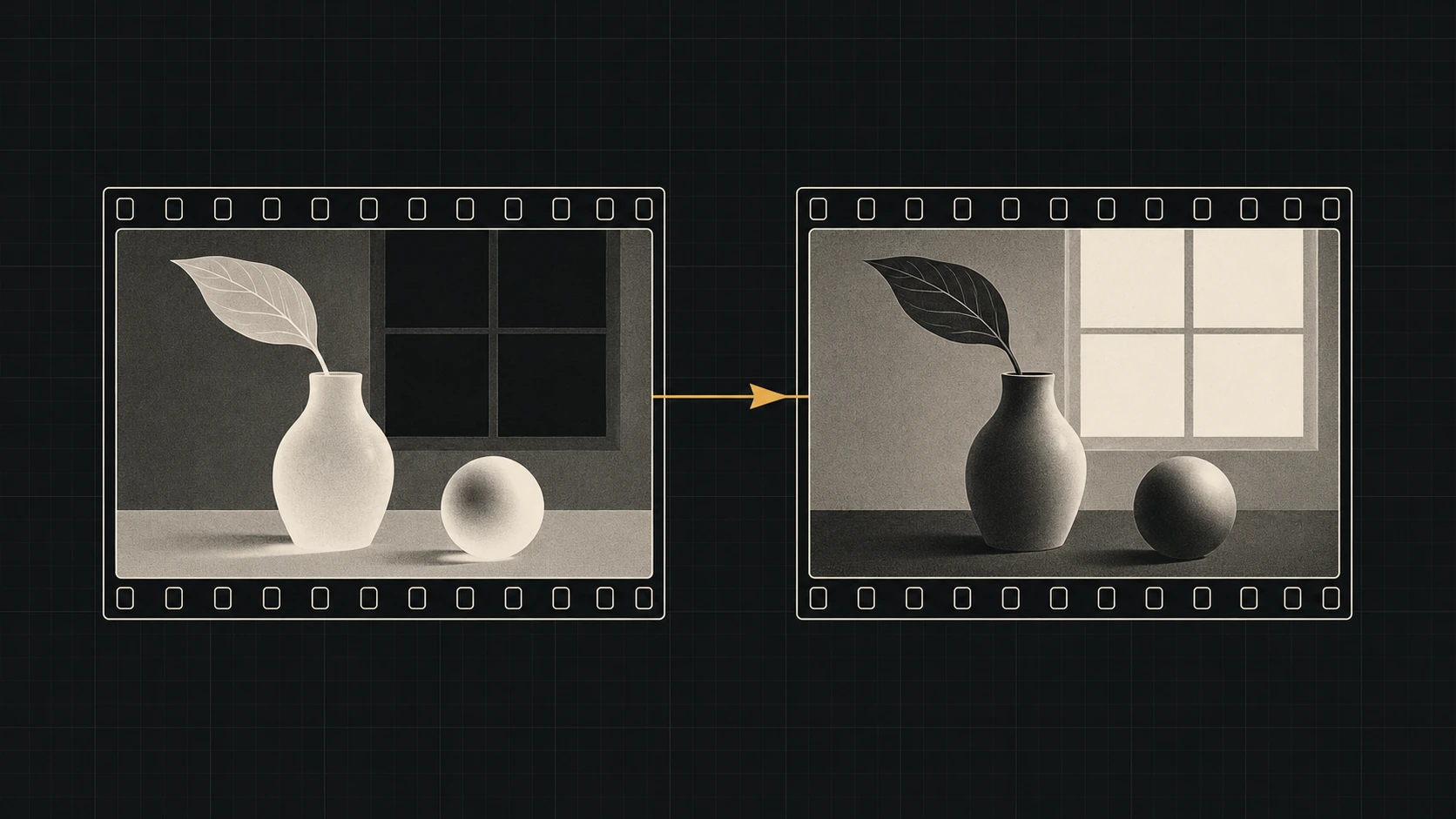
A colour-negative film compatible with C-41 normally develops into an image whose values and colours complement those of the subject. A bright part of the scene generally produces greater density in the negative. The material is therefore not intended to be judged as a positive photograph lit from behind.
The orange mask visible on many colour negatives helps correct unwanted dye absorptions. It is neither a light leak nor a patina added to make the picture look old. It reminds us that the negative belongs to a reproduction chain: the mask must be taken into account to obtain a balanced positive.
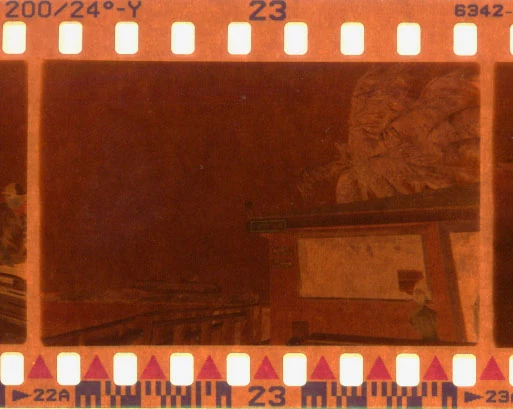

The laboratory uses chemistry and a cycle compatible with the material. Colour development, bleaching and fixing perform different functions; some configurations organise them differently. An all-purpose timing found online cannot replace that documentation. C-41 describes process compatibility, not permission to mix any available baths.
E-6: the positive already exists on the film
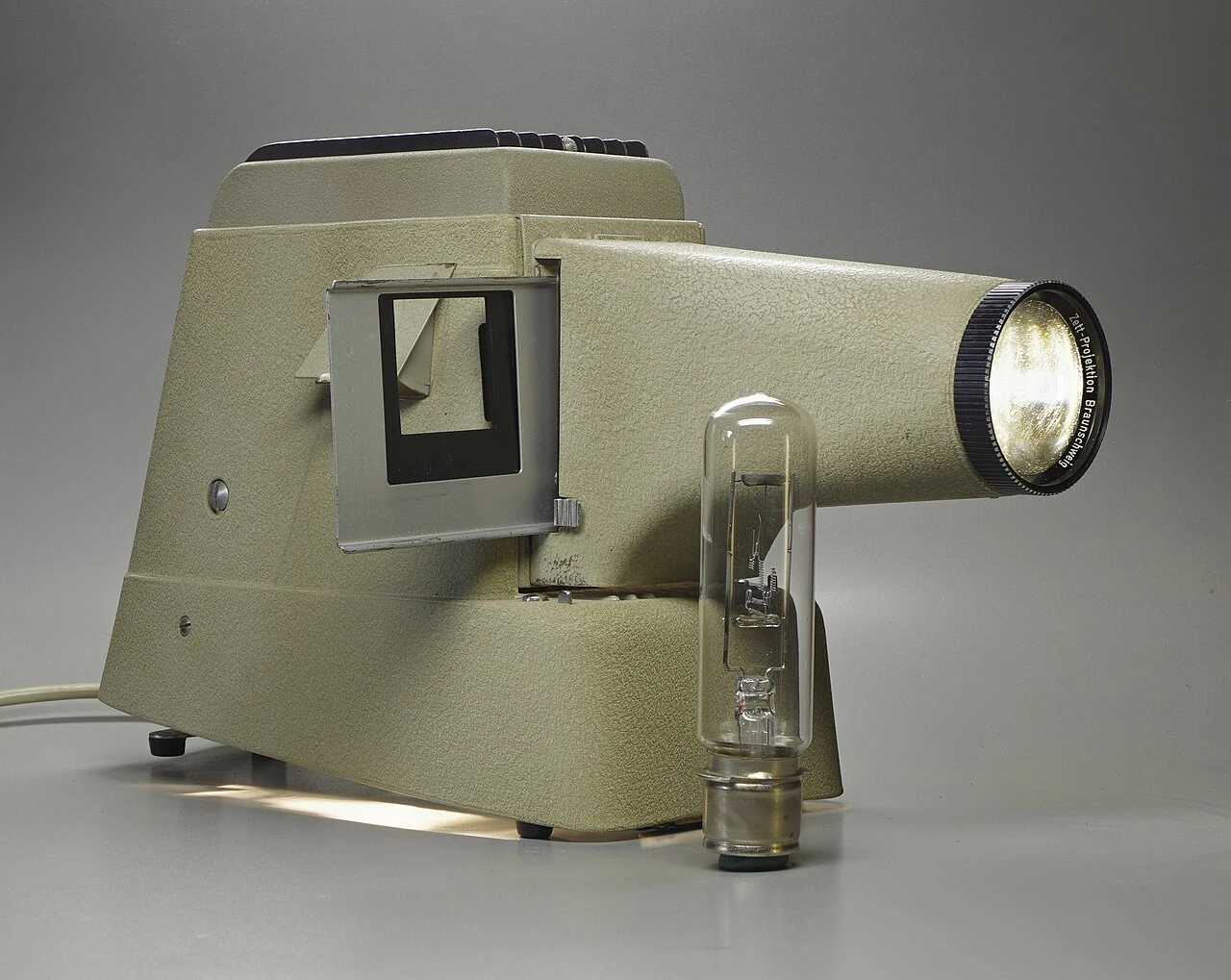
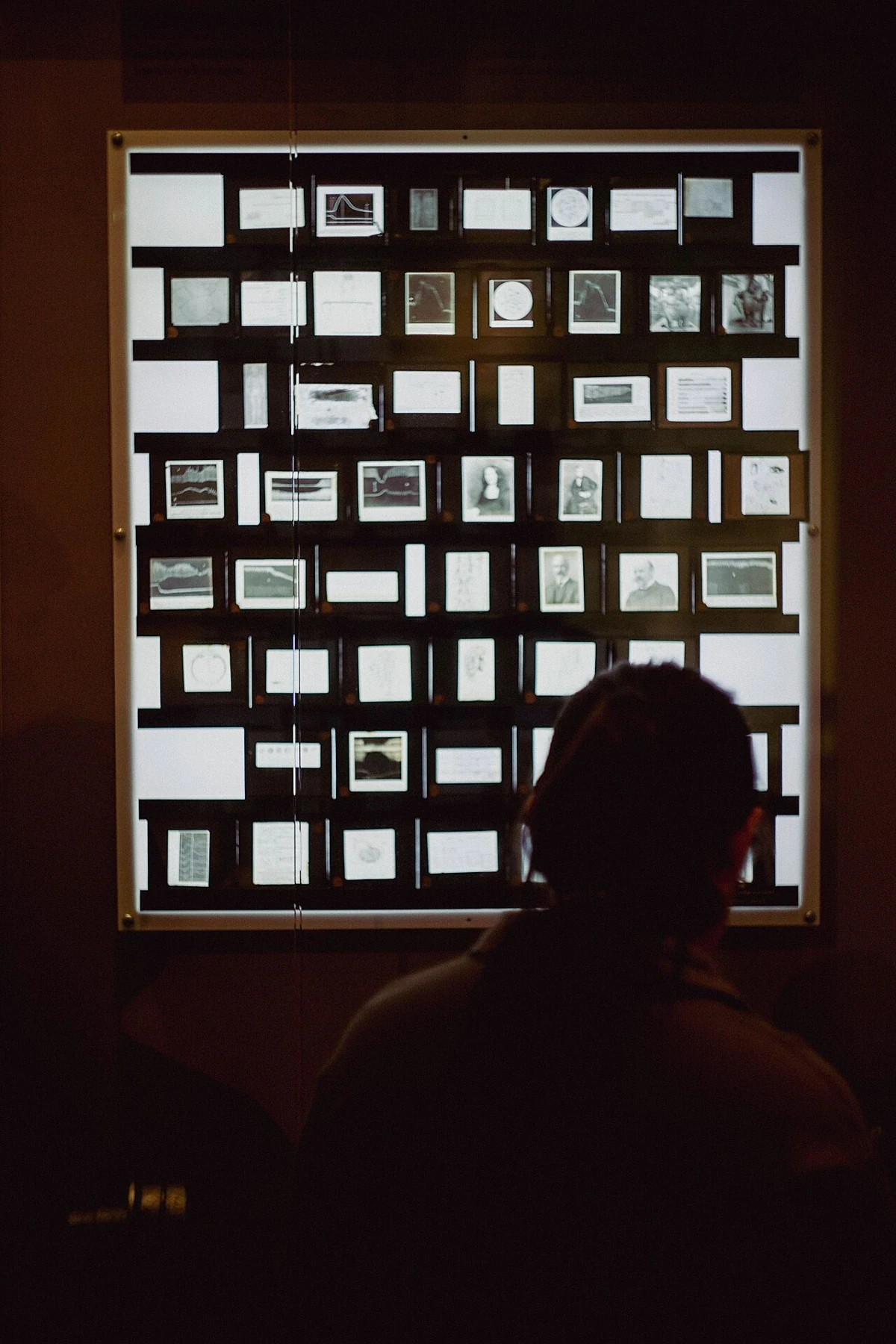
A reversal film compatible with E-6 produces a transparent positive image. On a light box, its light and dark arrangement directly resembles the scene. Mounting it in a small frame produces the familiar slide, but an unmounted strip remains reversal film: the mount does not create the positive.
Reversal is a different processing principle, not merely an inversion of an orange negative. E-6 includes an initial silver-image formation followed by operations that produce the coloured positive. Baths and their handling follow the documented process. A box specifying a different historical process does not become compatible simply because it contains slide film.

Fujifilm describes PROVIA 100F, for example, as daylight-balanced reversal film processed in E-6 or the stated equivalents. Its data sheet provides a practical starting point for exposure and light sources. That does not mean all slide films share identical colours, contrast or adjustment possibilities.
Exposure and lighting remain decisive
The choice between negative and reversal begins in front of the scene. A meter does not automatically recognise the important subject: snow, a backlit face or a dark façade may require interpretation. Identifying highlights and shadows helps decide which information must remain readable instead of assuming the laboratory can recover everything.
A slide is viewed directly by transmitted light, so exposure errors are immediately apparent. A negative is intended for another positive-making stage, allowing interpretation without recreating detail that was never recorded. Assigning a fixed number of stops of latitude to an entire family would be misleading: the particular film and situation matter.
The spectral balance of light matters as much as its quantity. Daylight film does not respond to a warm lamp as though it were sunlight. Filters, data-sheet instructions and shooting conditions help anticipate the difference. Changing development is not a universal correction for poor exposure or misunderstood lighting.
RA-4: colour printing is a separate stage
To make an optical print from a colour negative, an enlarger projects its image onto RA-4-compatible colour paper. The negative modulates the light reaching the paper. After processing, the paper carries a positive viewed by reflected light, unlike transparent film viewed or projected with illumination behind it.
Enlarger filtration and exposure adjust the print's balance. A cast in a proof is therefore not always an unalterable property of the film. Paper, settings and process condition contribute to the result. Comparing films requires an understanding of this second stage, not simply knowing the emulsion loaded into the camera.
RA-4 is neither C-41 nor E-6. Here, the first concerns colour paper, the second negatives and the third compatible reversal film. A slide cannot automatically be printed like a negative on negative-positive paper. Other reproduction chains need precise identification; these names are not interchangeable aesthetic filters.
Choose a chain, then learn to recognise it
Start a project by considering its destination: colour prints from negatives, or transparencies to view and project. Reading the film type, speed and process on the box prevents confusion. An old technical sheet can explain a material, but does not establish current availability or the condition of expired stock.
Recording the lighting, chosen meter reading and instructions given to the laboratory provides a basis for comparison. Within one series, change one decision at a time. Otherwise a colour difference may result from exposure, lighting or printing without revealing which cause actually changed the image.
Finally, keeping originals clean and protected lets you return to the photographic object. A negative and a slide tell colour differently, which is precisely their interest. Understanding that distinction supports a coherent visual intention without turning a processing characteristic into a magical promise of beautiful pictures. After scanning, colour profiles and web export explain how these values are interpreted on a display.
Sources and further reading
- Kodak — Exploring the Color Image
- Kodak Alaris — FLEXICOLOR Chemicals, C-41
- Fujifilm — PROVIA 100F technical data
- Kodak Alaris — PORTRA 400 technical data E-4050
- Kodak — EKTACOLOR Chemicals, Process RA-4, Z-130
- Kodak — Essential Reference Guide for Filmmakers, film structure
- Fujifilm — C-41 Processing Chemicals
From reading to making images
Explore filmsKeep exploring
All stories
Why the same colour changes under different light
Light spectra, metamerism and white balance: understand why skin, clothing or a print can change colour with the lighting.
Read the story
Why your photograph changes colour from one screen to another
sRGB, Display P3, ICC profiles and export: understand what changes a photograph’s colours between editor, browser and screen.
Read the storyShare this article
An idea worth passing on.