Understanding
Cyanotype: why light leaves a blue impression
A pale fern seems to float in deep blue. This image can emerge without a lens, film or metallic silver. Cyanotype is an iron-based photographic process: light helps form Prussian blue in the paper. Its apparent simplicity brings material, contact and exposure together.
Remember this
A photogram records an object by contact; a transparent negative can also print a photograph. These diagrams explain principles, not chemical recipes or universal exposure times. A digitally blue-toned image is not thereby a cyanotype.
An iron photograph, not blue film
Cyanotype names a process, rather than just a colour. In its traditional form, paper receives a light-sensitive preparation based on iron compounds. Light initiates transformations that produce Prussian blue. The finished image therefore belongs to a different family from prints whose dark values are carried by metallic silver.
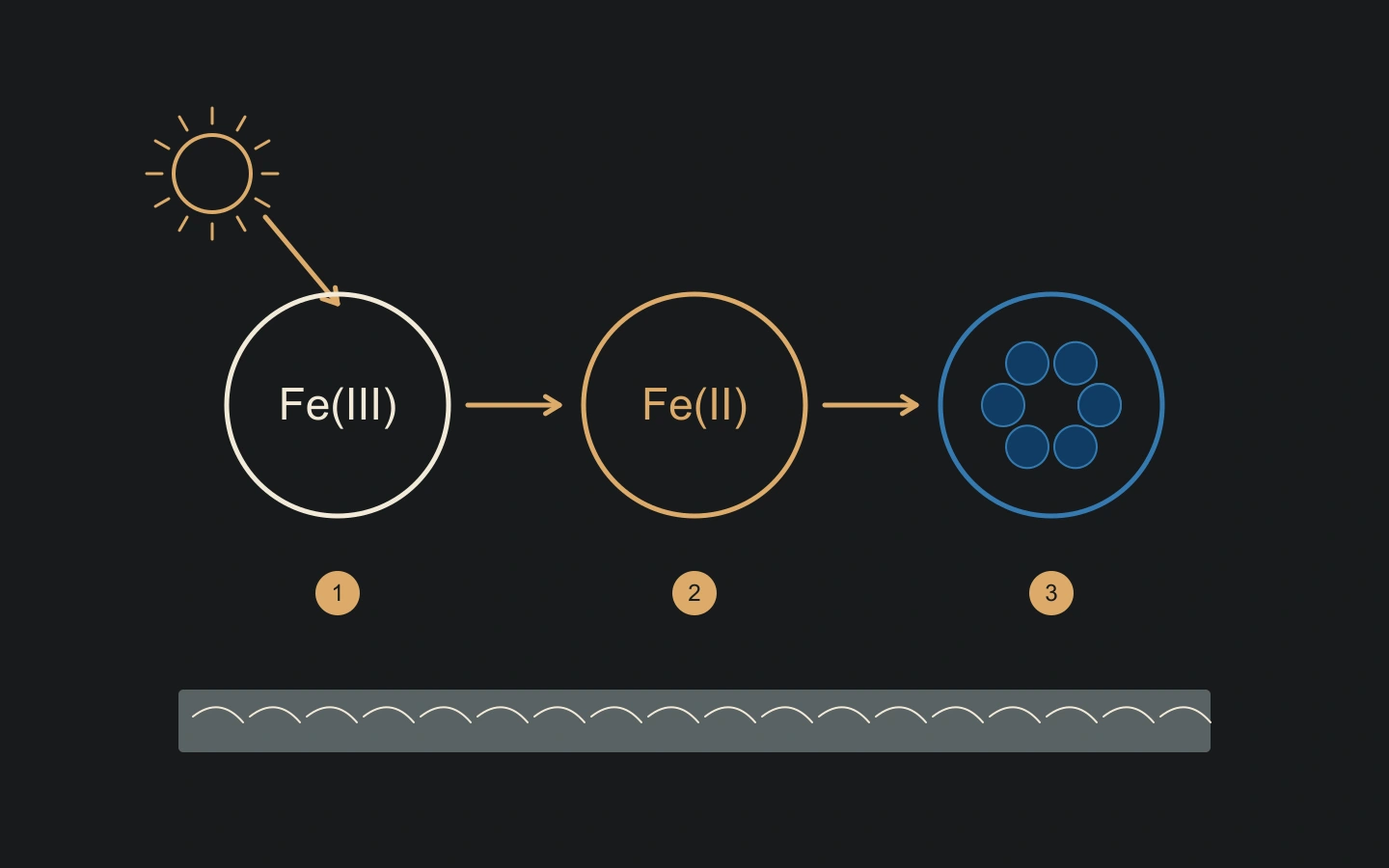
In principle, light reduces some iron(III) to iron(II). Reactions involving the associated compounds lead to the blue pigment; water treatment removes remaining soluble substances and contributes to the image's appearance. This outline is neither a complete equation nor a manufacturing procedure. Historical and modern formulations are not interchangeable.
This distinction changes how we look at the sheet. Blue is not a filter applied to an already finished black-and-white photograph: it is part of the image material. Paper fibres, coating and processing contribute to its appearance. Two sheets showing the same subject can share a composition while differing in density and fine detail.
A plant draws by blocking light
In a botanical photogram, the plant lies directly on the sensitive surface. Opaque parts block more light and leave pale shapes; uncovered areas become blue after processing. A translucent leaf may produce intermediate values. The image need not be a completely white cut-out against a uniformly blue field.
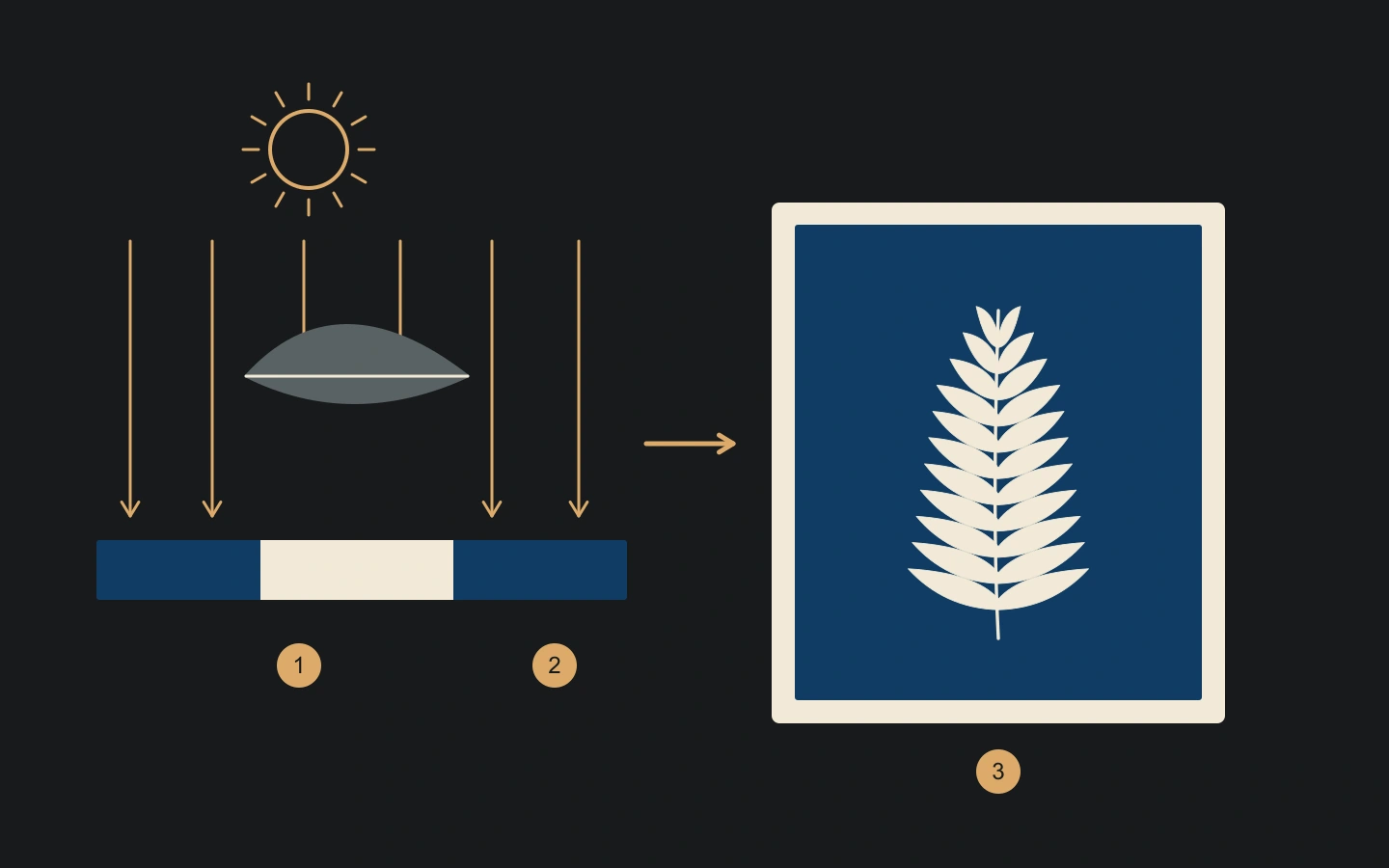
Contact controls the edge. A vein close to the sheet can appear sharply, while a lifted tip casts a softer shadow depending on the source's direction and extent. This is light geometry, not a focusing error: no lens formed the image. The diagram enlarges the gap to make that relationship visible.
Anna Atkins gave this meeting of botany and photography extraordinary significance through British Algae, begun in 1843. Selecting specimens, arranging plates and communicating forms were integral to her work. John Herschel had introduced the process in 1842; Atkins developed an influential scientific and editorial application. Reducing her contribution to blue decoration misses that purpose.
A negative turns contact into a photograph
Cyanotype is not restricted to objects placed on paper. A transparent negative can modulate light instead. Dense regions reduce exposure and produce paler areas; transparent regions let more light through and produce darker areas. A landscape or portrait can thus be translated into a range of blues.
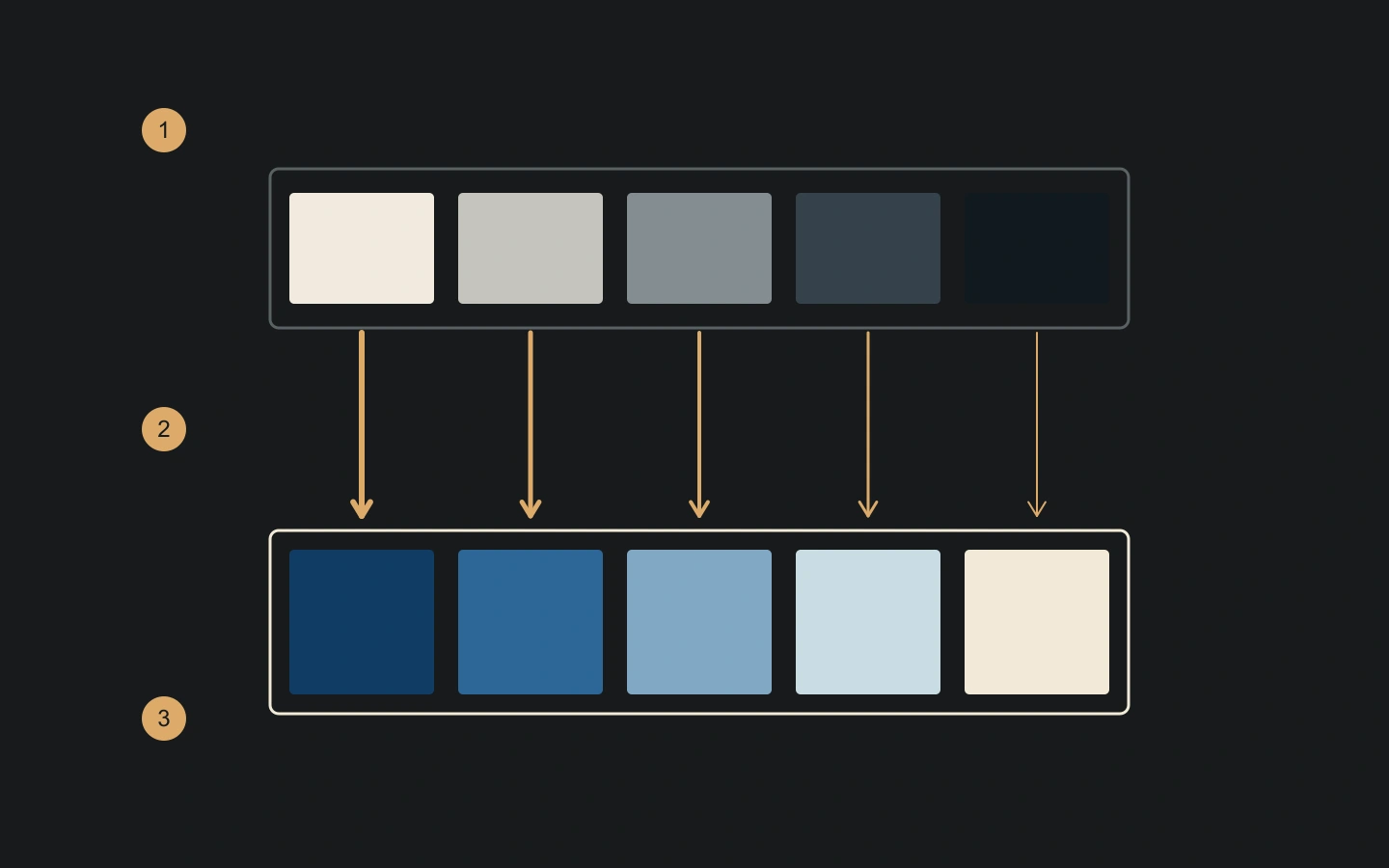
Contact printing means that negative and image are approximately the same size. A large print originating from a small file or negative generally needs an intermediate negative at the desired size. Its useful density concerns the wavelengths to which the process responds, not only its visual darkness on a light table.
A negative intended for another process can therefore yield blocked shadows or empty highlights. The useful question is which values this particular negative and process can separate. Annotated trials are more informative than automatic inversion followed by supposedly universal printing settings. Keep the source files and the conditions associated with each result.
Exposure needs more than a timer
Sunlight can expose cyanotype, as can an appropriate UV source. Duration alone does not describe the useful light reaching the paper. Source, distance, clouds, season and materials above the sheet affect the result. Glass that looks transparent does not necessarily transmit UV in the same way as another transparent material.
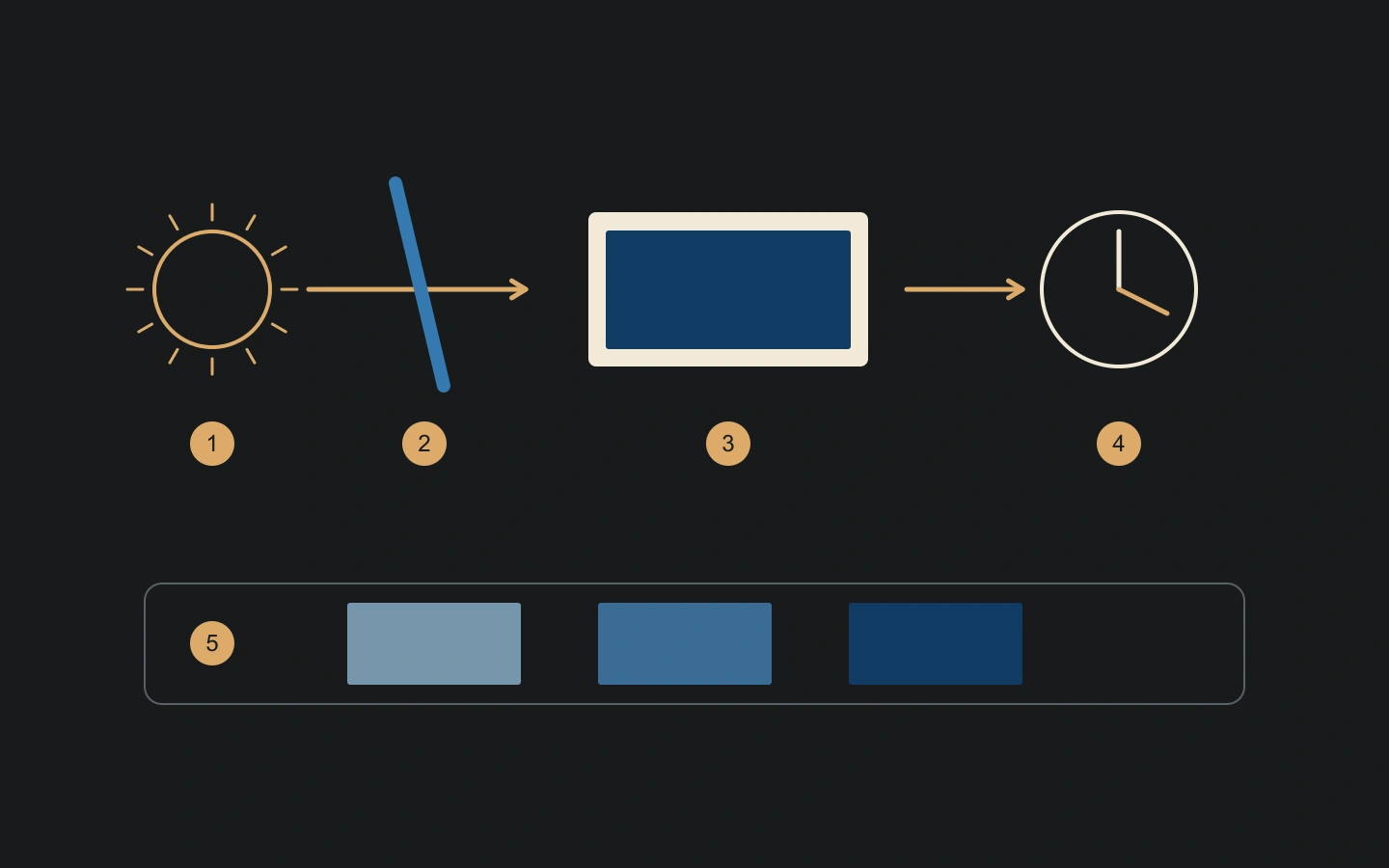
Paper and formulation matter too. Mike Ware's research demonstrates differences in sensitivity between variants. A recommendation of a few minutes belongs to particular conditions; turning it into a rule for every kit, lamp and negative removes the variables that matter most.
For a workshop, prepared paper and its documentation allow attention to stay on the image. Compare trials while changing one variable, and judge processed, dry sheets under consistent conditions. Wet appearance need not equal final appearance. This is a way of documenting a personal trial, not producing a standardized measurement.
Preserve the blue and describe the image honestly
A cyanotype is a physical object affected by its environment. Prussian blue is sensitive to alkaline conditions, giving it different storage needs from many other photographs. The Library of Congress recommends unbuffered conservation paper for cyanotypes. Packaging marketed as suitable for all photographs therefore deserves closer checking.
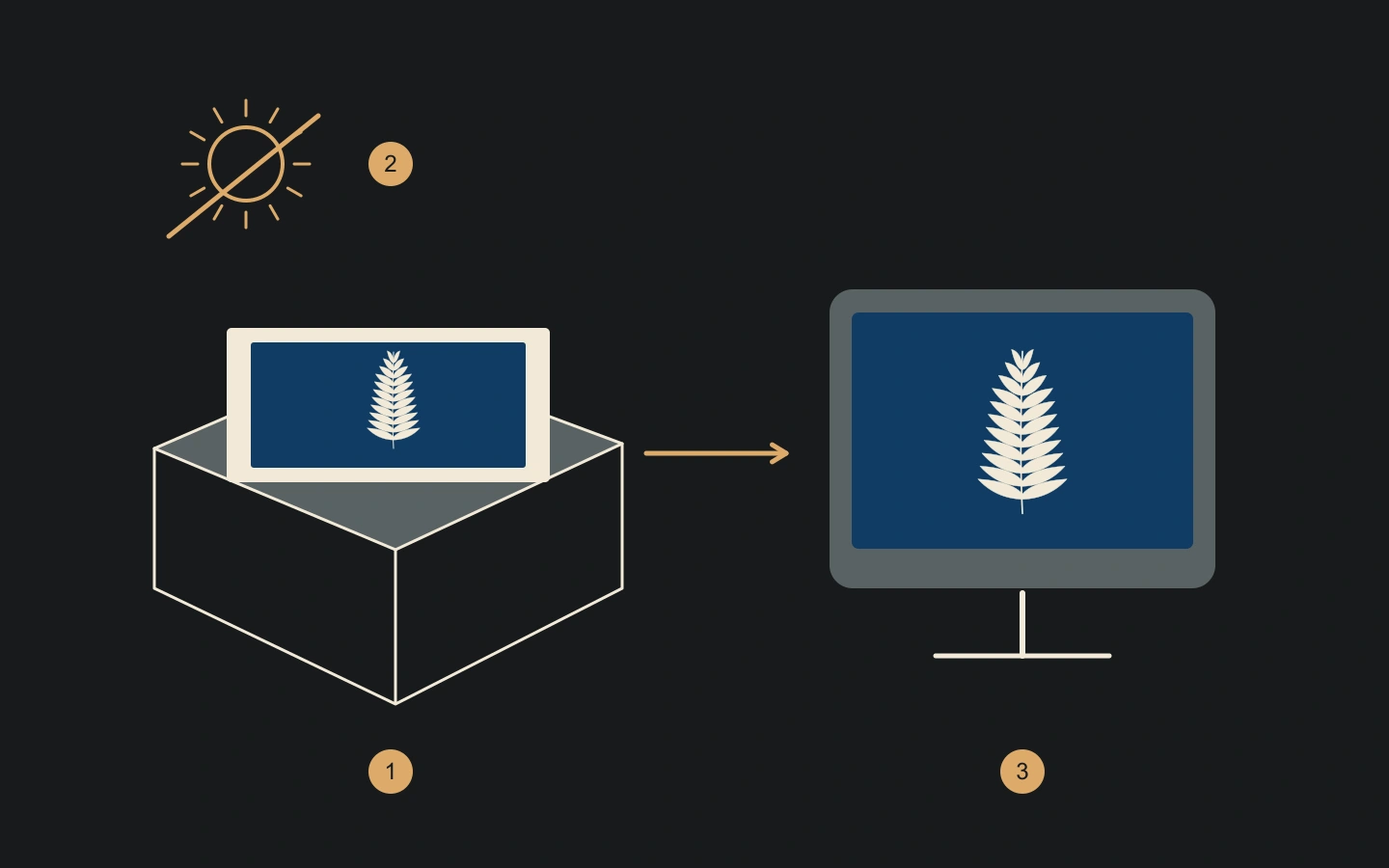
Light used to create an image does not guarantee permanence. Museums limit display of sensitive works and sometimes show reproductions. Washing an old sheet, changing its mount or attempting to restore its colour calls for conservation advice. Faded blue is not a reason to try an improvised recipe on an irreplaceable original.
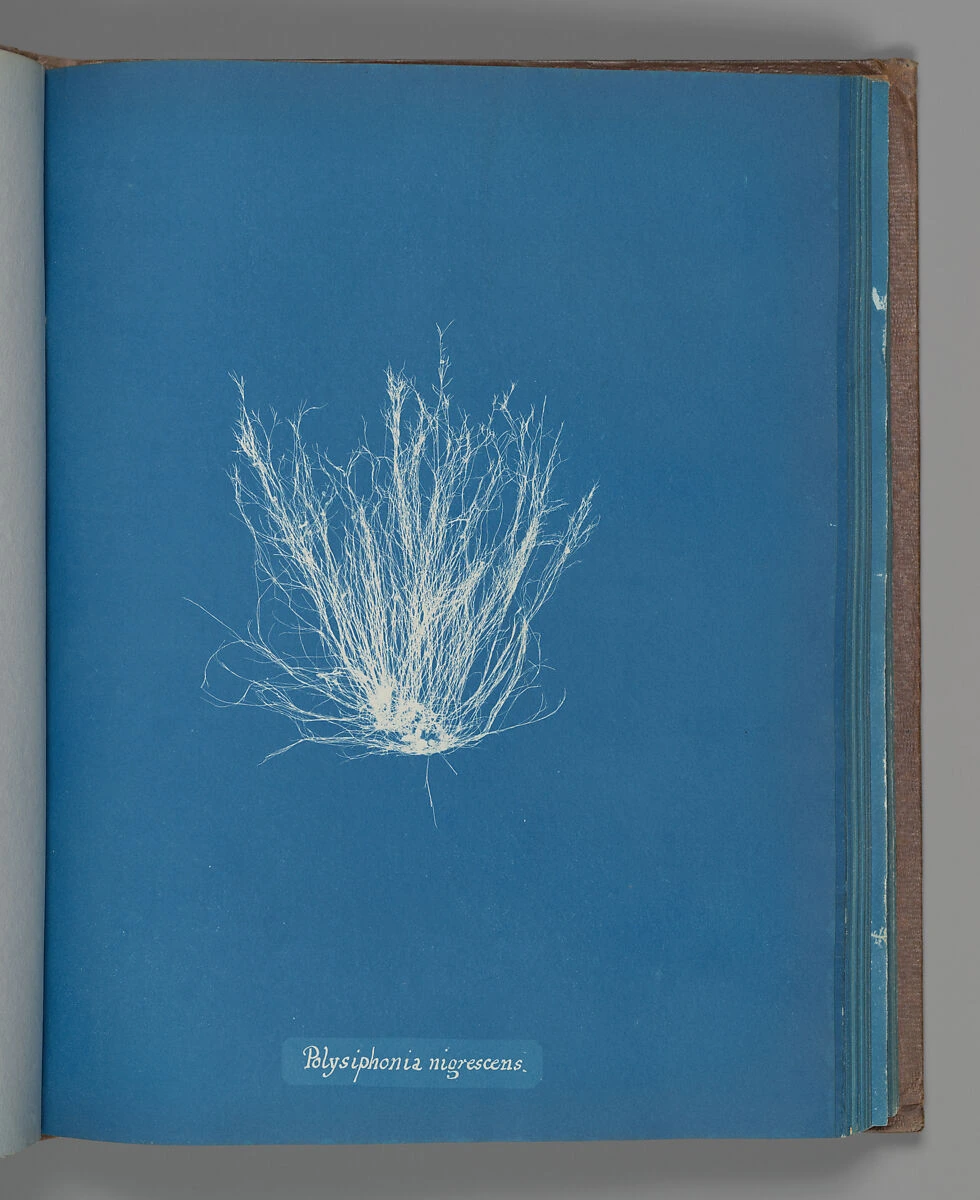
On screen, a scan conveys an appearance within the limits of illumination, capture and display. A digital blue treatment can borrow the aesthetic without reproducing iron chemistry. We therefore distinguish the real documentary photograph, conceptual diagrams and generated editorial cover. Clear provenance lets the process retain its poetry without inventing an image's history.
Sources and further reading
- Getty AAT — Blueprint process: iron salts and Prussian blue
- Mike Ware — Towards an Unproblematic Cyanotype Chemistry
- V&A — Cameraless photography: photograms and Anna Atkins
- Natural History Museum — Anna Atkins’s cyanotypes
- Mike Ware — Practical Instructions: contact printing and UV
- Mike Ware — The New Cyanotype Process: sensitivity and exposure
- Library of Congress — Care, Handling and Storage of Photographs
- Smithsonian National Museum of Asian Art — Light Duration Guidelines
- The Met — Anna Atkins, Polysiphonia nigrescens, ca. 1853
- Royal Botanic Gardens, Kew — Cyanotypes: The origins of photography
- Harmon B. Abrahamson — The Photochemical Basis of Cyanotype Photography, Journal of Chemical Education 78 (2001), 311
About this article
Written with the assistance of Codex and Astra, using the cited sources. The diagrams are educational; documentary photographs retain their authors and licences.
From reading to making images
Explore filmsKeep exploring
All stories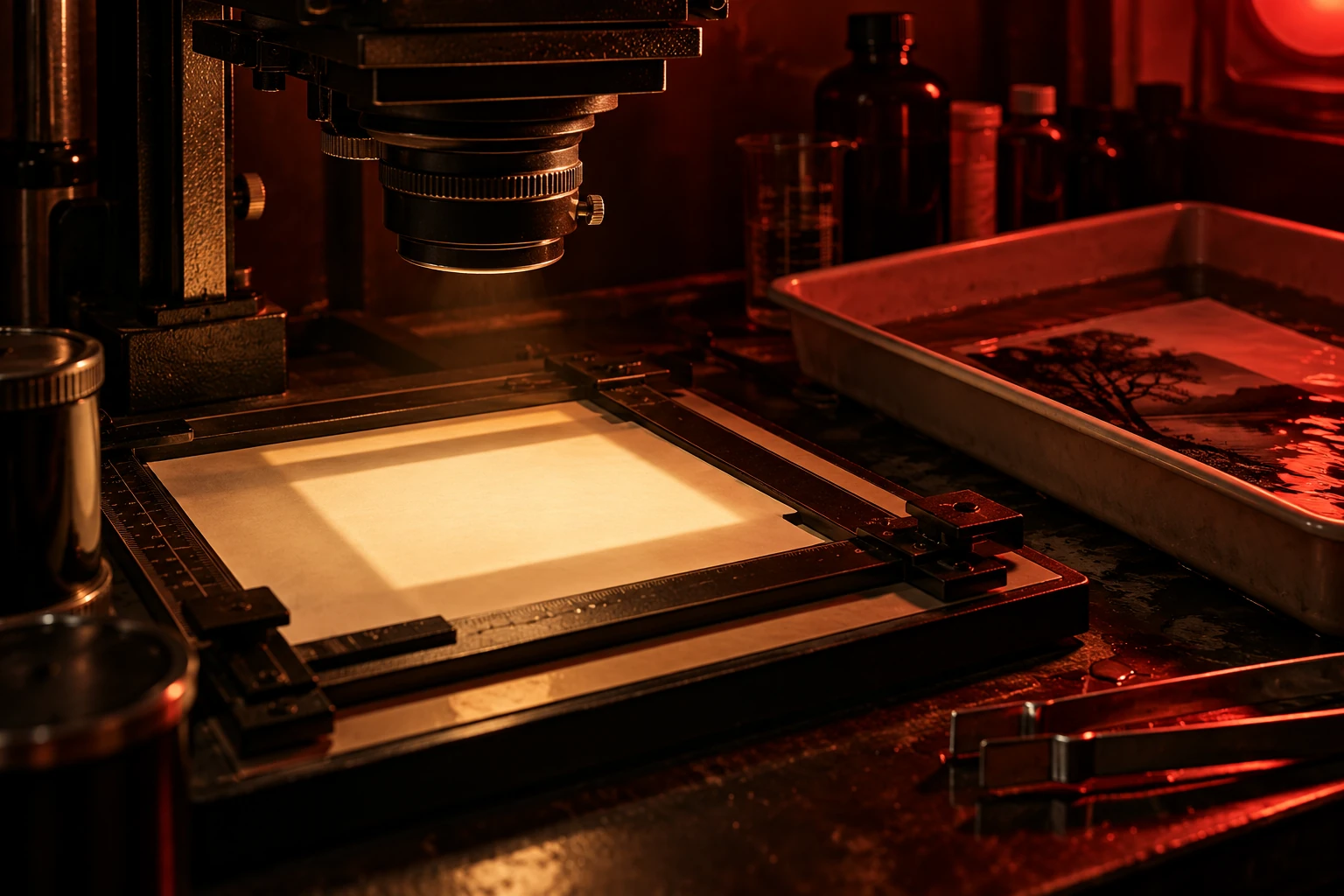
Inside the darkroom: making a silver-gelatin print
Enlargers, paper, test strips, dodging, burning and washing: understand every stage of black-and-white printing.
Read the story
Film grain: what you see and what the emulsion makes
Light-sensitive crystals, developed silver, dyes and enlargement: understand grain without treating it as a simple defect.
Read the storyShare this article
An idea worth passing on.