
Optics
Focal length changes the frame. Your position changes perspective.
A face looks different through a wide-angle and a telephoto lens. Is the glass alone responsible? Often the photographer has moved as well. From the same viewpoint, changing focal length mainly changes framing; moving changes perspective relationships. Keeping those operations separate gives you a practical composition tool.
Remember this
Choose distance for the proportions you want, then focal length for framing. Cropping and moving do not create the same image. Lens distortion is a further, separate issue: curved lines and viewpoint-dependent proportions require different explanations and different kinds of correction.
Framing also depends on recording format
Focal length is an optical property rather than the exterior length of the lens barrel. With comparable projection and focus, a longer focal length gives a narrower view on a given format. A shorter focal length includes a wider part of the same scene from the same camera position.
However, “35 mm” cannot describe the framing of every camera on its own. Recording-surface size matters: the same optical image is cropped differently by different formats. Equivalent focal length expresses a comparison of angle of view rather than a physical change to the lens fitted on the camera.
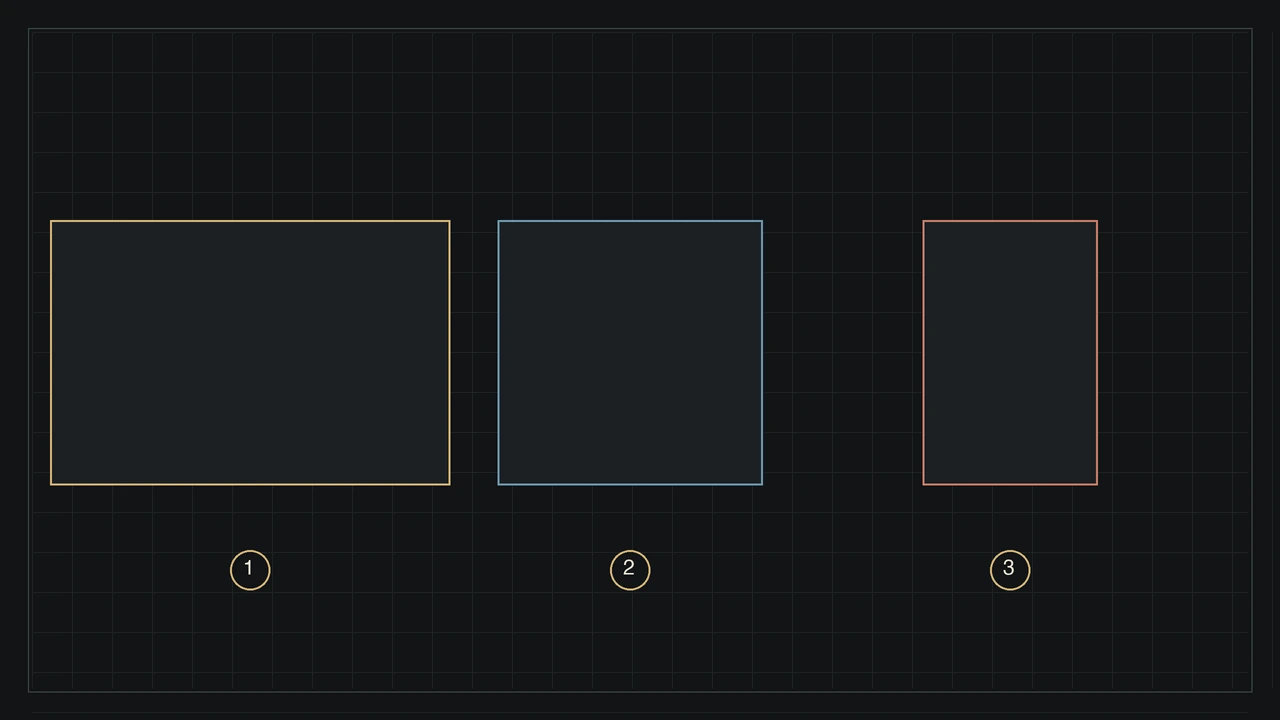
Before comparing photographs, note format, orientation and any crop. A portrait-oriented and a landscape-oriented image may share a diagonal angle while covering different horizontal and vertical portions. Identifying what is actually compared prevents a presentation difference from being mistakenly attributed to optical construction.
Viewpoint determines relative projected sizes
In a central-projection model, the image size of a small frontal object is proportional to its physical size and inversely proportional to distance. Two identical objects at one and two metres therefore have a two-to-one projected-size ratio. This is a geometric example rather than a measurement of any product.
Change focal length without moving the projection centre: projected sizes scale together and keep the same ratio in this model. A central crop from the wide view can therefore retain the same perspective relationships as a tighter view from that position. Resolution, aberrations and depth of field may still differ.
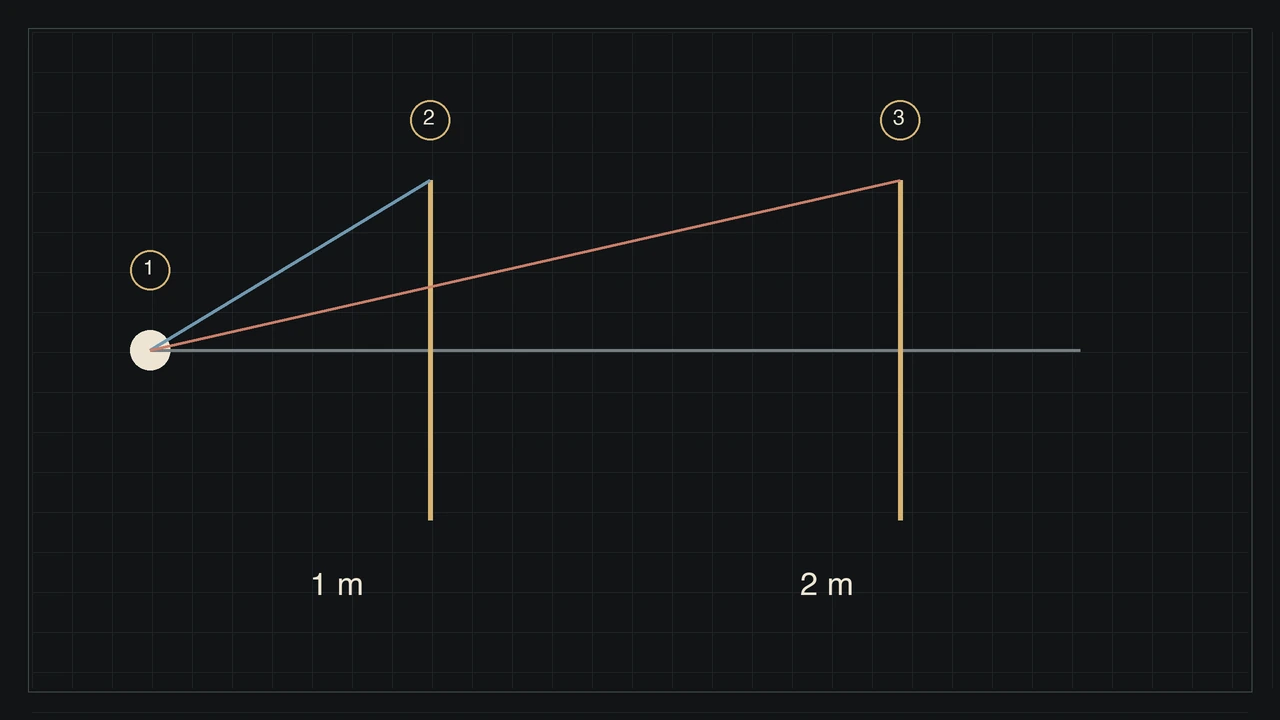
For a face photographed very closely, distance differences between nose, eyes and ears are large relative to the total distance. Moving back makes those differences a smaller proportion. A longer lens then allows the photographer to regain the intended framing from this new viewpoint rather than directly changing facial geometry.
Why people describe telephoto compression
To keep a person equally large in the frame with a longer focal length, photographers usually move back. The background may then appear larger relative to that person. The observed compression comes from the changed shooting geometry; the telephoto lens chiefly enables tighter framing from the more distant position.
In a simplified example, identical objects at one and two metres have a ratio of two. Move back ten metres and their distances become eleven and twelve metres; the ratio becomes twelve divided by eleven. Choosing another focal length to fill the frame does not restore the earlier distance relationship.
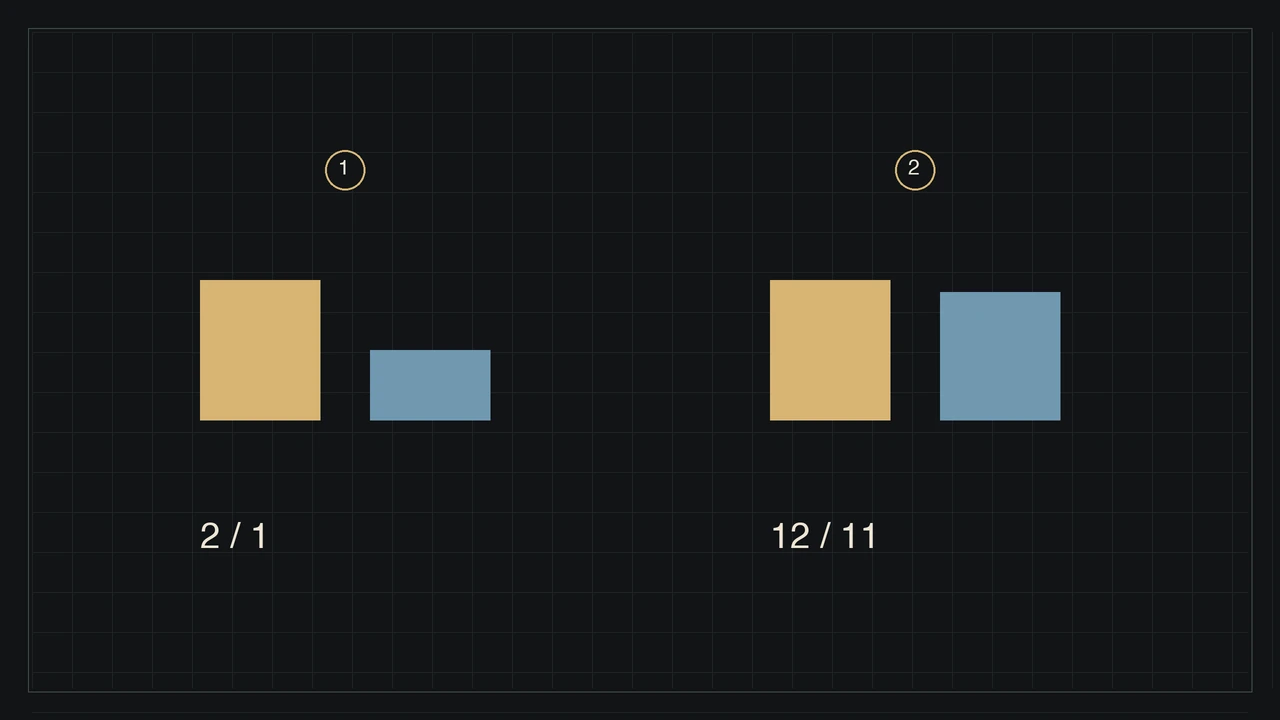
This approach can visually bring together layers of a street or landscape. It does not make a telephoto lens better for every subject. More pronounced perspective may instead communicate closeness, depth or the presence of foreground elements that are important to the story the photograph is intended to tell.
Perspective and optical distortion are different
Geometrical lens distortion describes a departure from a reference projection, such as straight lines bowing into barrel or pincushion shapes. An ideal rectilinear projection can keep lines straight while strongly stretching objects near the edges of a very wide field. The two effects should not be treated as interchangeable.
Verticals converging when a camera tilts upward are a perspective effect. Straightening the image changes its projection and crop rather than removing every limitation. You may lose usable image area and alter visible proportions depending on how the correction is applied and how the final frame is chosen.
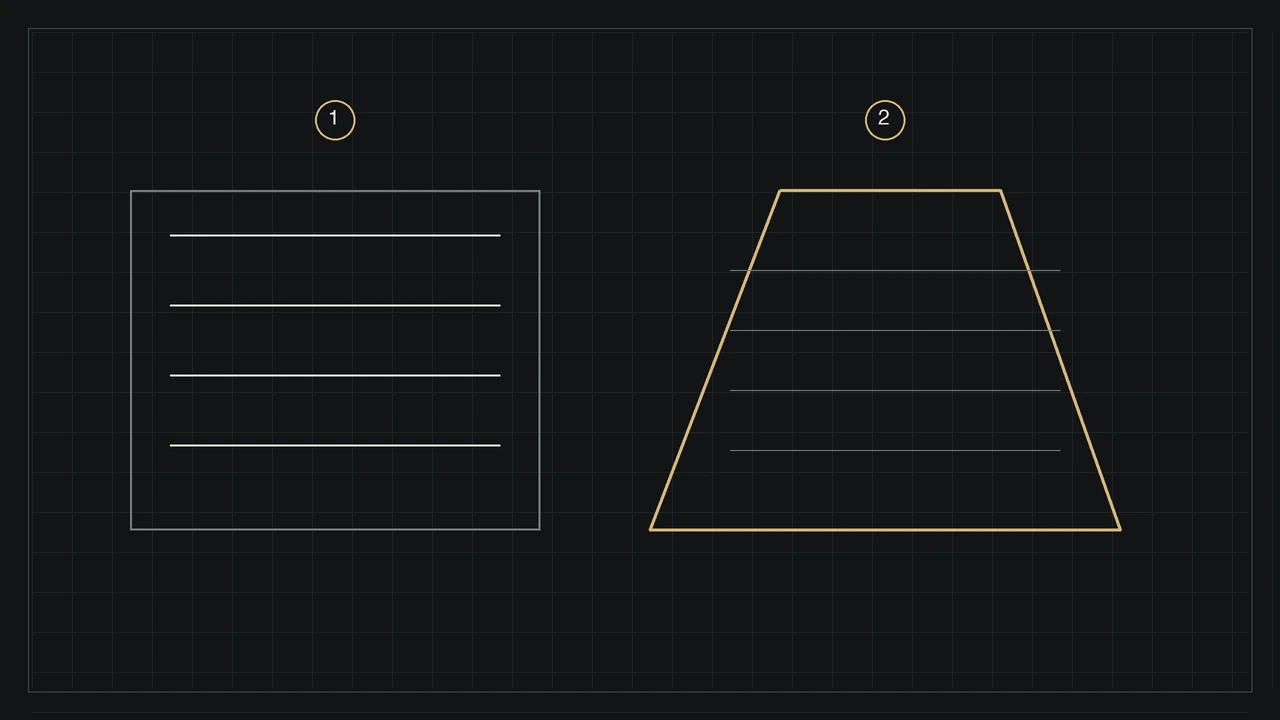
A lens-correction profile cannot simply relocate the photographer to another position. For architecture, first examine camera orientation and height. Optical choices and later adjustments then serve a visual intention, with compromises that need assessment in the completed photograph rather than through a single correction label.
Two experiments using your own photographs
First, keep the camera fixed and photograph two stationary objects at several focal lengths, then compare the same central crop. You mainly change field of view and reproduction limits. Keep the projection centre as stable as practical, since the pupil position of some lenses may shift with their settings.
Second, retain the main subject’s size while changing focal length and shooting distance together. Now compare its relationship to the background and what the foreground hides or reveals. Record positions: those notes explain the difference instead of treating the changed depth impression as a mysterious property of the glass.
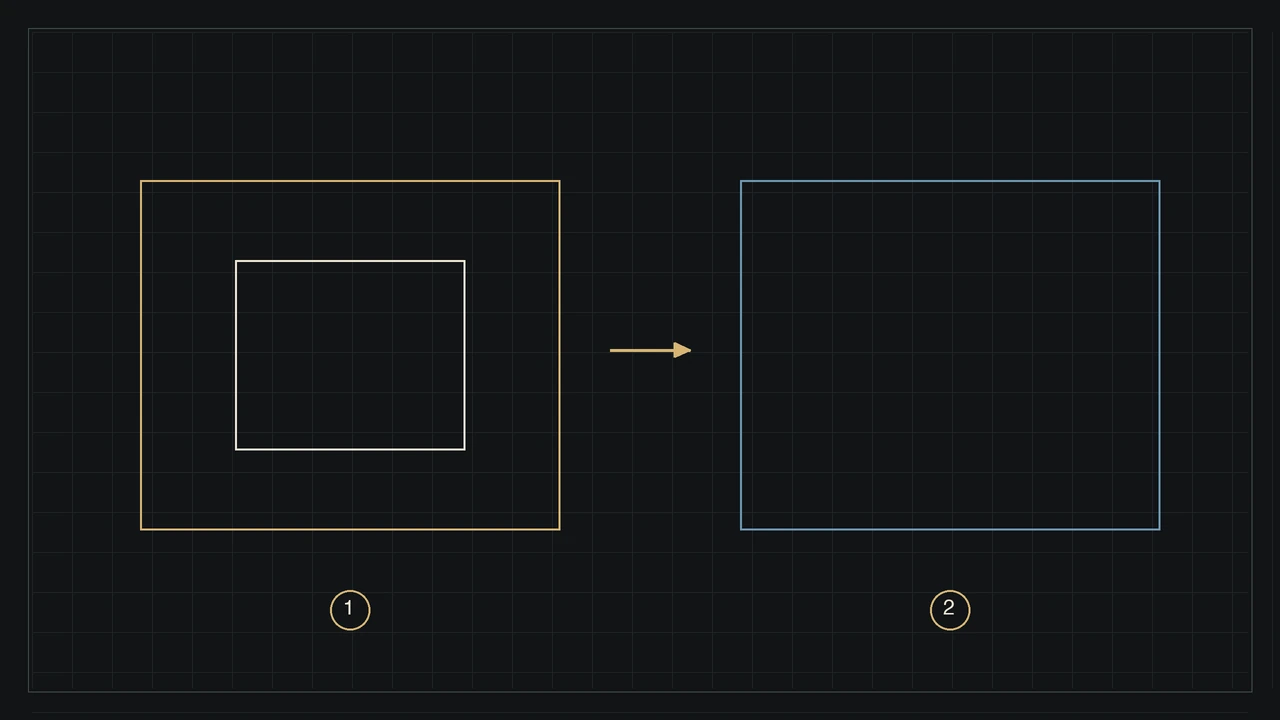
On a phone, changing modules may also shift viewpoint slightly and change processing. A simulated focal length or crop cannot replace physical movement. After making that composition decision, read bokeh and depth of field to explore the character of the background independently.
Sources and further reading
From reading to making images
Discover Lens FXKeep exploring
All stories
Bokeh is more than a blurred background
Depth of field, pupils and aperture blades: understand how much blur you get and how a lens draws it.
Read the story
A lens is more than glass.
From optical glass and polishing to coatings and assembly: the steps and compromises that shape a photographic lens.
Read the storyShare this article
An idea worth passing on.