

Histories
Fujifilm: a history of materials, colour and photographic uses
A green box is a familiar landmark. What it contains can belong to very different practices: cinema, negatives, slides, black-and-white or instant photography.
Remember this
A brand name is not a single aesthetic. Reference, family, format and process explain what a film actually is.
1934: building a sensitive-material industry
Fujifilm was established on 20 January 1934 as Fuji Photo Film Co., Ltd., taking over Dainippon Celluloid’s photographic operations. Its Ashigara factory started operating in February that year. The starting point was a Japanese industrial project: manufacturing photographic materials, including motion-picture film, through controlled production.
Film is more than coloured plastic. Sensitive layers must be prepared, coated uniformly, protected and packaged. Motion pictures make consistency particularly demanding: thousands of images pass through capture, processing and projection. Unwanted variations can undermine the entire sequence, even when an individual frame appears acceptable.

This is the useful starting point. Fujifilm began as a photographic-material manufacturer, before becoming a package colour or a visual identity. Processes, supplies and laboratory work matter alongside the familiar names that photographers would later associate with the company.
1948–1958: colour follows different routes
The official chronology records colour reversal film in 1948, followed in 1958 by general-purpose colour negative materials and colour paper. These milestones describe different uses. Reversal film produces a positive on the film; a negative normally leads to another stage, such as making a paper print.
Colour requires coordinating layers sensitive to different spectral regions. Film alone does not complete the system: processing must match the material and colour negatives also need a coherent printing chain. A colour photograph is the result of these connected operations, rather than an emulsion formula acting in isolation.
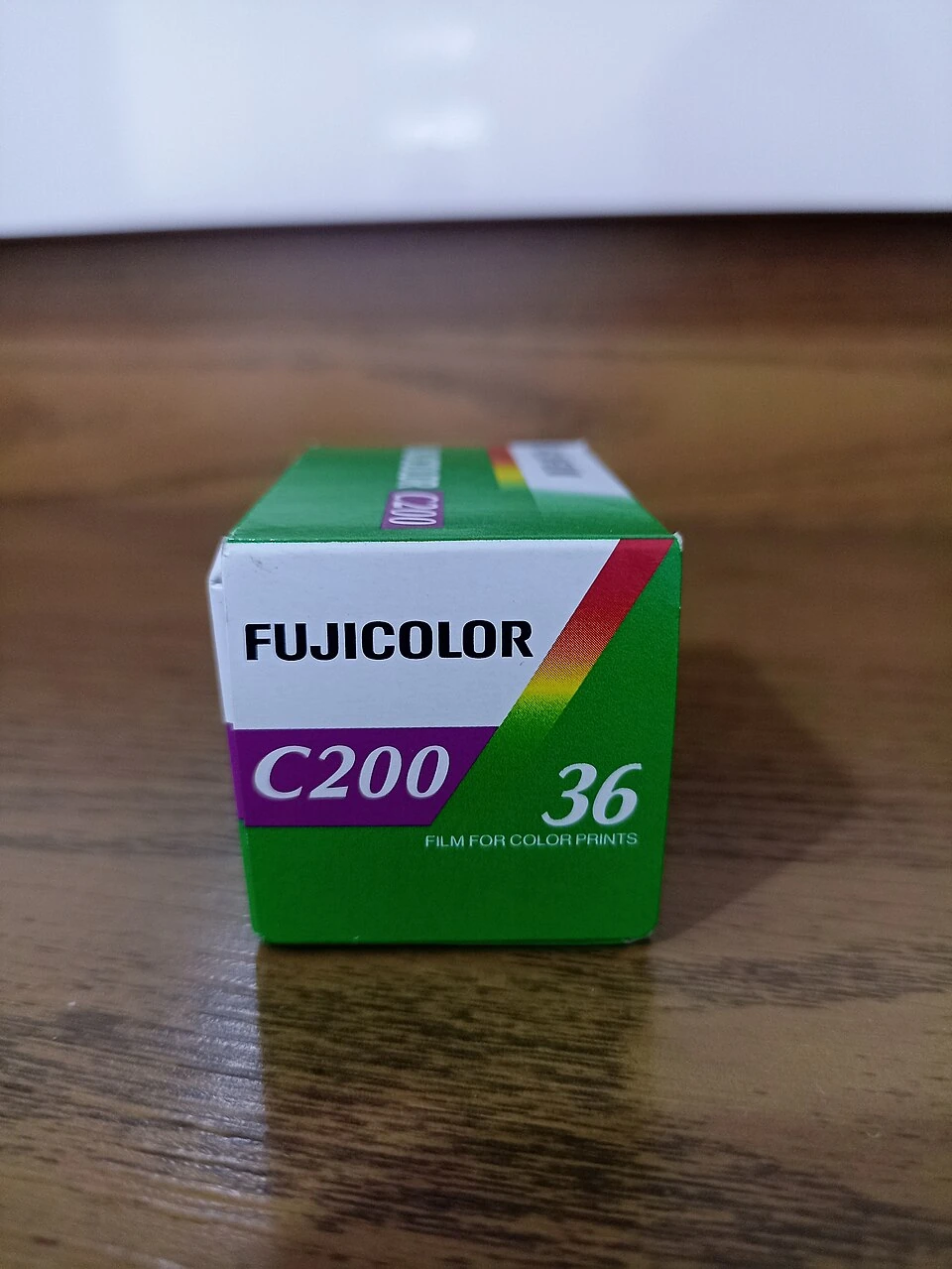

The photographs in this article show later examples, not the original products of 1948 or 1958. The Fujicolor C200 box documents a later colour-negative family. Separating historical milestones from illustrative objects prevents an attractive product photograph from becoming a false archival claim.
1976: speed as an everyday tool
In 1976 Fujifilm introduced Fujicolor F-II 400, a fast colour negative for everyday photography at the time. Sensitivity creates room to work in lower light or with moving subjects. It is not automatic exposure correction, nor does it guarantee a successful photograph under every condition.
Faster and slower films involve design trade-offs. Grain, contrast and other properties depend on the actual stock, format, exposure and processing. The ISO number does not summarise a film’s character. Shutter speed is also a different variable from the material’s sensitivity; their contributions to exposure should not be confused.
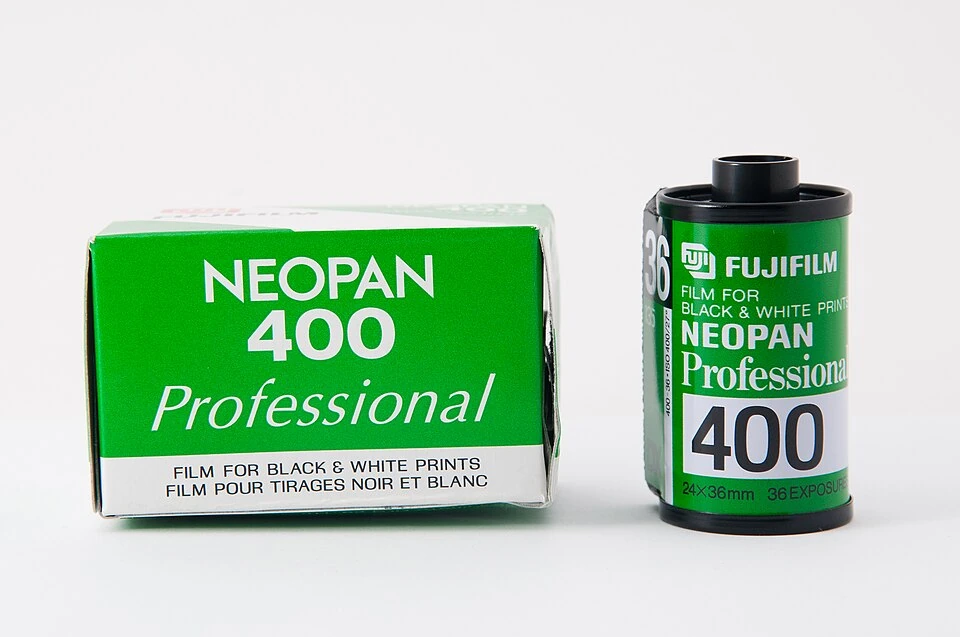
The Neopan 400 photographed here is a black-and-white film, not the 1976 F-II 400. The distinction shows why the same speed number can describe very different materials. Neither “400” nor the manufacturer’s name establishes colour behaviour, processing requirements or the final picture’s appearance.
1986–1987: QuickSnap did not begin in 35 mm
The first preloaded Utsurundesu camera, known internationally as QuickSnap, arrived in July 1986 using 110 film at speed 100. A subsequent generation adopted 35 mm and speed 400 in July 1987. Starting the story with a 35 mm disposable camera erases that first material format.
The idea was a ready-to-use package followed by laboratory processing. Body, frame count, intended focusing range and lighting conditions formed a coherent practical offer. Flash-equipped versions extended its usefulness, without turning the simple device into a camera whose settings could all be freely adjusted.
There is also an after-use history. Fujifilm records a recycling centre in 1990, automated component reuse in 1992 and a circular manufacturing system in 1998. These are documented industrial milestones. They do not demonstrate that every sold camera returned, or justify inventing a collection rate.
1990: Velvia and distinct film families
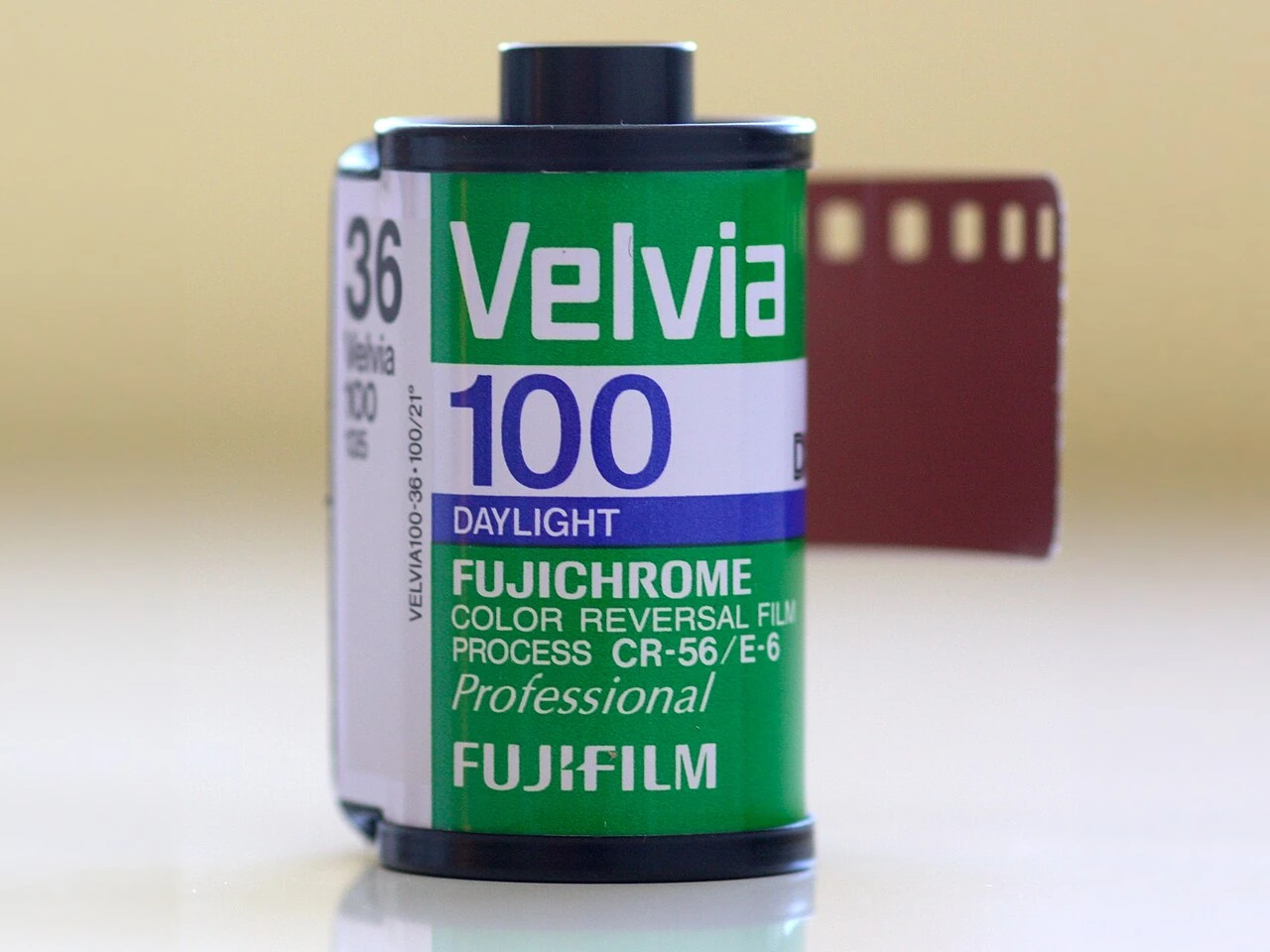
FUJICHROME Velvia appeared in 1990, an important step in Fujifilm’s colour-reversal family. The documentary photograph shows a later Velvia 100 cassette, not the original 1990 product. A shared family name does not make every generation or speed rating an identical material.
A slide is a positive object: density and colour are present in the film being examined. Colour negative requires inversion and printing or reproduction. Comparing those families means considering their uses and processing chains, rather than treating a single screen reproduction as a complete description.
There is consequently no universal Fujifilm green. A reversal stock, consumer negative and black-and-white material do not seek the same result. A useful account connects each reference to its material family and documentation, then considers lighting, exposure and laboratory decisions in the photograph being viewed.
1998: instant photography expands the story
Fujifilm dates the instax mini 10 to 1998. Instant photography offers a different relationship to the picture: a physical image develops after exposure without the usual route of sending a negative to a laboratory. It is analogue photography, but not a conventional 135 cassette.
Different materials and photographic practices coexist under the same brand. Cinema, slides, colour negative, black-and-white and instant photographs represent different ways of making and sharing images. Understanding those differences is more rewarding than reading the history as a succession of packaging colours.
When examining an old film, start with its exact reference, format and process. A recent box does not prove an early date; a scan is not an unmediated original; a colourful style is not an infallible material signature. Sources and practical uses give the history its substance.
Sources and further reading
From reading to making images
Explore filmsKeep exploring
All stories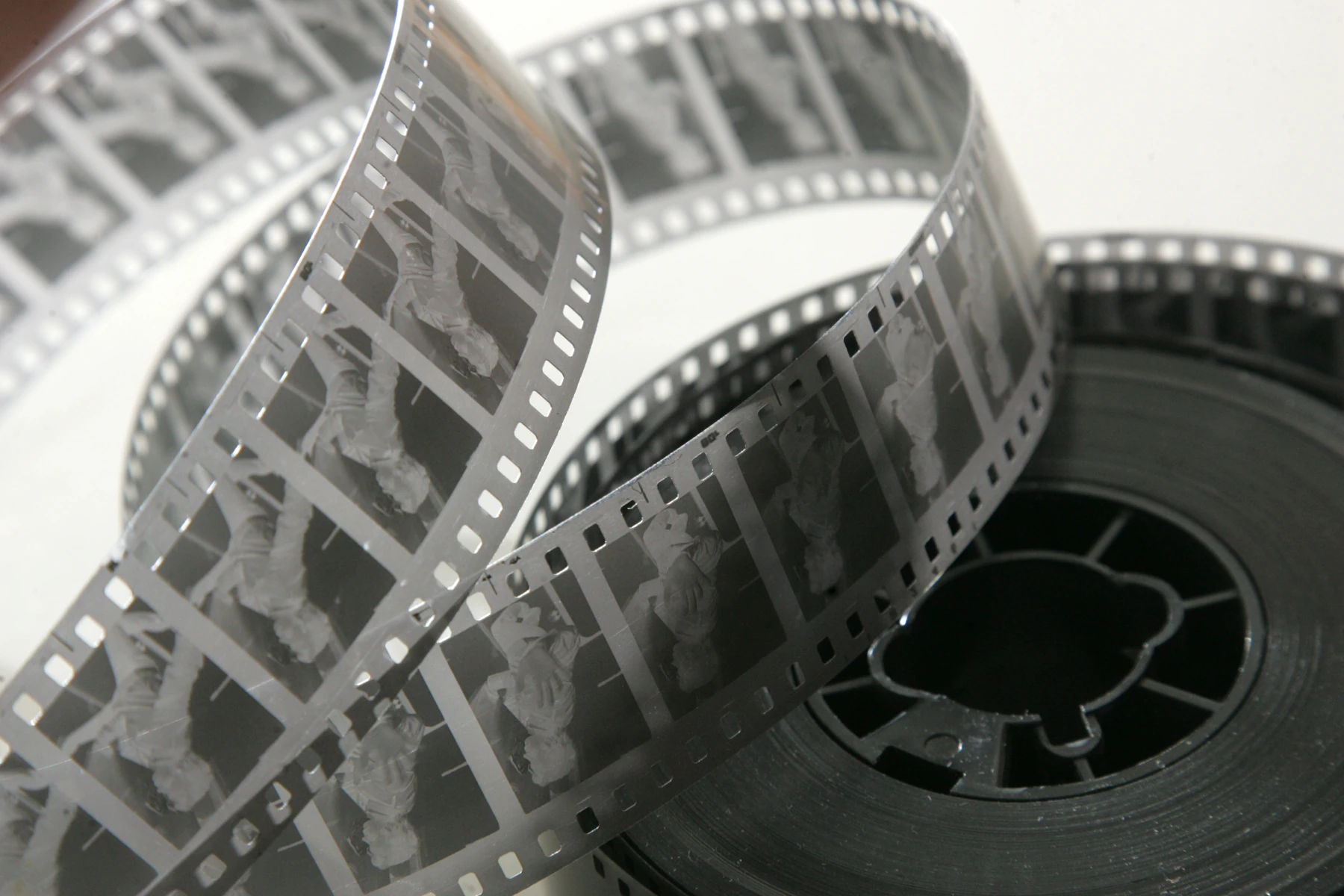

Film: light becomes matter.
How an emulsion records light, how development reveals the image and how photographic film is manufactured.
Read the story
A lens is more than glass.
From optical glass and polishing to coatings and assembly: the steps and compromises that shape a photographic lens.
Read the storyShare this article
An idea worth passing on.