

Histories
Kodak: how photography entered everyday life
A yellow box does not tell the whole story. Understanding Kodak means following sensitive material all the way to the photograph someone keeps.
Remember this
Simple picture-taking rests on a precise chain of manufacture, exposure, processing and printing. A brand name never replaces identifying the stock and its process.
1880–1881: reliability before simplicity
Kodak’s story begins before its name and yellow packaging. In Rochester, George Eastman worked to make photography less burdened by plates, equipment and preparation. He experimented with gelatin emulsions and consistent coating. He began commercial dry-plate production in 1880 and formed the Eastman Dry Plate Company with Henry Strong in 1881.
Dry plates did not remove the need for a lens, exposure or development. They did separate preparing a sensitive surface from taking a photograph more effectively. A photographer could buy material prepared elsewhere instead of mastering its manufacture before going outside.

This was a story of industrial reliability as much as invention. Defective emulsion could destroy irreplaceable pictures. Producing consistent material, distributing it and addressing faults were already part of the photographic experience. The future simple camera depended on considerable invisible work before anyone released its shutter.
1888–1889: the roll and the service
The Kodak camera of 1888 combined a portable body, a supply for one hundred exposures and a processing service. Customers returned the loaded camera; the company developed the pictures, made prints and reloaded it. The change was not just a smaller machine: it reorganised who performed each operation.
One detail prevents a familiar shortcut. The original 1888 material was not yet identical to the transparent film we picture today. The George Eastman Museum distinguishes American Film at launch from Transparent Film introduced in 1889. The roll concept preceded its most familiar material form; paper, gelatin and transparent support belong to an evolution.

This system reduced the operations customers performed while increasing the laboratory’s importance. The photographer selected a scene; specialists handled part of its transformation into a viewable photograph. That partnership between capture and service explains the change better than the outline of an old black camera alone.
1900: the Brownie enters everyday life
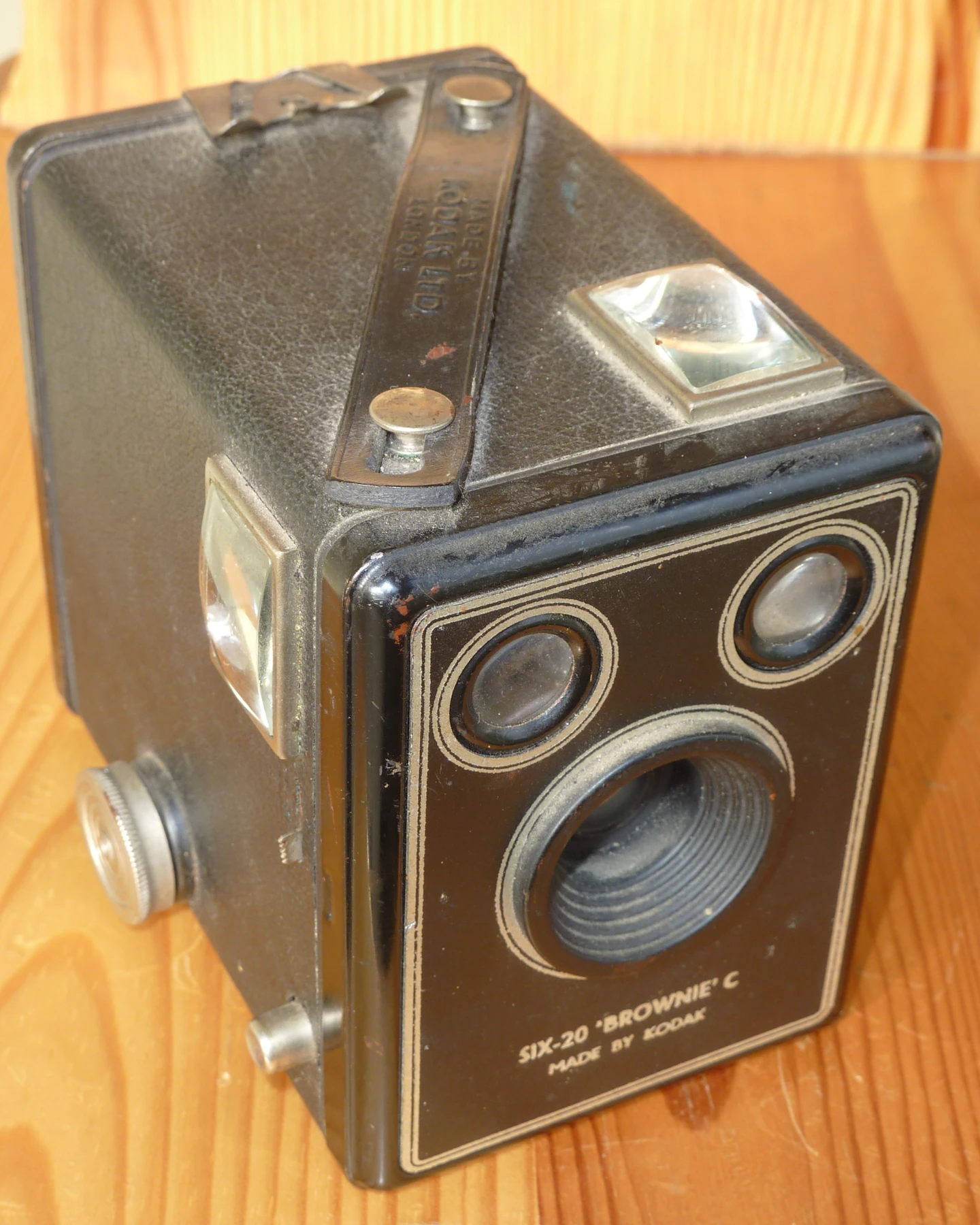
The Brownie launched in 1900 was another step: an inexpensive camera aimed at a broad public. Kodak records a one-dollar introductory price. That first model should be distinguished from the long Brownie family. A photograph of a Brownie Six-20, for example, does not automatically show the exact 1900 camera.
Simplification affected settings, loading and approaching a scene. It did not remove limitations of light or steadiness. An accessible camera still exposed a sensitive surface. A dark scene or moving subject continued to impose constraints even when the body offered very few controls.
Its cultural importance lay in multiplying opportunities for pictures: family, walks, holidays and ordinary moments. A memory no longer needed to mean a formal studio appointment. Personal albums became an extension of photographic practice. Frequency and context mattered alongside mechanical changes.
1935–1942: two routes to colour
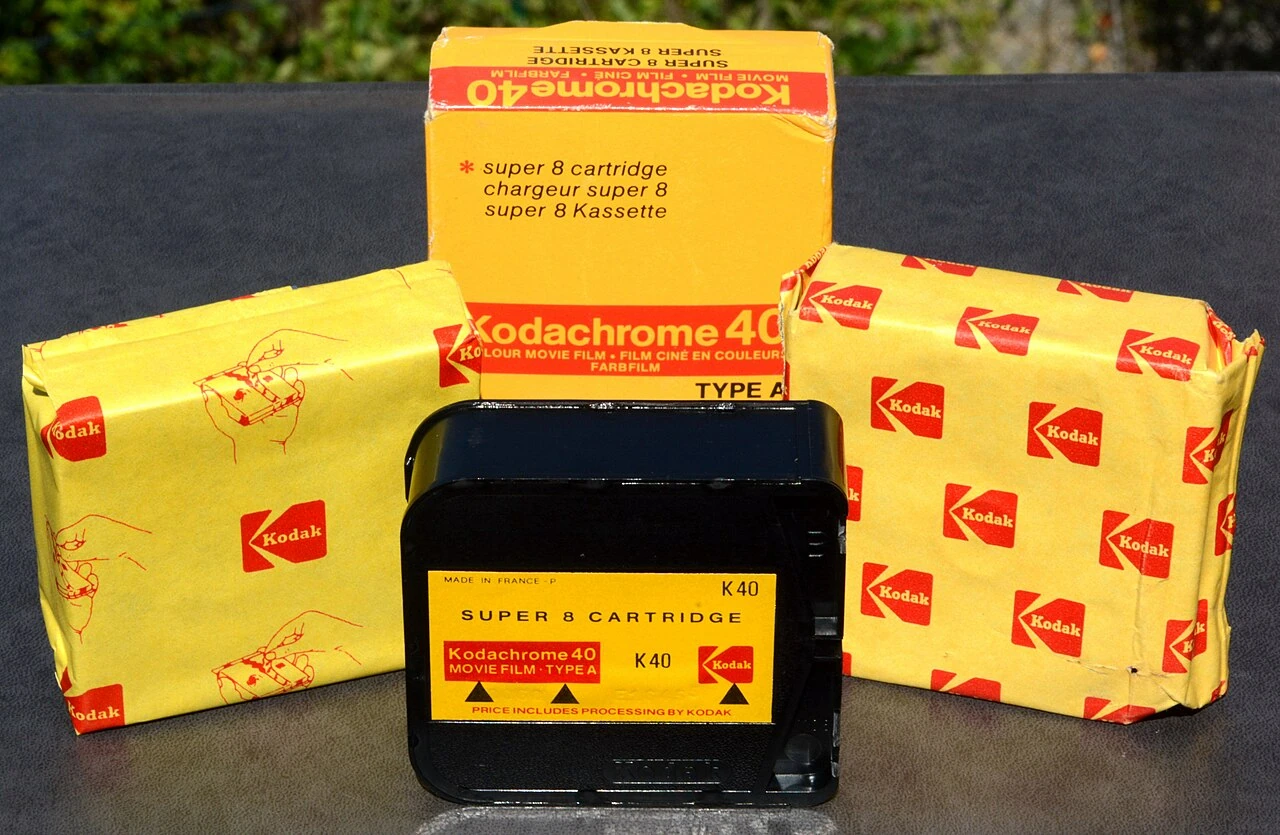
Kodachrome arrived in 1935 for amateur 16 mm movies; 35 mm slide and 8 mm movie versions followed in 1936. The familiar slide film therefore did not originate directly in a small 35 mm cassette. Formats and uses developed over time; later packaging should not be mistaken for evidence of its initial form.
Kodachrome is a reversal film, producing a positive intended for viewing. It also uses chromogenic development, but the couplers needed to form image dyes are supplied in the processing baths. In films designed for C-41 or E-6, those couplers are incorporated into the material. Colour photography therefore requires a coherent emulsion-and-chemistry system; similar product names do not guarantee the same process.
Kodacolor in 1942 took a different route: a colour negative intended for printing. Slides and negatives differ both as objects and in their reproduction chain. A single “Kodak colour” overlooks those differences. Film, illumination, processing and paper contribute together to the colours ultimately seen.
Film is an industrial system
Film combines a base, sensitive layers, protective elements and suitable packaging. In colour film, layers respond to different spectral regions. Manufacture must control their composition and uniformity. The visible cassette contains a material considerably more complicated than its label.
Processing transforms information recorded during exposure. Developers, other process baths and treatment conditions influence the result. A brand is not a universal recipe: black-and-white, colour negative and reversal are distinct families. Identify the actual stock and required process rather than relying on package colour.
Kodak’s history connects material, camera, laboratory and print. Innovation continues after the sale, through batch consistency, practical processing and the circulation of photographs. Understanding that chain prevents attributing everything in an old album to the emulsion alone.
Reading old film without inventing its story
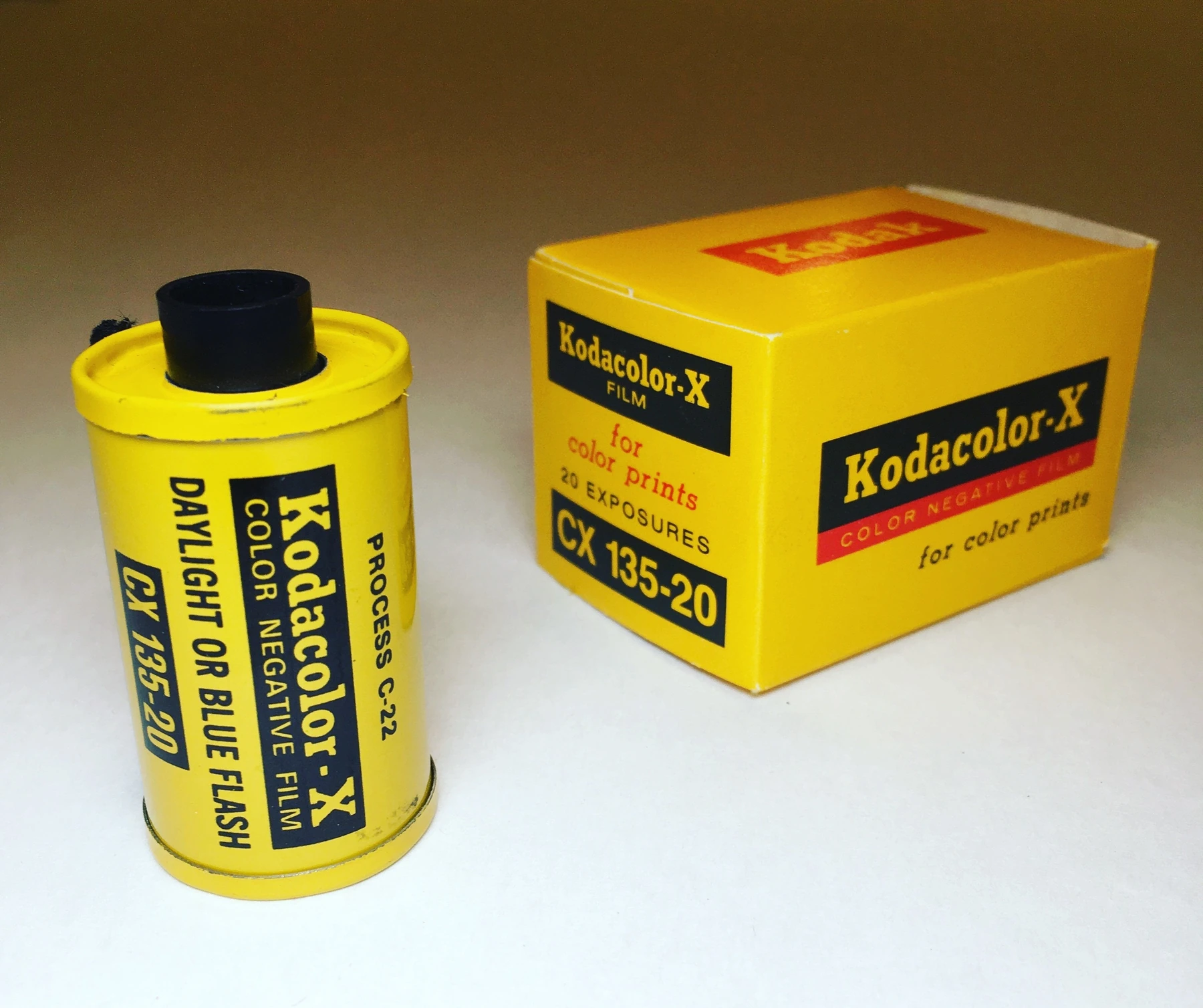
Packaging is documentary evidence. It carries a name, format, speed and sometimes a process or date. Those details help identify an object, but do not automatically date its photograph or every picture an owner made. The product’s date and the visual document’s date are different information.
An old photograph does not disclose its stock through colour alone. Lighting, exposure, development, printing, ageing and reproduction can all affect appearance. Without an inscription or provenance, naming a specific film remains a hypothesis. This article’s documentary photographs show identified objects, not calibrated demonstrations of their rendering.
The useful inheritance is a way of looking: examine the material, seek context and distinguish evidence from brand mythology. Kodak helped make photography everyday by changing a whole production-and-service chain. Its analogue legacy is clearer in those practical uses than in a yellow cast imagined across every picture.
Sources and further reading
- Kodak — George Eastman
- George Eastman Museum — Two rare rolls of early Kodak film
- Kodak — Photography history
- George Eastman Museum — Images from the final roll of Kodachrome
- Kodak — Essential Reference Guide for Filmmakers
- George Eastman Museum — About George Eastman
- Canadian Conservation Institute — Care of Colour Photographic Materials: chromogenic film
From reading to making images
Explore filmsKeep exploring
All stories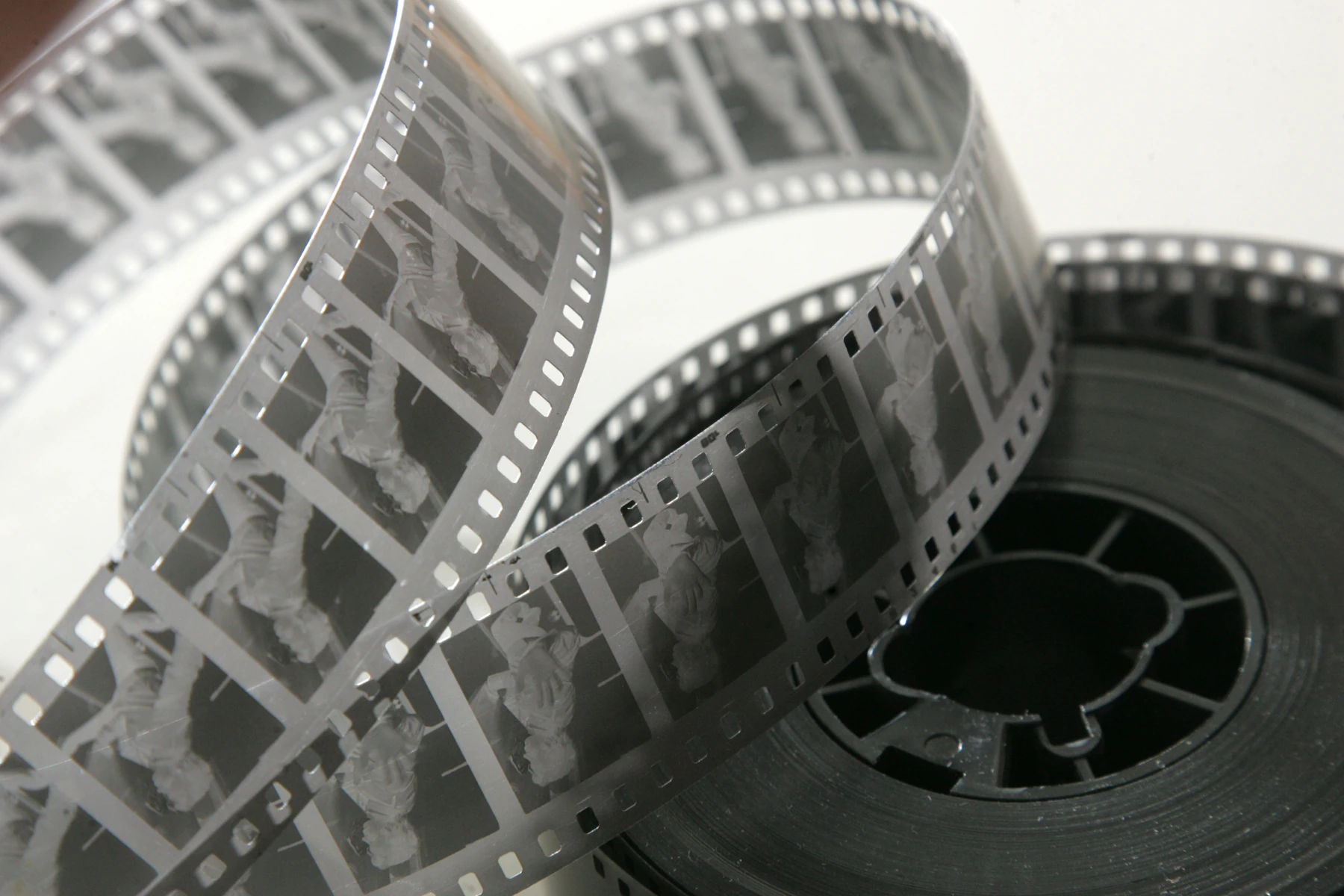

Film: light becomes matter.
How an emulsion records light, how development reveals the image and how photographic film is manufactured.
Read the story
A lens is more than glass.
From optical glass and polishing to coatings and assembly: the steps and compromises that shape a photographic lens.
Read the storyShare this article
An idea worth passing on.