

Histories
How 35 mm became a photographic format
35 mm did not begin as a colour or a style. It is a film strip reorganised to make a different way of photographing possible.
Remember this
35 mm, 24 × 36 and 135 are not interchangeable names: strip width, image dimensions and packaging describe different parts of one system.
35 mm first means the width of the film
35 mm describes the width of the film strip, including its edges. It is not a colour, a focal length or automatically the size of each picture. Perforations and margins occupy part of that width; the usable image area depends on the camera exposing the material.
Still photography often associates 35 mm with a 24 × 36 mm image. One dimension fits between the edges of the wider strip; the other extends along its travel. Perforations help transport and position the material. They are mechanical features, rather than decoration applied around a photograph.

Also distinguish 35 mm from 135: one indicates film width, while the other identifies the familiar photographic cassette format. Different image sizes can use the same film width. Recognising the strip therefore does not automatically identify a negative’s dimensions or the camera that made it.
Around 1892: the motion-picture inheritance
The Library of Congress dates the 35 mm development associated with Thomas Edison and William Dickson to around 1892. Before its place in everyday still photography, this strip belonged to moving pictures. Flexible material, mechanical transport and industrial availability enabled regular sequences of exposures.
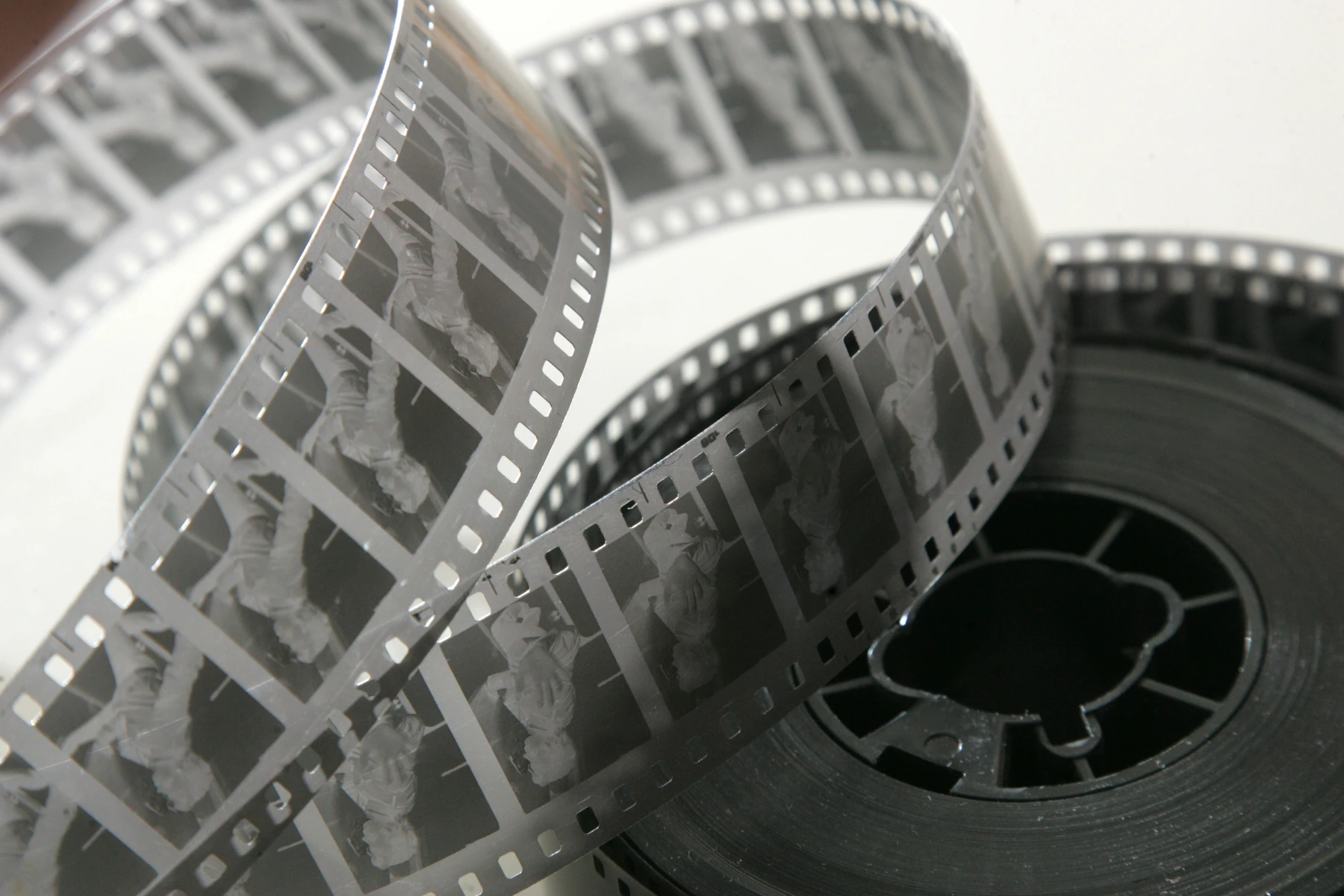
In the conventional four-perforation cinema arrangement, each frame occupies four perforations along each edge. Film travels in a different direction relative to the image from photographic 24 × 36. Other arrangements exist; this classic case should not become an absolute rule for all cameras and periods.
The documentary photograph shows a 35 mm cinema negative, not a strip of 24 × 36 still negatives. Image organisation along the strip makes that difference visible. The connection between cinema and photography is material as well as linguistic: an existing industrial resource was put to a different use.
1913–1914: Barnack changes the strip’s use
Oskar Barnack joined Leitz in 1911. Leica’s chronology dates development of the Ur-Leica to 1913–1914. The project used cinema film in a smaller camera, with the photographic image arranged horizontally along the strip. It did not invent the 35 mm material itself.
A 24 × 36 frame uses a longer section in the travel direction than the conventional cinema frame. This combines a compact camera with a negative intended for enlargement. A geometrical change reshapes the relationship between body, material and final picture, rather than simply making an existing camera smaller.
A small negative requires care with the lens, film stability and enlargement. The format does not remove optical limitations. It moves the compromise towards carrying less material and enlarging further, instead of recording a large image directly on the capture material.
1923–1925: prototypes become a distributed camera
An engineering idea is not yet a shared photographic practice. The 0 series of 1923 supported practical testing before production. Leica records the industrial decision in 1924, manufacturing beginning late that year, and the Leica I’s public presentation at Leipzig’s 1925 spring fair.
This camera family matters enormously to small-format history. Nevertheless, attributing all 35 mm photography to one inventor or model would be excessive. Prototype, industrial production, commercial distribution and photographic practices are different stages. Their dates and participants should not collapse into one heroic invention story.
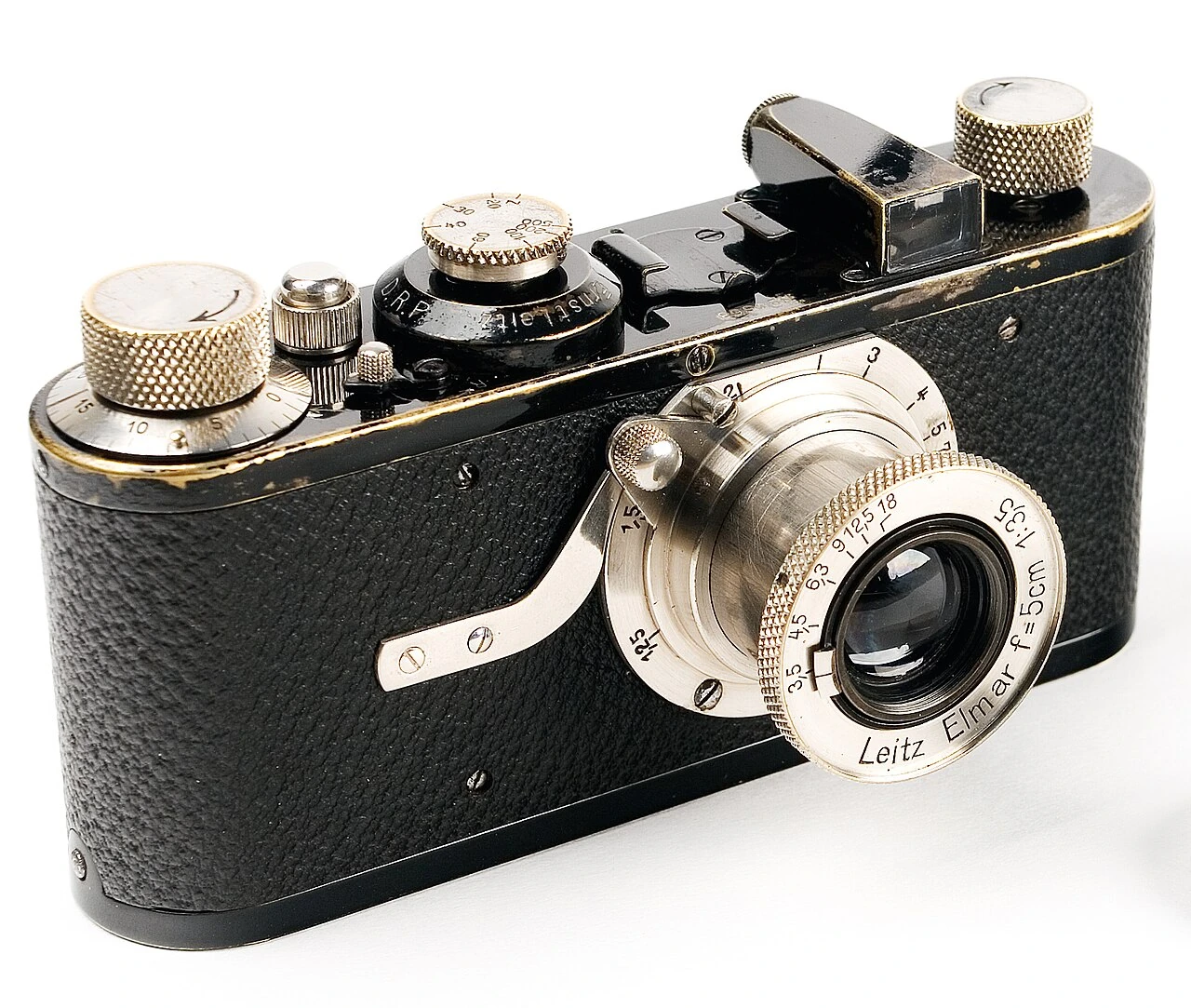
The Leica I (A) photographed here is a late-1920s example, not a photograph of the 1925 launch. Its controls and lens make the compact system tangible. The object helps explain the mechanism, without proving how every photographer used it or what any particular picture must have looked like.
1934: the Retina and the 135 cassette
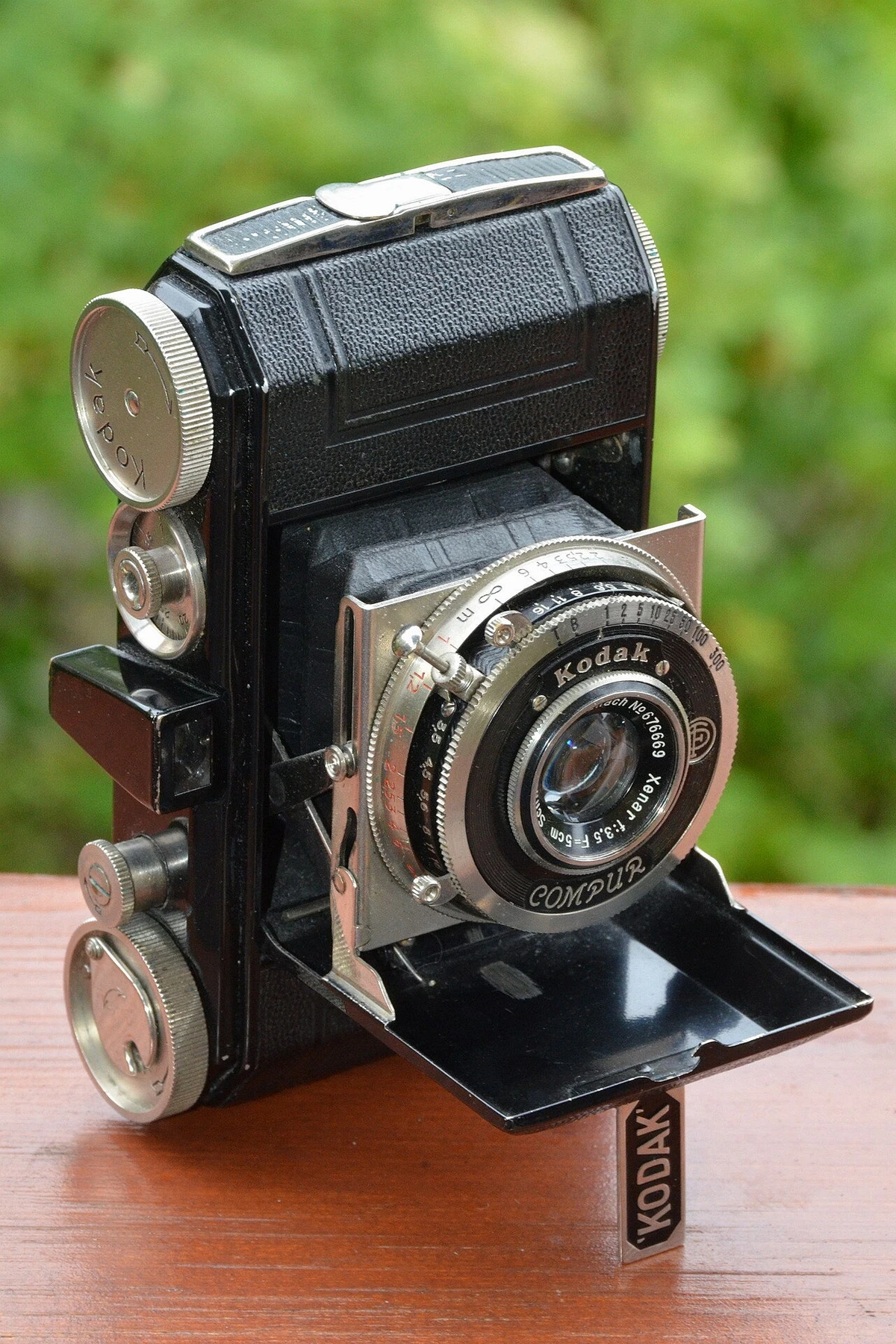
The Science Museum Group documents the Kodak Retina type 117, made in 1934–1935, as a 24 × 36 camera using the daylight-loading 135 cassette. This packaging, associated with August Nagel’s work, simplified small-format handling. Film history and the history of its container meet here.
A cassette protects the unexposed supply. Loading in ambient light does not mean the sensitive strip outside its enclosure tolerates light. Follow the camera’s instructions; in rewind cameras, exposed pictures must return inside the cassette before the back is opened. The package protects the material rather than changing its sensitivity.

Practical loading and industrial compatibility matter alongside camera dimensions. Cameras, shops and laboratories can organise around shared packaging. A cassette does not itself change the emulsion’s chemistry: it first changes how photographers carry, load and handle an existing photographic material.
New freedom, not a single aesthetic
Small format makes a compact camera and consecutive exposures on one strip practical. Following a scene and working in sequences become easier. This mobility supports photographic practices, but does not single-handedly invent reportage or prescribe a particular composition. Material possibilities and photographers’ decisions work together.
After processing, negatives can be examined, contact-printed, selected and enlarged. Visible grain also depends on enlargement. The same film may look different at another output size or after different processing. “35 mm” does not necessarily mean black-and-white, pronounced grain or old-fashioned colours.
When reading an analogue image, separate strip width, picture dimensions and sensitive material. Then consider exposure, processing and reproduction. Photographic 35 mm adapted an existing system ingeniously: a history of geometry, industry and practical gestures, rather than the invention of one universal visual filter.
Sources and further reading
From reading to making images
Explore filmsKeep exploring
All stories
Film: light becomes matter.
How an emulsion records light, how development reveals the image and how photographic film is manufactured.
Read the story
A lens is more than glass.
From optical glass and polishing to coatings and assembly: the steps and compromises that shape a photographic lens.
Read the storyShare this article
An idea worth passing on.