
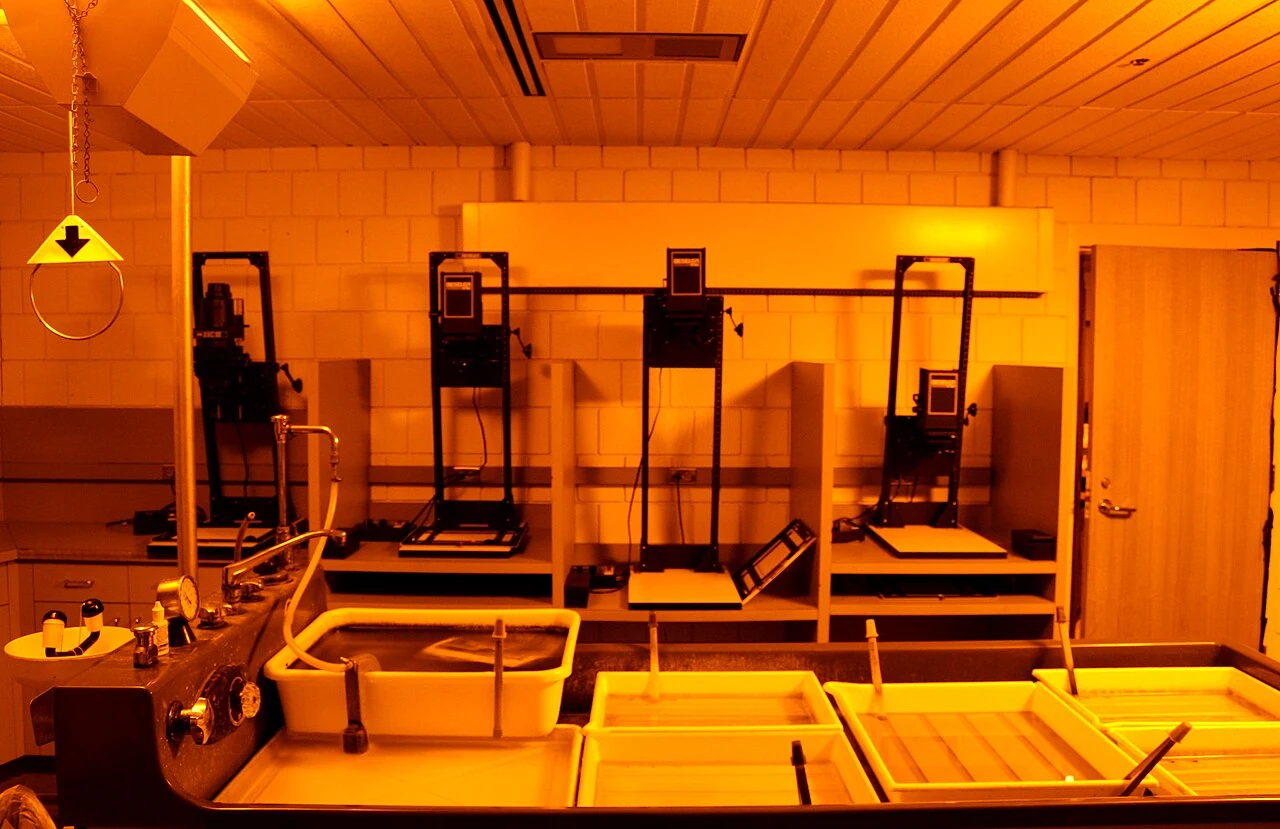

In the darkroom
Long exposures on film: why ten seconds may need more time
Your meter indicates ten seconds, yet some films under some conditions need more time to produce the expected exposure. The shutter is not necessarily faulty. Forming a stable latent image can become less efficient at very low illumination. The correction depends on the actual emulsion and its published guidance.
Remember this
First calculate the metered exposure including filters, then apply the manufacturer’s reciprocity recommendation. A coefficient specified for HP5 PLUS is not a rule for every film. Also record the real lighting during the exposure: it may change while the shutter remains open.
Reciprocity within the conditions where it applies
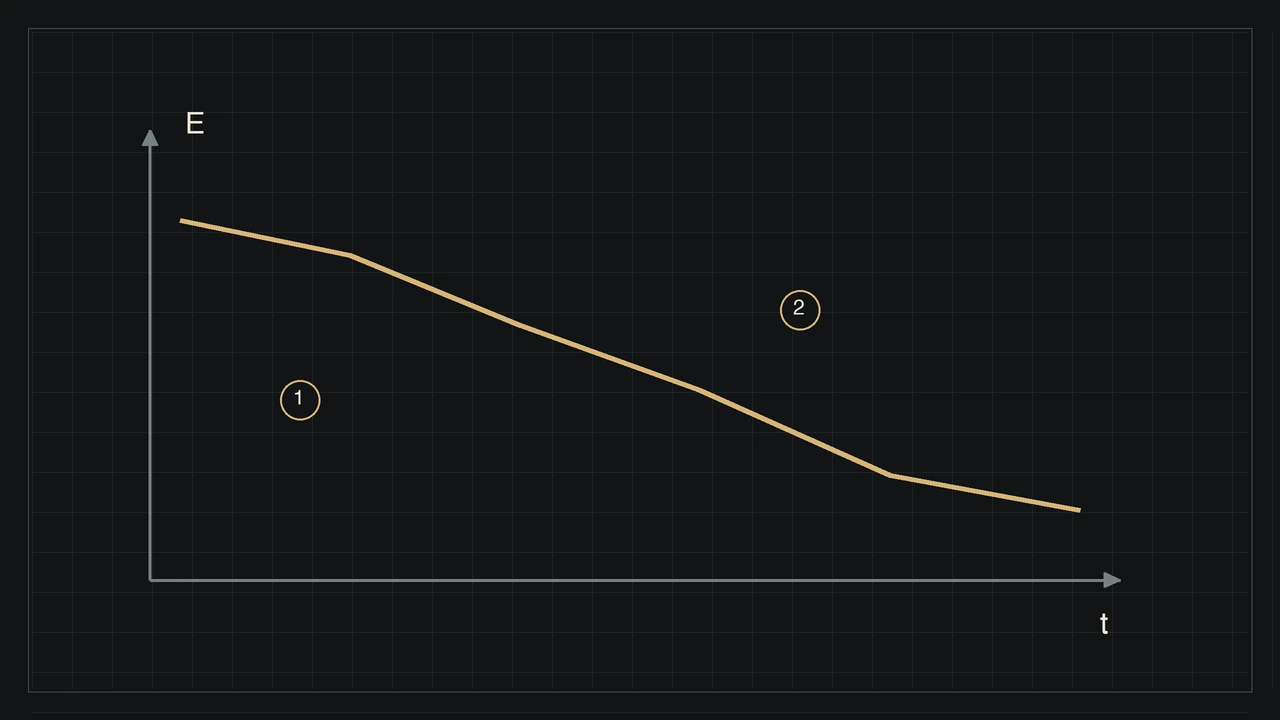
Where reciprocity holds, photographic exposure depends on the product of film-plane illumination and time. Halving the illumination and doubling the duration preserves that product. This principle allows a photographer to choose equivalent aperture-and-time combinations under ordinary conditions without automatically changing overall exposure.
The f-number does not directly measure the scene’s illumination; it describes a relative aperture. Lens and filter transmission also matter. A meaningful comparison assumes the same scene, framing and stable conditions, rather than treating two pictures made under different light as a controlled test of reciprocity.
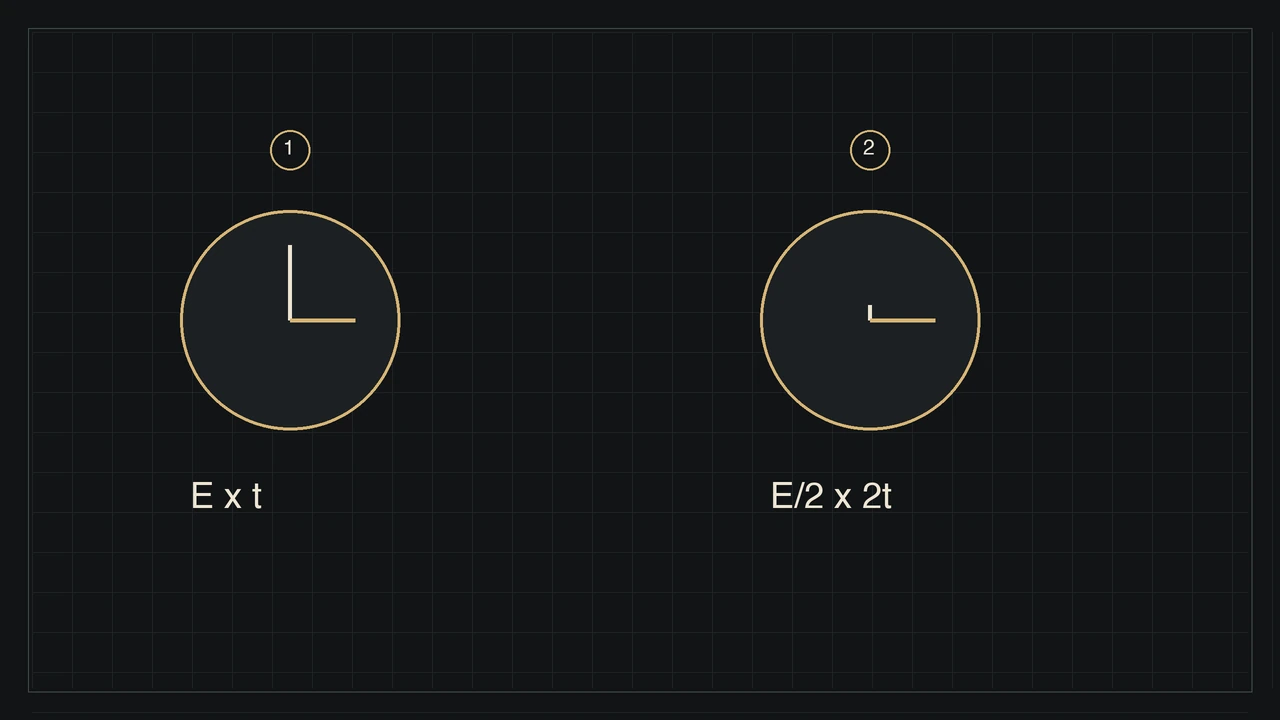
The simple relationship concerns exposure equivalence rather than appearance. One second and one minute can record movement very differently even when the resulting exposure is similar. Water, people and clouds continue to contribute to the photograph throughout the time during which the shutter is open.
Why film can depart from that relationship
At low illumination over long periods, stable development centres can form less efficiently. The emulsion no longer behaves as though the same total exposure had arrived quickly. Giving more exposure than a conventional meter calculates may therefore be necessary to obtain the intended record on that particular material.
The onset and size of the departure depend on the product. A formula for one emulsion does not automatically apply to another with a similar nominal speed. Colour layers can respond differently as well; duration and any colour correction should follow the guidance for the actual stock and process.
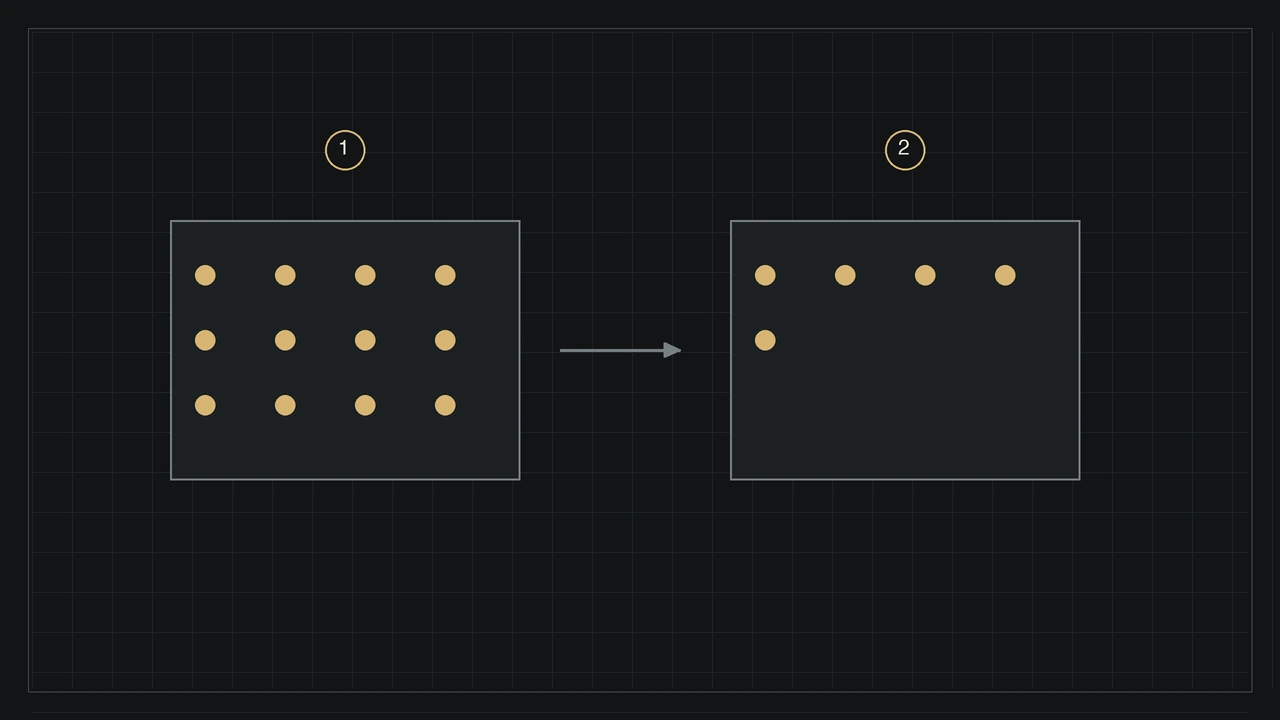
This effect is neither grain nor halation. It concerns how exposure is recorded under particular conditions. A digital rendition applied to an existing photograph can alter its appearance, but it cannot retroactively reproduce the physical image-forming chemistry of a long exposure on a real roll of film.
A worked example tied to one published recommendation
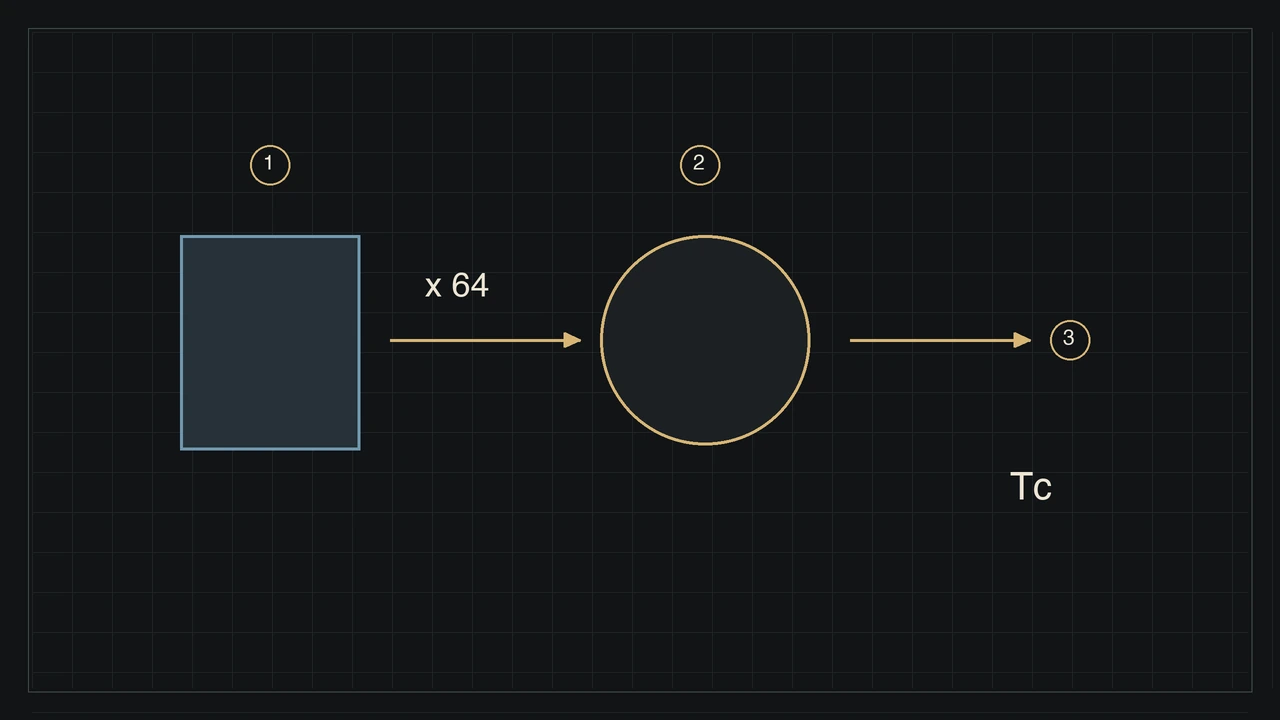
ILFORD’s May 2024 document gives the relationship Tc = Tm raised to p, with times expressed in seconds. In that document, HP5 PLUS has p = 1.31. A metered time of 10 seconds therefore gives approximately 20.4 seconds, rounded to 20 seconds in the manufacturer’s worked example.
This expression belongs to a method with an applicable range. Do not use it as a correction for ordinary short exposures, unrelated films or arbitrarily extreme durations. Consult the current documentation and prefer the specific instructions for your material rather than assuming all tables describe the same conditions.
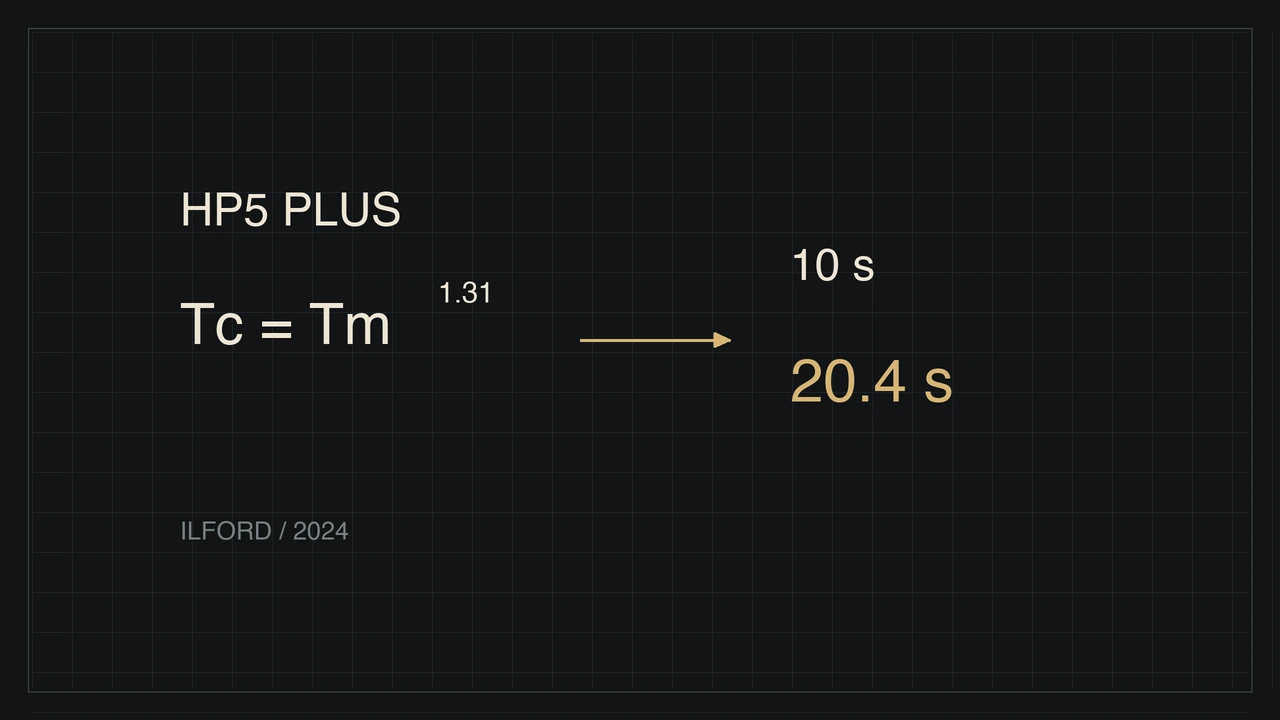
The calculated number is still a photographic starting point. Low-light metering accuracy and changes in the scene can limit its practical precision. Documented tests around the calculated exposure are often more useful than placing excessive confidence in a decimal produced by a scientific calculator.
ND filters: perform the calculations in the right order
A neutral-density filter reduces transmitted light. In an ideal model, six stops of attenuation require a time multiplied by 64 to preserve exposure at the same aperture. That factor comes from repeated doubling; it does not yet include any correction for the film’s response during a long exposure.
Calculate the metered duration after accounting for the filter, then use that duration as the input to the recommended reciprocity correction. Applying a correction before adding a strong filter may yield a different answer. Check whether your equipment can still meter reliably through the filter you intend to use.
A real filter is not necessarily perfectly neutral, and its markings need correct interpretation. Products may specify stops, optical density or a filter factor. Check the instructions, possible light leaks and colour casts before attributing a change in rendition solely to the film emulsion or the processing laboratory.
The light keeps changing while the shutter is open
At dusk, a reading taken at the beginning may become less representative during an exposure lasting several minutes. Headlights and signs can add intermittent light as well. A meter cannot predict these events; it describes the conditions at the time and in the area in which the measurement is made.
Stabilise the camera and prepare framing and focus before fitting a very dark filter. Record the time of day, meter reading and actual exposure duration. Those notes help distinguish an unsuitable calculation from changing illumination, vibration or subject movement that occurred while the frame was being exposed.
For a first experiment, choose stable light and a subject whose intention survives a small timing difference. Compare negatives and consistently reproduced files. Read exposing a negative alongside this method: long exposure is an image-making decision rather than a search for one perfect number.
Sources and further reading
From reading to making images
Explore filmsKeep exploring
All stories
Exposing a negative: keep shadow detail and protect the light
Metering, latitude and density: a practical way to expose negative film and understand the limits of a scan.
Read the story
Pushing film: what the laboratory actually changes
ISO, exposure index, contrast and grain: understand push and pull without promising to recreate missing shadows.
Read the storyShare this article
An idea worth passing on.