
Understanding
Solarization and the Sabattier effect: when tones reverse
A pale cheek darkens, an outline seems to glow, and one print combines positive and negative appearances. What art history often calls solarization frequently means the Sabattier effect: re-exposure to light during development. It is more subtle than an Invert button.

Remember this
True solarization follows extreme initial exposure; the Sabattier effect involves another exposure during development. A digital curve can suggest reversed tones but cannot establish a print’s chemistry or provenance.
Two phenomena behind one familiar name
The vocabulary remains ambiguous. Many catalogues use solarization for partly reversed images associated with the avant-garde. Getty's technical distinction reserves true solarization for reversal caused by extremely strong exposure of the emulsion. It is different from an ordinary overexposed photograph or clipped digital sky.

The Sabattier effect occurs when the material is exposed to light again while development is underway. Sequence matters: an image has started to form, and another illumination acts on material that remains sensitive. This is the situation described in many artistic accounts of darkroom solarization, on negatives or photographic paper.
When reading a historical caption, retain the institution's terminology while clarifying the mechanism when documented. The word alone cannot reconstruct the photographer's actions. Our diagram separates the two paths without proposing a universal exposure threshold or a measured characteristic curve for an emulsion.
Second light reaches an image still forming
Development turns a latent image into a visible one. In a suitable silver-based material, different areas progress differently because they received different exposures. Re-exposure during this evolution is therefore not equivalent to lighting a blank sheet uniformly. The initial image and processing have already structured the material's condition.
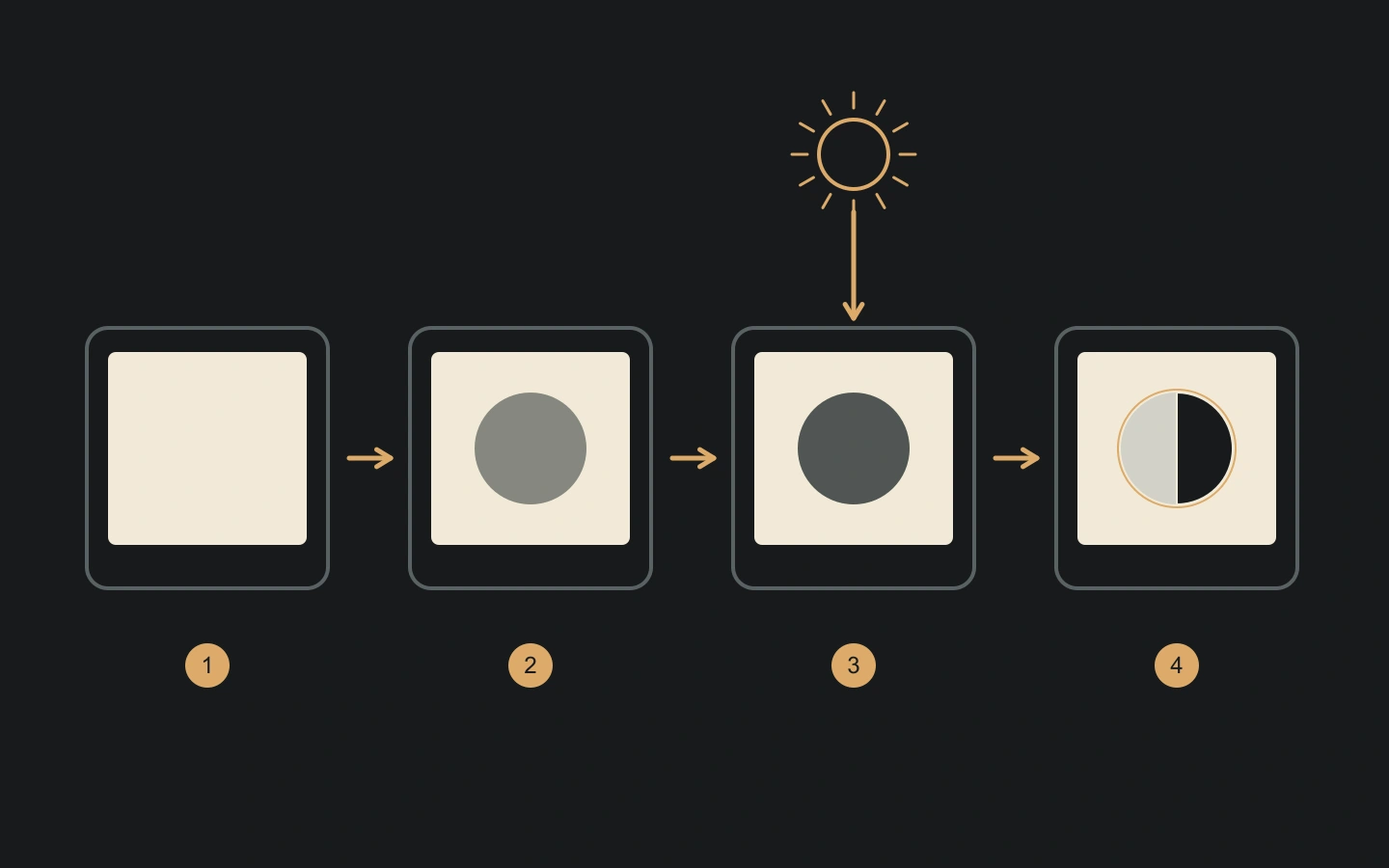
Some areas can preserve their usual tonal order while others appear to reverse it. The positive-negative description is helpful because it expresses this coexistence in one object. It does not mean every grey exchanges precisely with its complement, or that every location responds identically.
Paper or film type, initial exposure and the timing of re-exposure affect appearance. Development is part of that context. An isolated instruction to switch on a lamp for a few seconds is not a reproducible method. A laboratory note and identification of the support tell us more about an artwork than guessing a setting from its reproduction.
Why some edges look drawn
Images associated with the Sabattier effect may show a line emphasizing boundaries. It can suggest drawing within photography. This feature relates to phenomena during development and to transitions between regions; it should not be interpreted as an ink outline added afterward.

It also differs from an optical halo. Halation involves light propagation in photographic material around intense sources, while optical diffusion occurs along the light path. Here an outline may surround a form that emits no light. Similar-looking borders do not establish an identical physical cause.
Prints differ in the prominence of their edges, and a small reproduction may strengthen or conceal nuances. Our simplified boundary shows what the eye can look for, without modelling chemical diffusion or claiming a measured line width. Examine a good detail reproduction, then consider how the boundary affects the whole image.
A history of practices and collaborations
Man Ray and Lee Miller played major roles in the artistic use of these images around the late 1920s and early 1930s. V&A accounts emphasize their collaboration. A solitary-inventor narrative erases both Miller and the earlier existence of the photographic phenomenon. Finding an aesthetic possibility is not necessarily discovering a reaction for the first time.
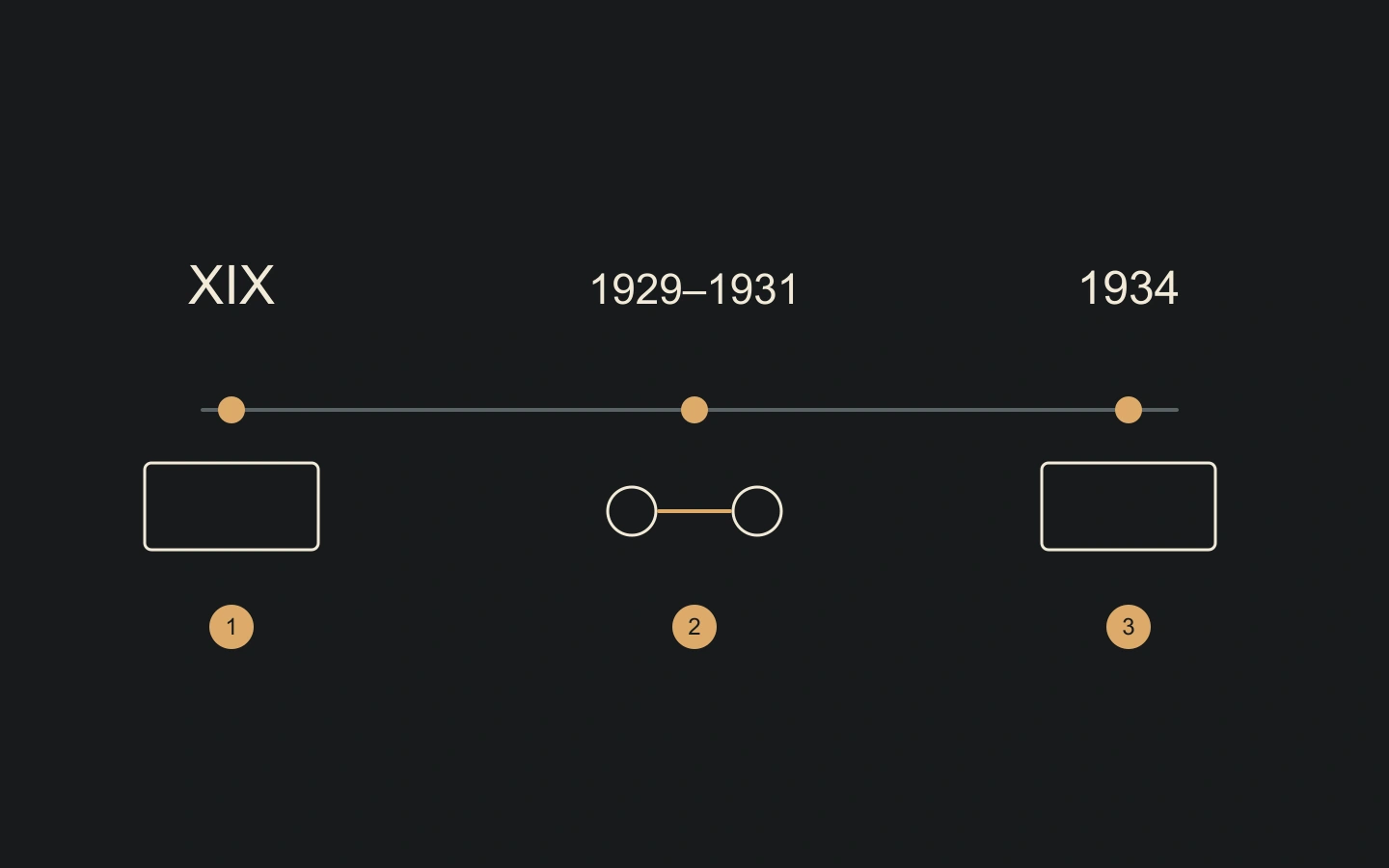
Darkroom accident stories became famous, but an anecdote is neither a protocol nor a complete history. MoMA places these explorations within broader experiments with photograms, montage, negatives and varied surfaces. Artists also challenged photography's apparent ability to present an immediately legible world.
Ilse Bing offers another example: the V&A documents experiments in Paris in 1934 and her claim of independent discovery. This plurality encourages attention to individual works, dates and materials. A portrait, a watch and a night scene do not use reversed tones to create the same feeling, even when grouped under one technical name.
Suggesting the effect digitally
A digital curve maps input values to output values. If its direction changes, certain lighter levels can become darker than neighbouring ones, suggesting partial reversal. A full inversion instead reverses the whole scale. These operations organize an image differently and should not be described as equivalent.
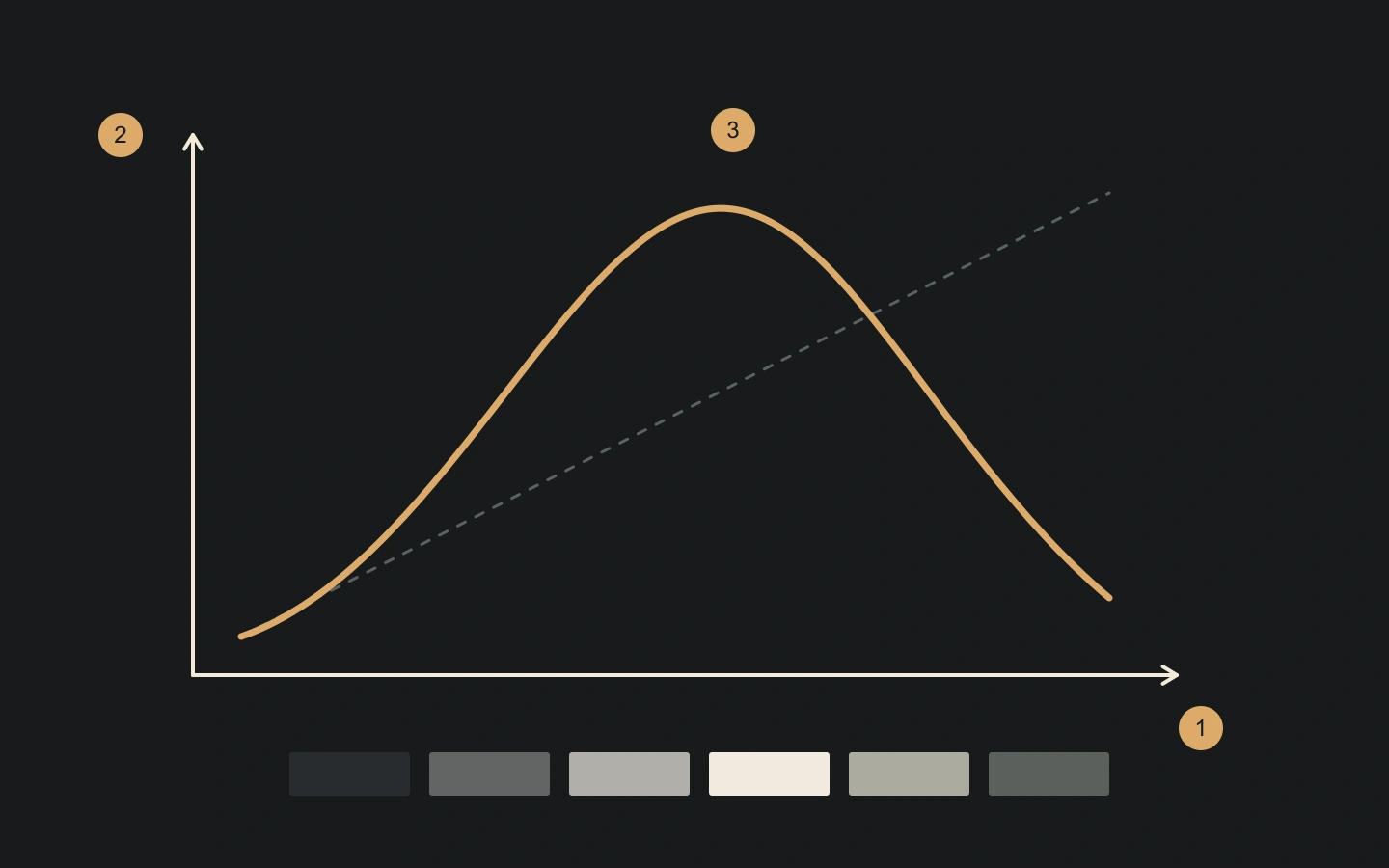
To study the visual language, work on a copy with a reversible adjustment and compare shapes and transitions while preserving the source. A global curve changes values; it does not automatically reproduce local interactions in silver development. Adding a digital outline is another operation and should be identified when used.
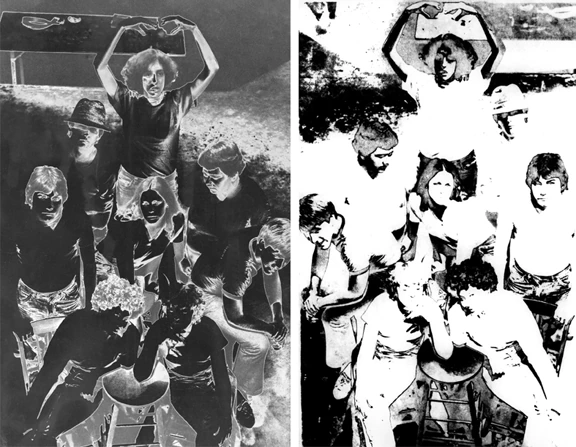
This cover is a generated illustration evoking a print and darkroom atmosphere, not an authenticated Sabattier experiment. The documentary image shows actual Sabattier prints; the diagrams are conceptual. Good descriptions identify a silver print, reproduction, digital treatment or illustration. Visual mystery does not require uncertainty about how an image was made.
Sources and further reading
- Getty AAT — Solarization: extreme initial exposure
- Getty AAT — Sabattier effect: exposure during development
- MoMA, Object:Photo — Materials glossary, solarization
- MoMA — Modern Photographs from the Thomas Walther Collection
- V&A — Everything you need to know about Lee Miller
- V&A — Ilse Bing: working methods
- Adobe — Adjust color and tone with Curves
- N0TABENE — Sabattier paper prints, original prints 1978, scan 2016
About this article
Written with the assistance of Codex and Astra, using the cited sources. The diagrams are educational; documentary photographs retain their authors and licences.
From reading to making images
Explore filmsKeep exploring
All stories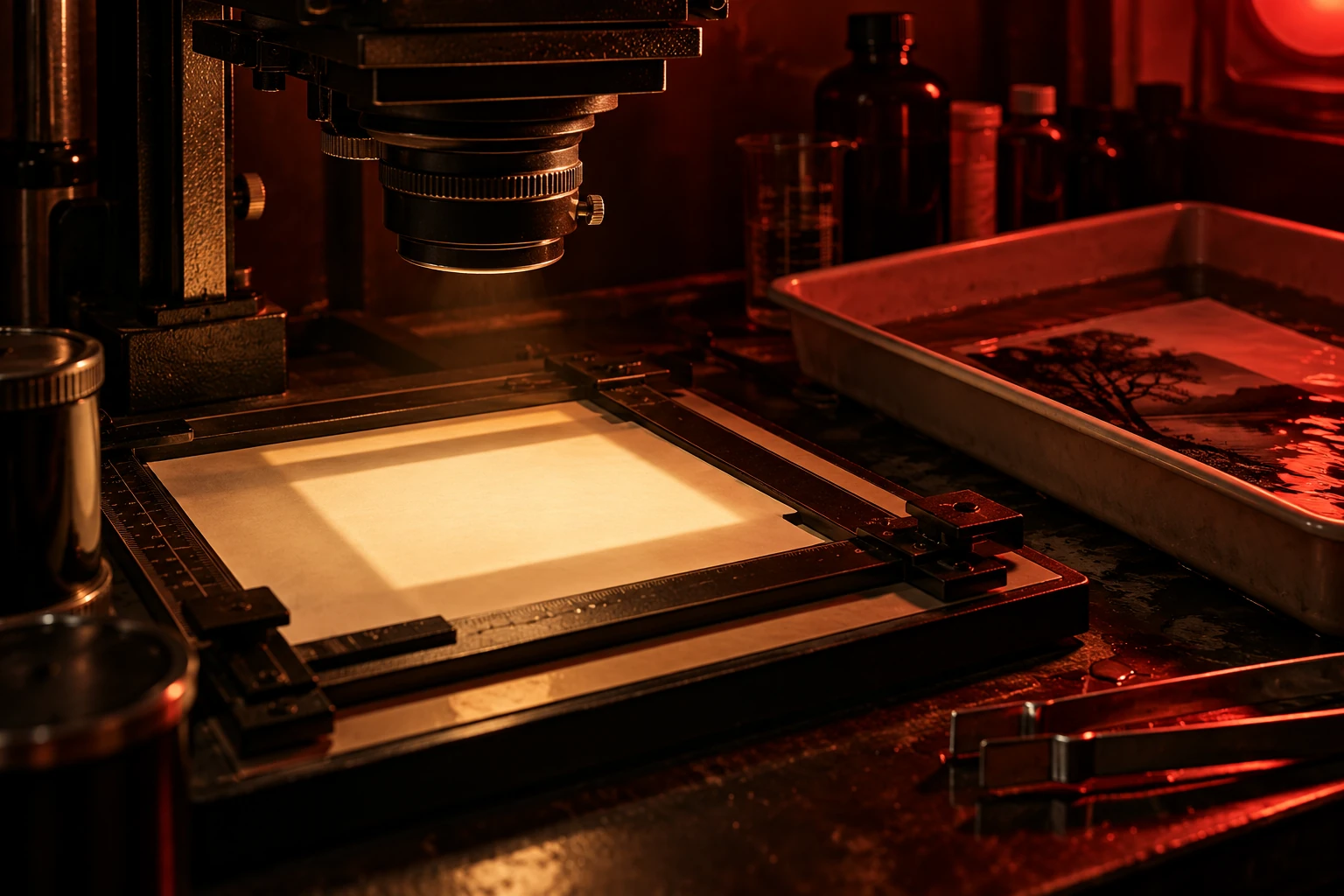
Inside the darkroom: making a silver-gelatin print
Enlargers, paper, test strips, dodging, burning and washing: understand every stage of black-and-white printing.
Read the story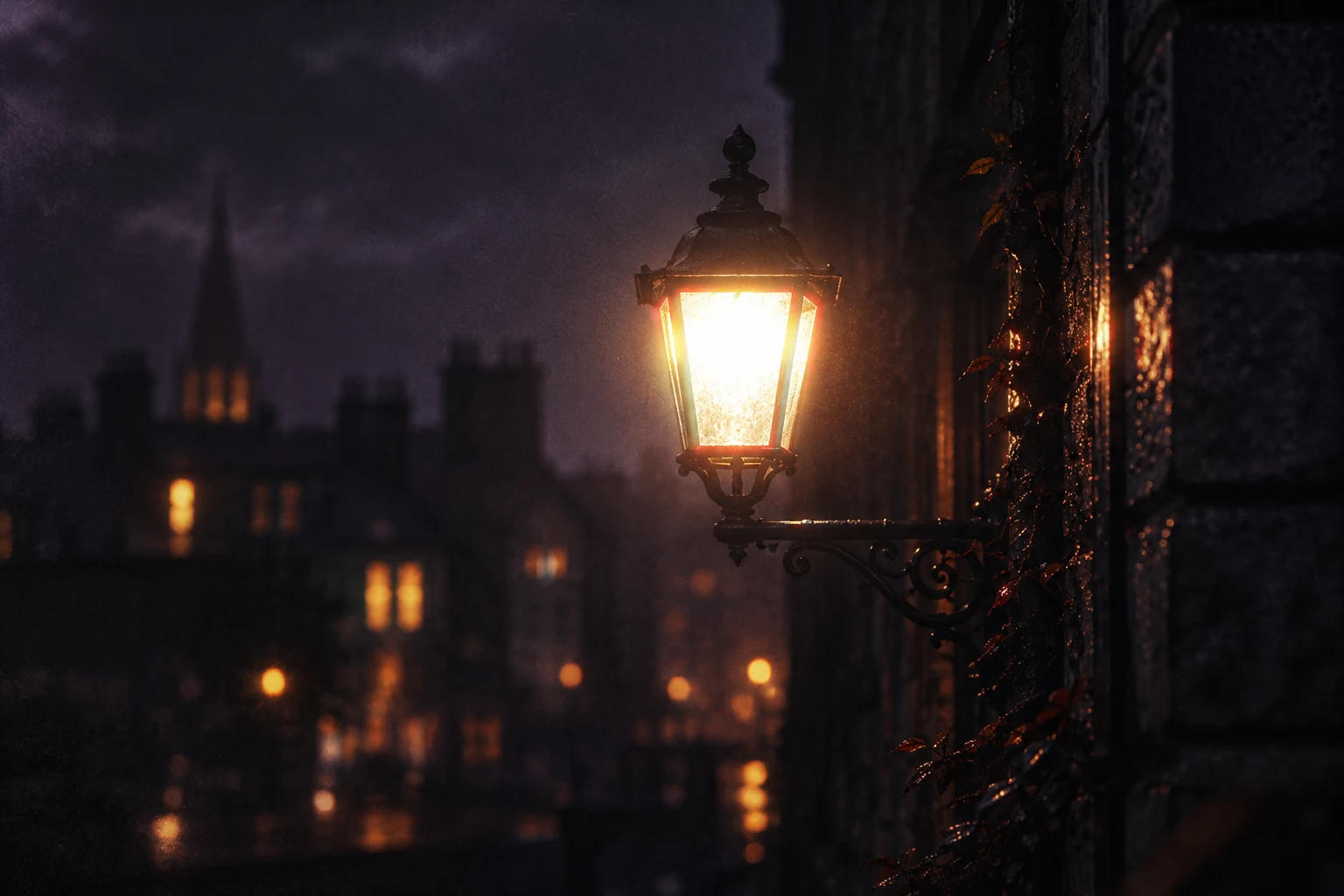
Halation: why bright lights spill across film
Reflected light, anti-halation layers and red halos: understand remjet, AHU and the differences between film halation and optical glow.
Read the storyShare this article
An idea worth passing on.