
Optics
Polarization: choosing reflections instead of removing them all
A window reflection hides a face; glare hides a wet stone’s colour; a river turns into a mirror. A polarizer changes how much of certain light reaches the lens. Its purpose is to choose what reflections contribute, rather than automatically darkening every scene.
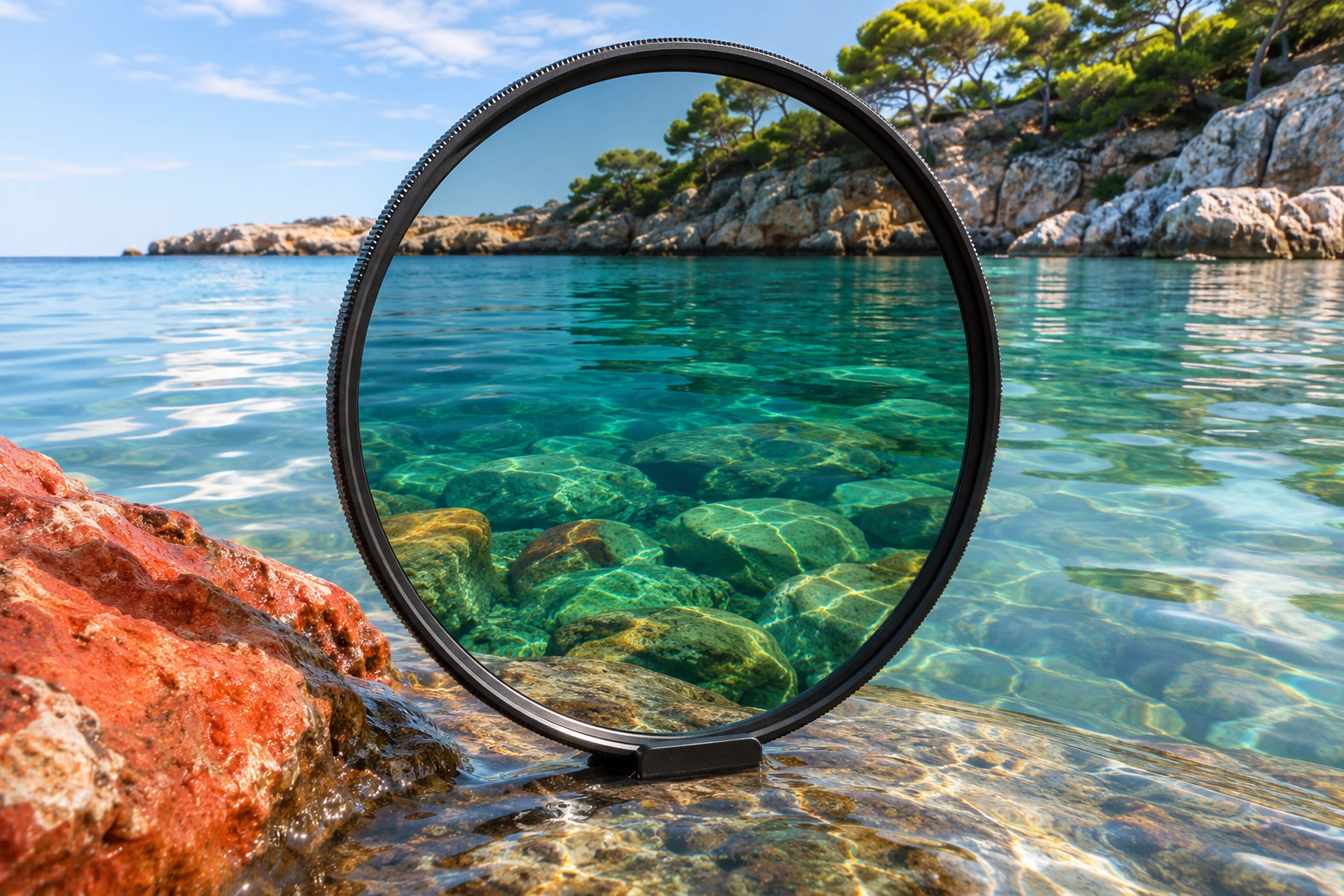
Remember this
A polarizer selects an electric-field orientation, not an isolated colour. Its effect depends on surfaces, geometry and rotation. Maximum suppression is not always the best photograph, and no setting guarantees removal of every reflection.
Rotation selects an orientation of light
Light is an electromagnetic wave. To understand a polarizer, consider the orientation of its electric field, perpendicular to the direction of propagation. In unpolarized light that orientation varies randomly with time. Linearly polarized light has a preferred oscillation direction. This does not mean all its rays travel in one direction.
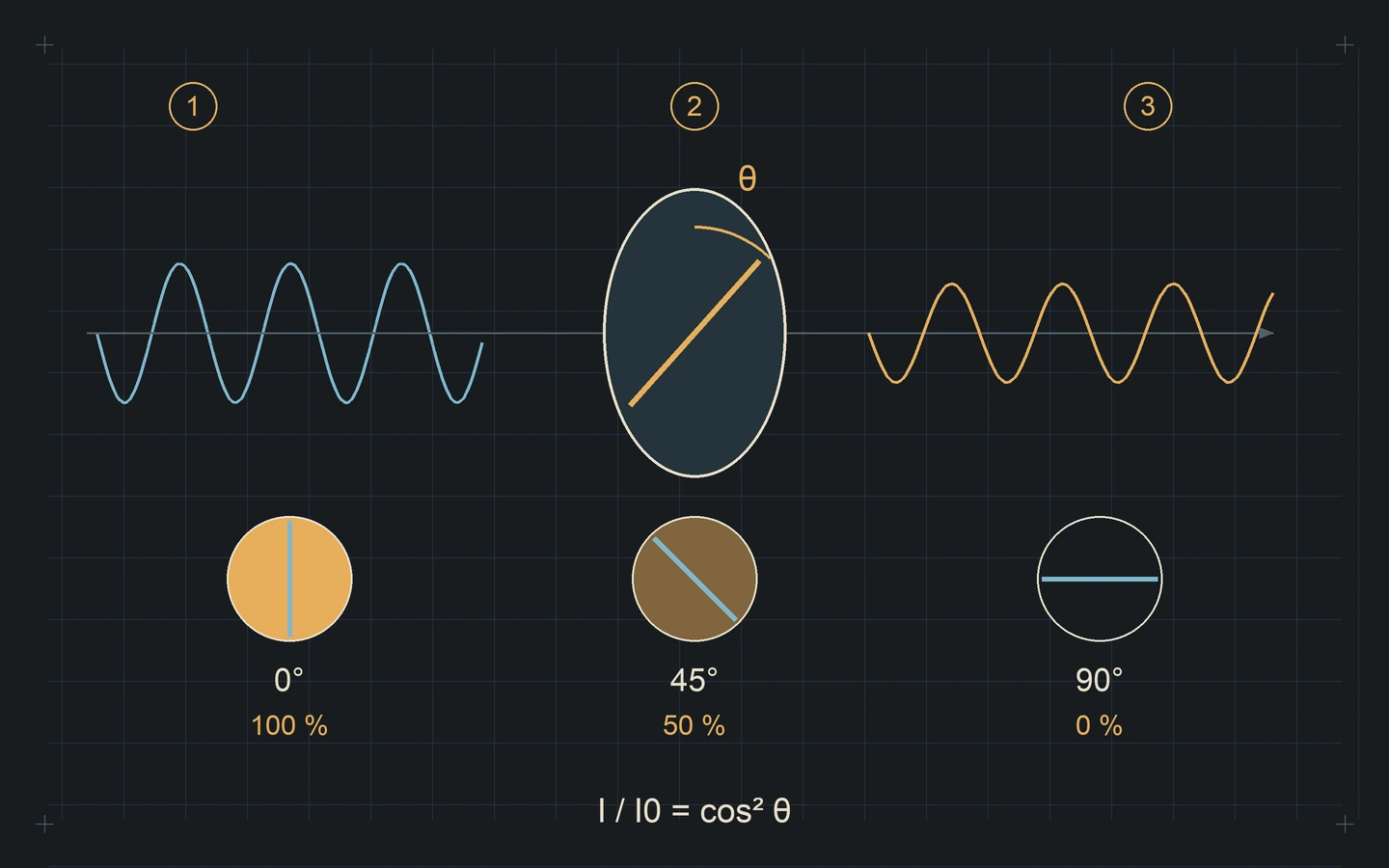
A linear polarizer preferentially transmits a field component. Rotating it changes the selection. For already linearly polarized light and an ideal analyzer, Malus’s law gives I = I₀ cos² θ, where θ is the angle between orientations. Parallel orientations give a maximum and crossed ones a minimum; real filters do not achieve perfect extinction.
A scene mixes light with different polarization states. Some areas change strongly as the ring rotates and others barely change. The filter therefore does not behave like a saturation slider or a blue-colour selection. A window reflection on a table may weaken while a matte fabric mainly gets darker. Examine individual materials instead of expecting a uniform effect.
Angle and material determine which reflections weaken
At the boundary between air and a transparent dielectric, the two orientations defined relative to the plane of incidence are reflected in different proportions. This plane contains the incoming ray and surface normal. At Brewster’s angle for an ideal non-absorbing interface, the parallel component is not reflected, leaving a linearly polarized reflection.
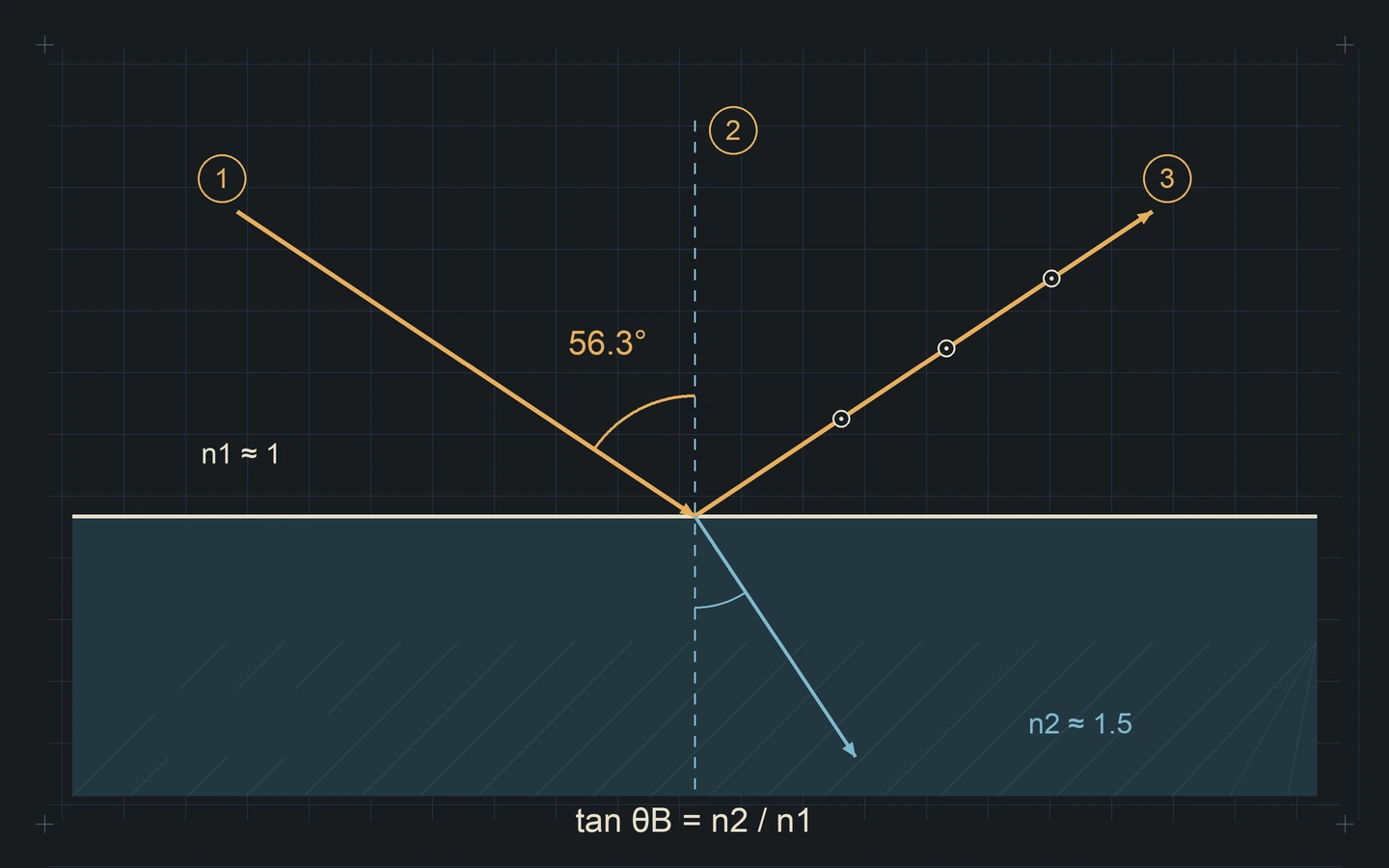
The angle is measured from the normal, not the surface. For air and glass with an index near 1.5, it is about 56 degrees; for water near 1.33, about 53 degrees. These examples explain geometry without guaranteeing extinction on a real thick, curved or coated window with multiple reflections.
Move your viewpoint before turning the ring harder. A waxy leaf or wet stone may lose some white glare and reveal more colour. Bare metal cannot be treated like water: complete removal of its reflection should not be promised. Paint or varnish on metal can, however, contribute a separate dielectric reflection.
A wide sky is not uniformly polarized
Scattering of sunlight in the atmosphere produces partly polarized light. In a simple molecular-scattering model, the effect is strongest in viewing directions roughly 90 degrees from the Sun. This is an angular relationship across the sky, not a rule that the filter always works best at one hour or on one particular colour.
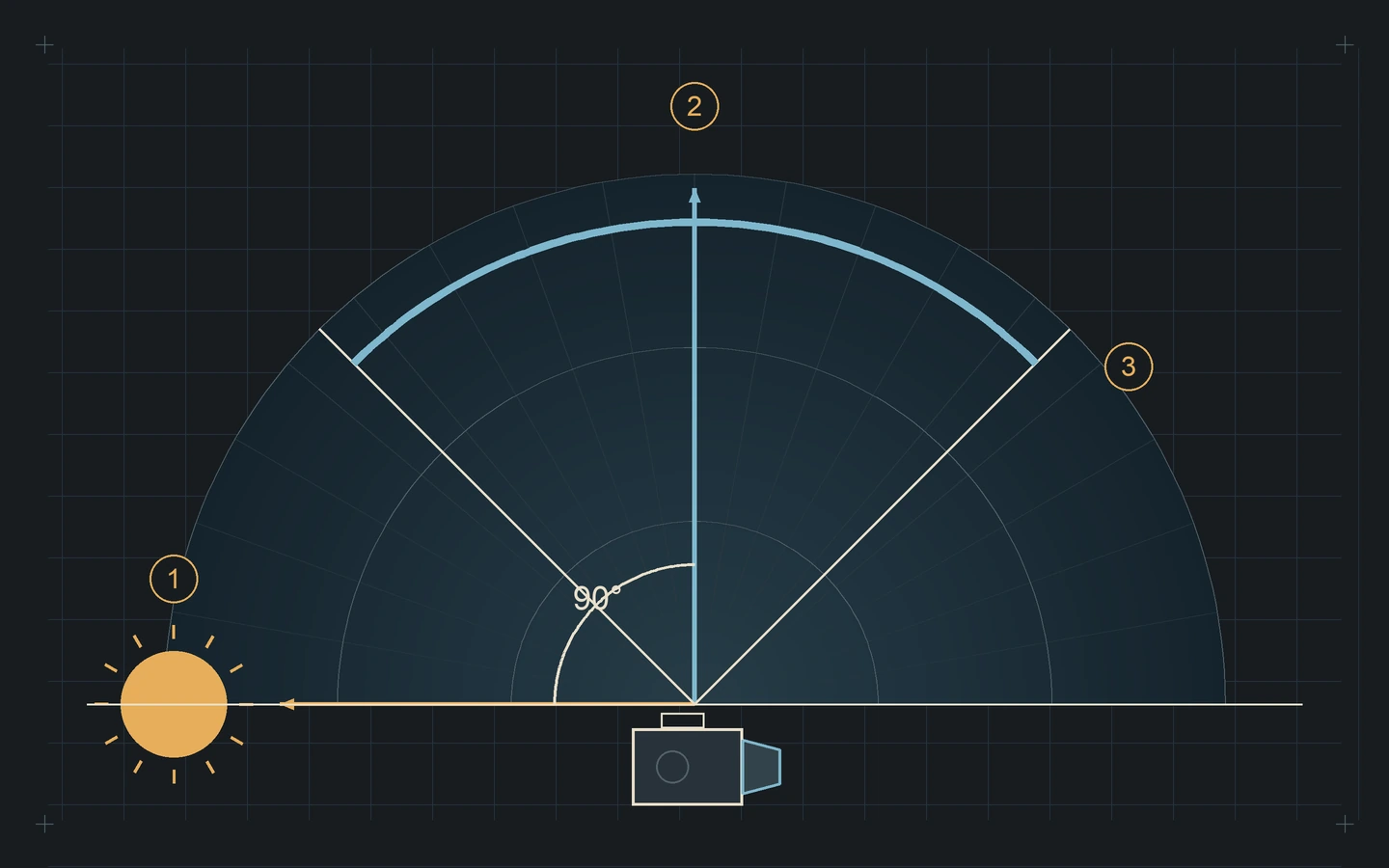
A wide-angle lens includes widely differing directions. The same filter setting may strongly darken one part of the sky and have less effect elsewhere. A dark patch or strong gradient does not necessarily mean the filter is defective. Clouds, aerosols and multiple scattering make a real sky more complex than the simple diagram.
Check corners as well as the centre before shooting. Reduce the effect, change framing or remove the filter when the sky becomes distracting. For stitched panoramas, remember that viewing angle relative to the Sun changes between frames. Identical exposure across the sequence does not automatically make those brightness differences disappear.
Circular does not mean rotation is unnecessary
A photographic circular polarizer usually combines a linear polarizer with a correctly oriented quarter-wave plate on the camera side. The first part selects the light; the second transforms its polarization state. Circular describes the ideal outgoing state, not the shape of the mount, and does not make rotating the filter ring unnecessary.
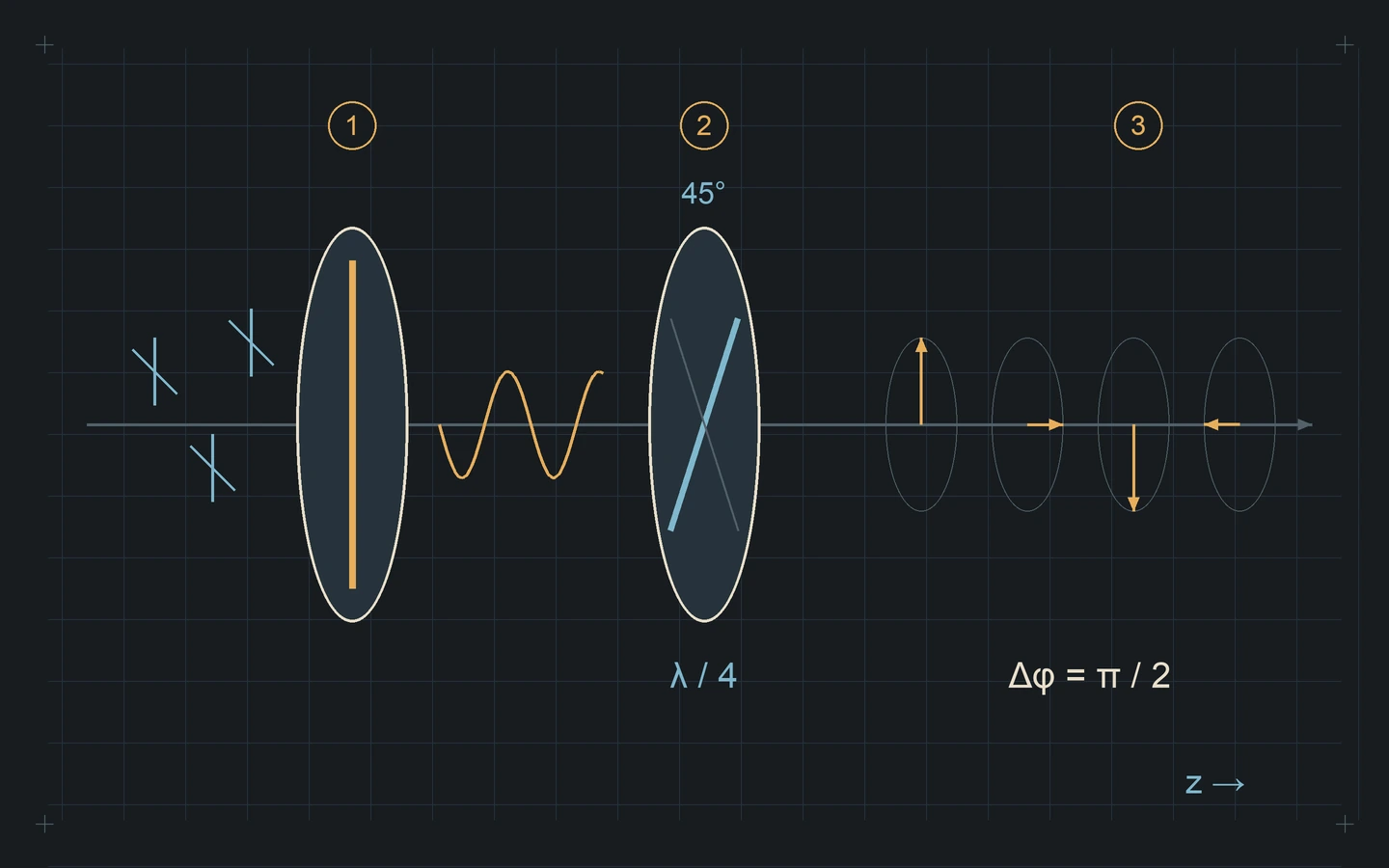
This construction addresses metering or autofocus systems sensitive to polarization. It is not a universal compatibility promise for every optical setup. Check the camera and filter instructions, fit it in the intended direction and inspect the result. Reversing the components changes their optical order and is not an equivalent way of using the system.
The filter also reduces available light. An ideal linear polarizer transmits half of fully unpolarized light, but real products add losses and scenes are not always unpolarized. Actual exposure compensation therefore depends on product and scene. Meter with the chosen setting, monitor shutter time and do not assume one universal factor for all filters.
Make a comparison that respects the subject
For an exercise, choose a window or a bowl of water near one. Shoot from a fixed position without the filter, then at two filter orientations. Keep focus, aperture and illumination consistent, adjusting time for comparable exposure. Record camera and source positions: moving changes the geometry as well as the filter’s contribution.
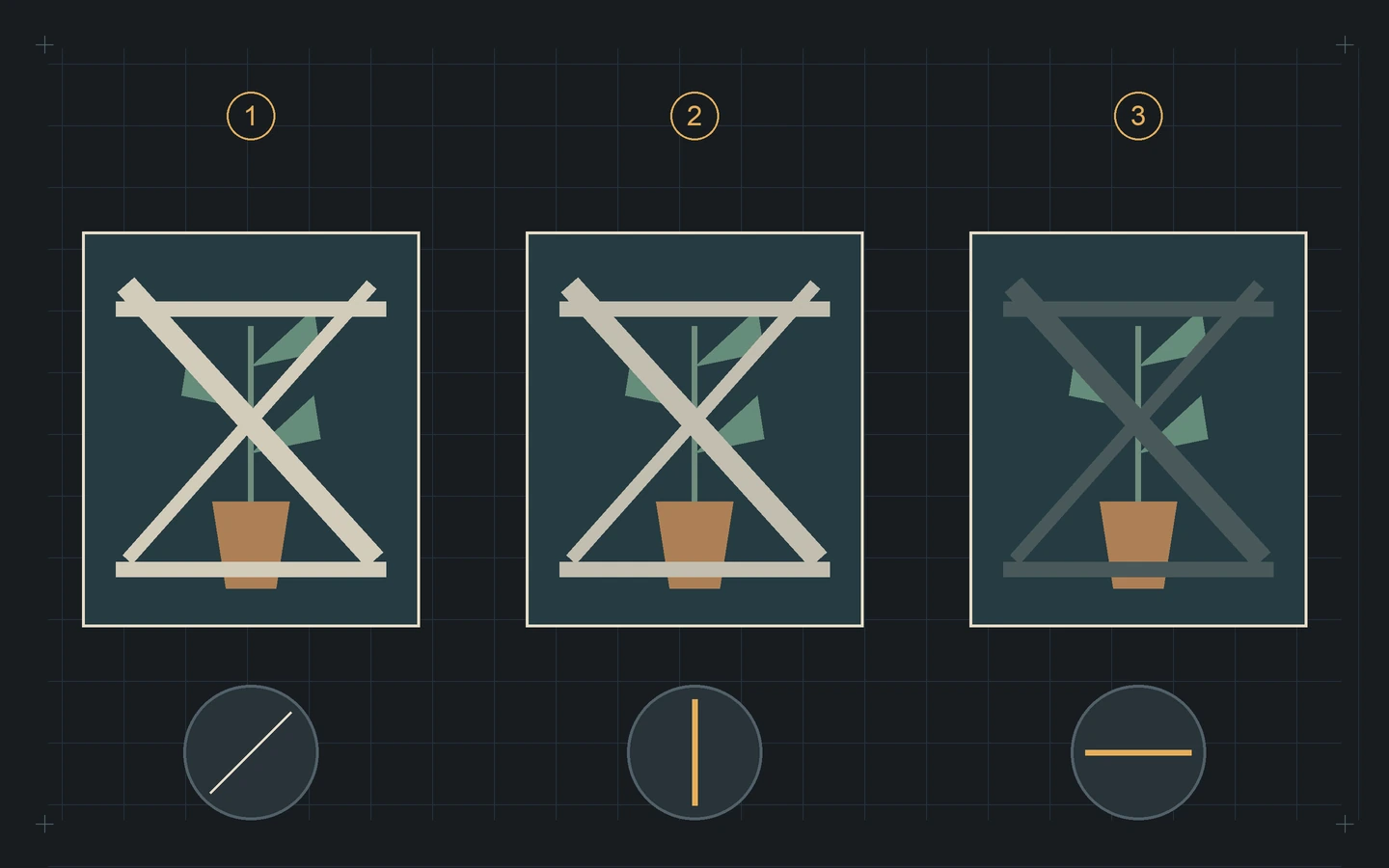
Compare the reflection, the view behind the surface and matte areas separately. Keeping some shine can give an apple volume, describe a car body or retain the sky in a puddle. The darkest setting is not evidence of higher quality. Look for the balance of materials that serves your intention, even if a substantial reflection remains.
Editing can subdue a bright area or reconstruct an appearance, but an ordinary single photograph does not fully separate polarization states. It therefore cannot guarantee faithful recovery of detail hidden during capture. Kolorshift treatments are digital; the article on colour filters and monochrome photography explains a different, spectral form of optical selection.
Sources and further reading
- Edmund Optics — Introduction to Polarization
- Edmund Optics — Polarizer Selection Guide
- Edmund Optics — Laser Polarization and Brewster’s Angle
- Canon Academy — Polarizing Filters in Practice
- Nikon — Polarizing Filters Add POW to Pictures
- Nikon — Circular Polarizing Filter II, instructions
- NASA Goddard — Rayleigh Scattering and Polarization
About this article
Written with the assistance of Codex and Astra, using the cited sources. The diagrams are educational; documentary photographs retain their authors and licences.
From reading to making images
Discover Lens FXKeep exploring
All stories
Why use a coloured filter for black-and-white photography?
Yellow, orange, red and green: understand grey separation, film sensitivity and exposure compensation.
Read the story
Why the same colour changes under different light
Light spectra, metamerism and white balance: understand why skin, clothing or a print can change colour with the lighting.
Read the storyShare this article
An idea worth passing on.